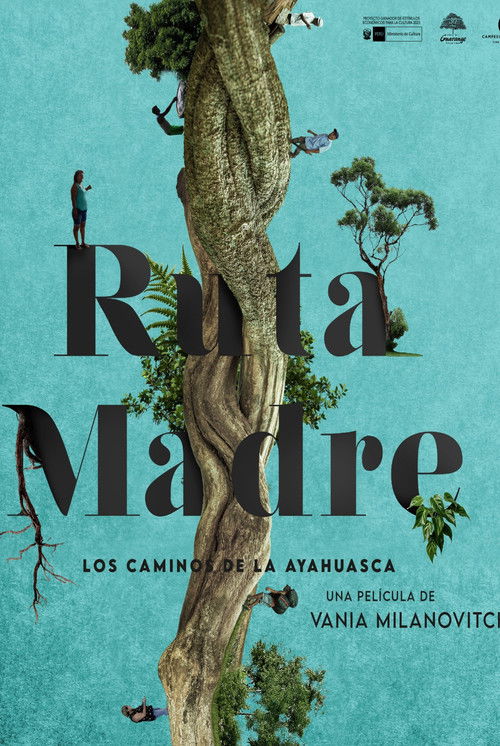
Filmed in the jungles of Peru, shaman Don Jose Campos introduces the practices and benefits of Ayahuasca, the psychoactive plant brew that has been used for healing and visionary journeys by Amazonian shamans for at least a thousand years.
José Campos
as Himself
Pablo Amaringo
Pablo Arce Hidalgo
After many years of life marked by PTSD, men and women veterans of the wars in Vietnam, Afghanistan, and Iraq travel to the Peruvian Amazon to participate in shamanic ceremonies to heal their traumas.
An associate of Ram Dass, East Forest explores how music and psychedelics can facilitate transformative healing through the blending of shamanistic practices with guided psychedelic experiences.
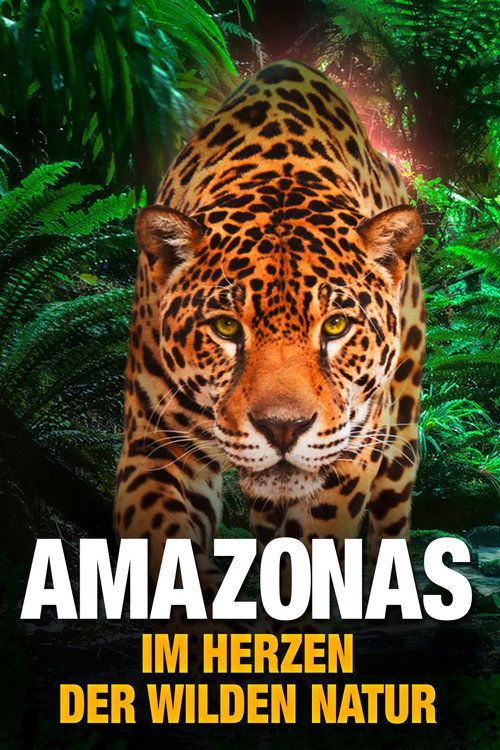
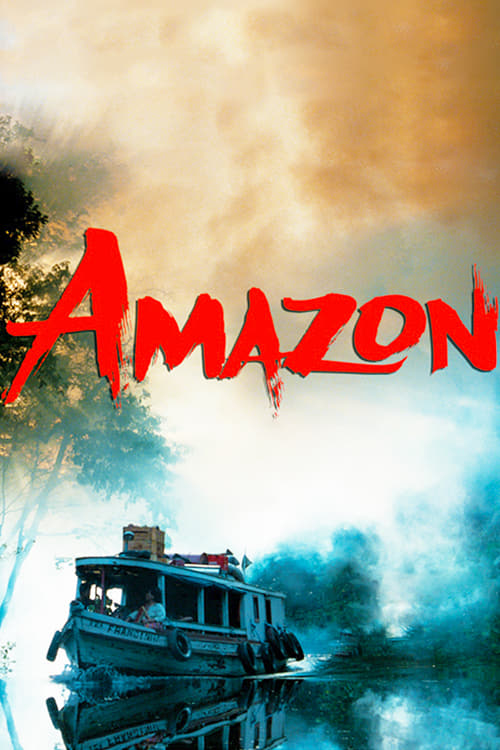
Explore the mysterious Amazon through the amazing IMAX experience. Amazon celebrates the beauty, vitality and wonder of the rapidly disappearing rain forest.
The opening ceremony of the 2014 Winter Olympics took place at the Fisht Olympic Stadium in Sochi, Russia, on 7 February 2014. It began at 20:14 MSK (UTC+4) and finished at 23:02 MSK (UTC+4) This was the first Winter Olympics and first Olympic Games opening ceremony under the IOC presidency of Thomas Bach. The Games were officially opened by President Vladimir Putin. An audience of 40,000 were in attendance at the stadium with an estimated 2,000 performers. The ceremony touched upon various aspects of Russian history, and included tributes to famous Russians, such as Peter Tchaikovsky (1840–1893), Ukrainian-born Russian humourist, dramatist, and novelist Nikolai Gogol (1809–1852), filmmaker Sergei Eisenstein (1898–1948), ballet dancer Vaslav Nijinsky (1889–1950), and patron of arts, and founder of Ballet Russes, Sergei Diaghilev (1872–1929).
In powerful images, alternating between documentary observation and staged sequences, and dense soundscapes, Luiz Bolognesi documents the Indigenous community of the Yanomami and depicts their threatened natural environment in the Amazon rainforest.
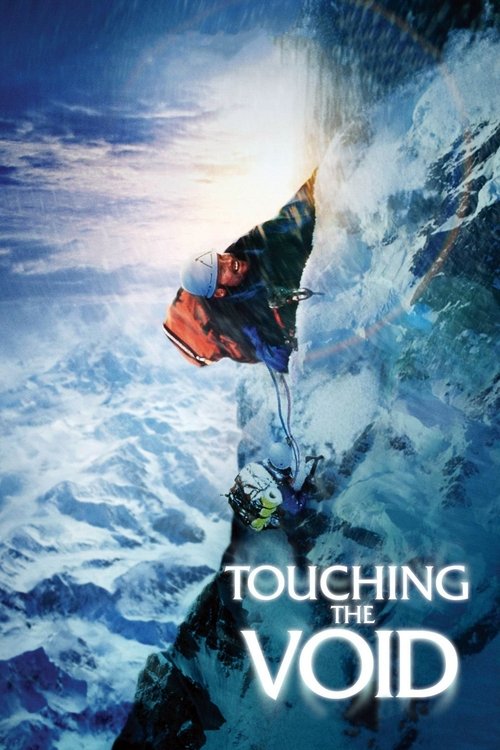
The true story of Joe Simpson and Simon Yates' disastrous and nearly-fatal mountain climb of 6,344m Siula Grande in the Cordillera Huayhuash in the Peruvian Andes in 1985.
Narrated by Academy Award winners Sissy Spacek and Herbie Hancock, River of Gold is the disturbing account of a clandestine journey into Peru's Amazon rainforest to uncover the savage unraveling of pristine jungle. What will be the fate of this critical region of priceless biodiversity as these extraordinarily beautiful forests are turned into a hellish wasteland?
The Athos peninsula in Greece is one of Europe's last secrets. Over 2000 monks live on Athos - cut off from the outside world. Access is denied to women, tourists are not welcome. Only workers and pilgrims can obtain a visa. The "Autonomous Monastic State of the Holy Mountain" attracts people who feel like they are missing something from their modern lives. With the help of three Athos monks, "Athos - A Taste of Heaven" tells the story of the island and its inhabitants in a unique filmed diary style. The film's guiding theme is the path we as people have to find and follow - each and everyone for themselves. "First we must heal our own souls, only then we can help others", is one of Father Galaktions core messages. He lives as a hermit on the holy mountain. Not all monks, however, live as secluded and demure as Father Galaktion. The film team is also received by Father Epiphanios - a gifted and poetic cook who certainly does not disdain the pleasures of life.
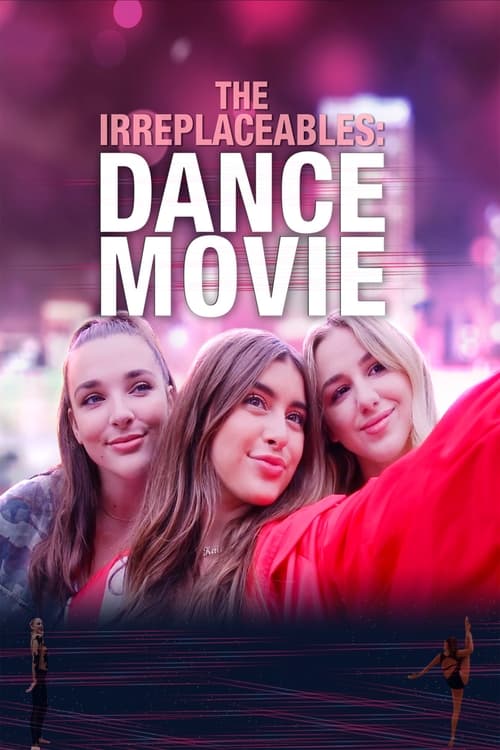
Join Dance Moms stars, Kendall Vertes, Chloe Lukasiak, and Kalani Hilliker as they perform on The Irreplaceables Tour. Watch along as the girls tour around Peru and perform their world-famous dances for eager fans.
The 2008 Summer Olympics opening ceremony was held at the Beijing National Stadium, also known as the Bird's Nest. It began at 8:00 p.m. China Standard Time (UTC+8) on August 8, 2008, as 8 is considered to be a lucky number in Chinese culture. Featuring more than 15,000 performers, the ceremony lasted over four hours and cost over $100 million USD to produce.
The Amazon rain forest, 1979. The crew of Fitzcarraldo (1982), a film directed by German director Werner Herzog, soon finds itself with problems related to casting, tribal struggles and accidents, among many other setbacks; but nothing compared to dragging a huge steamboat up a mountain, while Herzog embraces the path of a certain madness to make his vision come true.
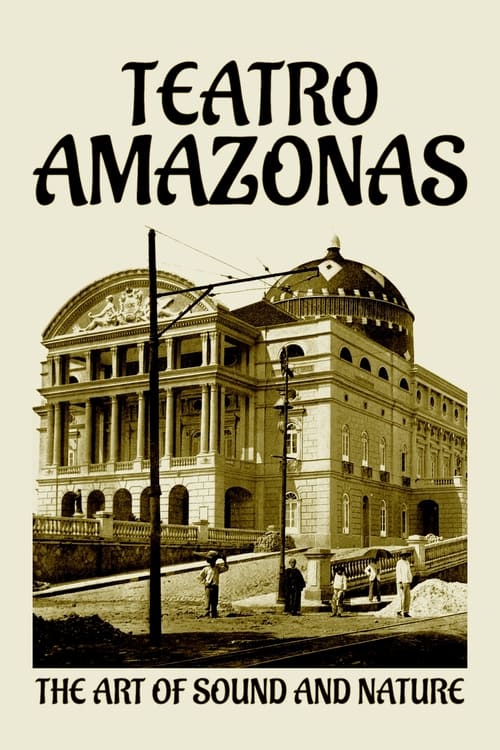
Documentary by Portuguese Silvino Santos, about the Amazon, its flora, fauna, its inhabitants and among other wonderful images from the beginning of the 20th century with alternating close-up shots of caimans, jaguars and tropical flora with footage of Indigenous rituals--including some of the earliest known moving images of the Indigenous Witoto people--and longer sequences showcasing the region’s extractive industries: rubber, the Brazil nut, timber, fishing, even the egret feathers that were a staple of women’s fashion at the time.
Follows Martin Strel as he attempts to cover 3,375 miles of the Amazon River in what is being billed as the world's longest swim.
James, giving himself 12 months before he has "a license to kill himself," sets off to the Amazon rainforest with hopes of finding a shaman who can save his life.
This film dives into the world of Amazon, its story and view of the world. It offers a large social fresco backed up by an in-depth investigation where private lives meet the mega-machine.
After a plane crash, four indigenous children fight to survive in the Colombian Amazon using ancestral wisdom as an unprecedented rescue mission unfolds.
In this documentary, "Zappy" Zapolin interviews spiritual gurus, celebrities, and people of various faiths about the relationship between spirituality, religion, and psychedelics—in their beliefs and in their experiences.
Women have always sought ways to terminate unwanted pregnancies, despite powerful patriarchal structures and systems working against them. This film provides a historical overview of how church, state and the medical establishment have determined policies concerning abortion. From this cross-cultural survey--filmed in Ireland, Japan, Thailand, Peru, Colombia, and Canada--emerges one reality: only a small percentage of the world's women has access to safe, legal operations.