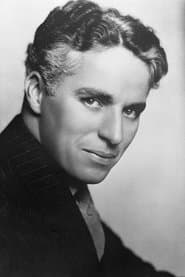
A short documentary about the making of "The Great Dictator."
Charlie Chaplin
as Self (archive footage)
Costa-Gavras
as Self

The incredible story of the Avro Lancaster, one of the finest bombers of the Second World War, which played a crucial role in the long and savage campaign to defeat Hitler's Third Reich. This documentary features interviews with surviving veterans of Bomber Command, who share frank personal accounts of their part in an aerial battle of attrition which claimed the lives of 55'000 aircrew.
A dramatisation of the workers' protests in June 1976 in Radom, seen from the perspective of the local Secretary of the Polish United Workers' Party.
Orson Welles acted in Brazilian culture and music by deeply researching Brazil's historical geology, consciously completing a legendary cultural mission. Although being turned down by Hollywood producers, he developed a triumphantly accomplished mission in the language domain - three friends of Welles' testified his love for cinema, his passion for Brazilian music and people and his obstinate endurance against formidable pressures coming from inside and outside Hollywood regarding his unfinished "It's All True".
Any given Sunday of 1974 in Spain, soccer games in several stadiums, the sarcastic voice of commentators, the inevitable presence of advertising. Goal! The victors and the defeated.
An exploration —manipulated and staged— of life in Las Hurdes, in the province of Cáceres, in Extremadura, Spain, as it was in 1932. Insalubrity, misery and lack of opportunities provoke the emigration of young people and the solitude of those who remain in the desolation of one of the poorest and least developed Spanish regions at that time.
Set to a classic Duke Ellington recording "Daybreak Express", this is a five-minute short of the soon-to-be-demolished Third Avenue elevated subway station in New York City.
1940, Kawamoto Akiko lives in Hiroshima with her father and mother, Genkichi and Shizuko, as well as her two younger brothers. Akiko loves playing her favourite piano. As the war situation worsens, she is busy helping out the war efforts. On the morning of August 6, 1945, she disobeys her father and heads into the centre of town for work. In Hiroshima 75 years later, her favourite piano remains, restored and playable following its survival of the atomic bombing
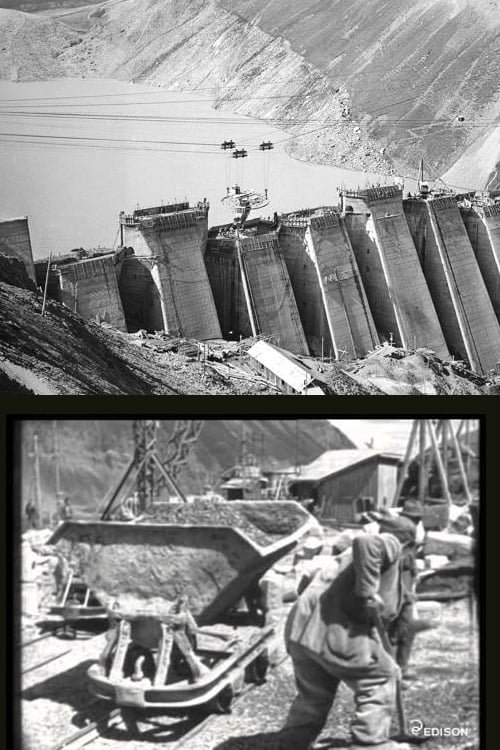
Alcoholism and its Ill-Effects was considered to be one of the most popular science propaganda (or educational) films produced in Russia before the revolution of 1917. Alexander Khanzhonkov, the most prominent Russian film producer of that era, financed a special department dedicated to non-fictional cinema, despite the fact that such films were not commercially successful. Unfortunately, not a single copy of the film has survived to the present day. All that remains are 12 frames, which were used by Izvolov to create this reconstruction. He also used extracts from critical reviews, published at the time of the film’s release, to produce a soundtrack.
SONG 5: A childbirth song (the Songs are a cycle of silent color 8mm films by the American experimental filmmaker Stan Brakhage produced from 1964 to 1969).
Displaying the faces and voices of transgender youth, the documentary short shows the authenticity of queer and trans people living in Toronto, while simultaneously discussing the struggles for self-acceptance that people who do not conform to cisgender and heteronormative ideals of gender face. Andy Nguyen, trans director and film student, captures his trans friends in their natural state on 16mm film shot on a Bolex h16 camera. Accompanied by narration written and recited by Salem Rao, this film represents that trans people exist and this is what we look like. Regardless of the obvious everyday transphobia, trans people find community and uniqueness within each other and themselves.
“Let’s describe it as a desire to be outward followed by a fear of being seen,” The 1975’s Matty Healy tells Apple Music. “I think that is the conversation that happens in this record.” This short film finds Healy reflecting on his motivations and complexities as he and his bandmates reveal the ideas that fuelled their fourth album, Notes on a Conditional Form. It’s a unique and unguarded look at one of Britain’s most venturous bands.
What would your family reminiscences about dad sound like if he had been an early supporter of Hitler’s, a leader of the notorious SA and the Third Reich’s minister in charge of Slovakia, including its Final Solution? Executed as a war criminal in 1947, Hanns Ludin left behind a grieving widow and six young children, the youngest of whom became a filmmaker. It's a fascinating, maddening, sometimes even humorous look at what the director calls "a typical German story." (Film Forum)
Twenty-one-year-old Julia had to leave her daughters under the care of a children's shelter house. Five years later, Julia keeps fighting to rebuild her life and get reunited with her daughters.
The man behind the legend and a knowing look at 1950s Hollywood are revealed in this dynamic biopic of the meteoric star whose troubled life echoed his gut-grabbing performances in East of Eden, Rebel Without a Cause and Giant.
A riveting expose about the personalities of murderers and their motives. This 72 minute film covers the McDonalds' restaurant massacre, President Reagan's assassination attempt, serial murderer Henry Lee Lucas and others.
After his father is murdered by the Nazis in 1938, a young Viennese Jew named Ferry Tobler flees to Prague, where he joins forces with another expatriate and a sympathetic Czech relief worker. Together with other Jewish refugees, the three make their way to Paris, and, after spending time in a French prison camp, eventually escape to Marseille, from where they hope to sail to a safe port.