The short registers a sports spectacle of great importance (probably of soccer). We never see the spectacle itself but the people watching and reacting at the stadium.
Madrid, Spain, 1949. The Circo Americano arrives in the city. While the big top is pitched in a vacant lot, the troupe parades through the grand avenues: the band, a witty impersonator, the Balodys, acrobats, jugglers, acrobatic skaters, clowns and… Buffallo Bill.
A Brazilian production that follows an amateur soccer team entirely consisting of homosexual players." Some gay soccer players got together for fun and founded a team which became so popular that it started a movement all across Brazil.
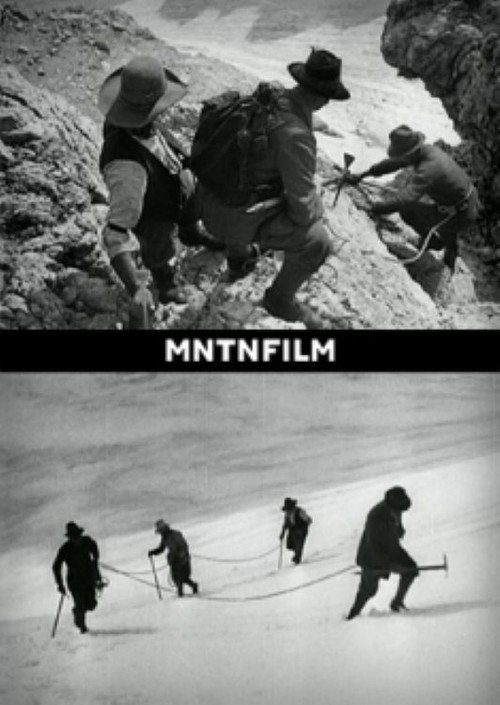
Roald Amundsen's South Pole Journey is a Norwegian documentary film that features Roald Amundsen's original footage from his South Pole expedition from 1910 to 1912.
This film describes a psychological state "kin to moonstruck, its images emblems (not quite symbols) of suspension-of-self within consciousness and then that feeling of falling away from conscious thought. The film can only be said to describe or be emblematic of this state because I cannot imagine symbolizing or otherwise representing an equivalent of thoughtlessness itself. Thus the actors in the film, Jane Brakhage, Tom and Gloria Bartek, Williams Burroughs, Allen Ginsberg, Peter Olovsky and Phillip Whalen are figments of this 'Thought-Fallen Process', as are their images in the film to find themselves being photographed."
A portrait of a family living in a village in Masuria.
Kurt Vonnegut, Jr., discusses his development as a writer, including references to some of his major novels, his themes and their meaning, his relationship to other writers, problems in sustaining his special vision of American life, and his future. Accompanied by photographs that chronicle the author’s life and selections from home movies taken during his youth.
As technology accelerates, our species' collective imagination of the future grows ever more kaleidoscopic. We are all haunted by temporal distortion, perhaps no more than when we attempt to remember what the future looked like to our younger selves. As the mist of time devours our memories, the future recedes; each of us burdened by the gaping mouth of entropy. Yet, emerging technology provides a glimmer of hope; transhumanism promises a future free from mortality, disease and pain. Does our salvation lie in digital simulacra? We're here to sell you the answer to that question, for the low, low price of four hundred and seventy seconds.
Long thought to be the first film ever made by an Indigenous filmmaker, Black Fire examines the situation of First Nations people in the early 1970s through politically charged discussions, comical vox pops, and interviews with luminaries of the time such as Pastor Doug Nicholls and Aboriginal Tent Embassy co-founder Bertie Williams.
The sights and sounds of a kimchi factory in Vietnam.
Animated short documentary following a young woman's diagnosis of bipolar: a journey of self-acceptance to challenge everyday stigma. In "Trust Me", a genre-bending short documentary, a young woman uses humour and compassion to share her moving and deeply personal story of coming to terms with her mental health condition. When she starts exhibiting atypical and extreme behaviour, her loved ones trick her into hospitalisation against her will. She is diagnosed with bipolar disorder which starts her challenging journey of self-acceptance, confronting internalised and societal stigma, and learning to trust herself and others again.