Seven Wonders of the World is a 1956 film in Cinerama. Lowell Thomas searches the world for natural and man made wonders and invites the audience to try to update the ancient Greek list of "Seven Wonders of the World."
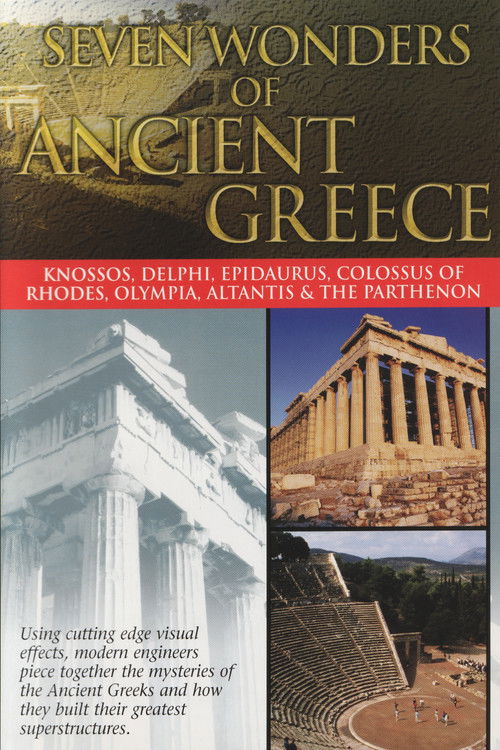
This program presents the stories of the works of architecture regarded by the Greeks and Romans as the most extraordinary structures of antiquity: the Hanging Gardens of Babylon, The Statute Of Zeus, the Temple of Artemis, the Mausoleum of Halicarnassus, the Pharos of Alexandria and the Pyramids of Egypt and more.
Greece, a land of breathtaking beauty and light. A land where science, art and inspiration from the gods combined to produce some of the world's greatest marvels of architecture and design. The ancient Greeks used buildings and structures to reflect the variety of life at the core of their civilisation - they built the first theatres, staged the first sports events and worshipped in some of the most spectacular temples ever built.
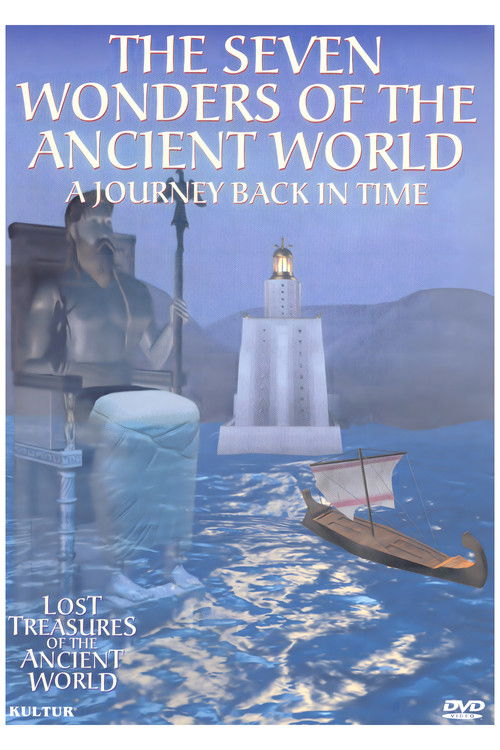
Noted scholar John Romer takes us on a tour of the seven wonders of the ancient world. This program presents the stories of the works of architecture regarded by the Greeks and Romans as the most extraordinary structures of antiquity: the Hanging Gardens of Babylon, The Statute Of Zeus, the Temple of Artemis, the Mausoleum of Halicarnassus, the Pharos of Alexandria and the Pyramids of Egypt and more.
The Romans saw the Seven Wonders of the Ancient World as the crowning achievements of their predecessors. Through stunning on-location and re-created visuals, learn how and why they were built and how they dazzled the ancients.
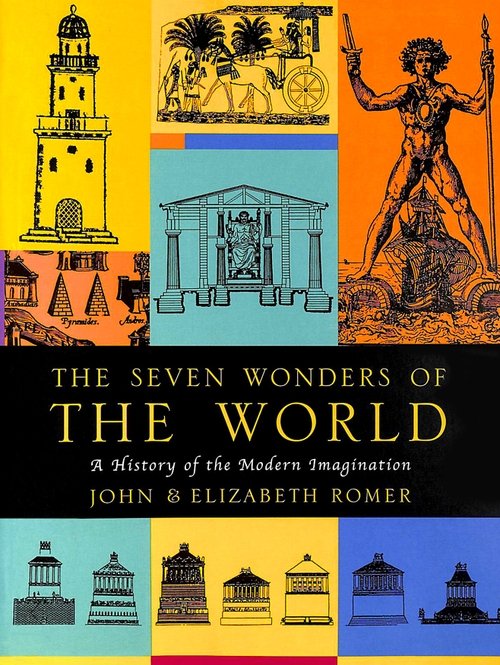
Documentary discussing the seven manmade wonders listed by Philo of Byzantium 2000 years ago: the Colussus of Rhodes, the statue of Zeus at Olympus, the Mausoleum at Halicarnassus, the temple to Artemis at Ephesus, the pyramid of Giza, the Pharos of Alexandria and the Hanging Gardens of Babylon.
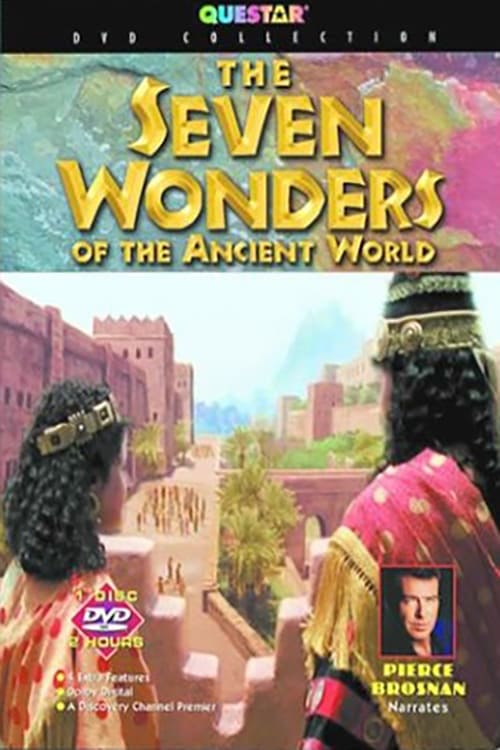
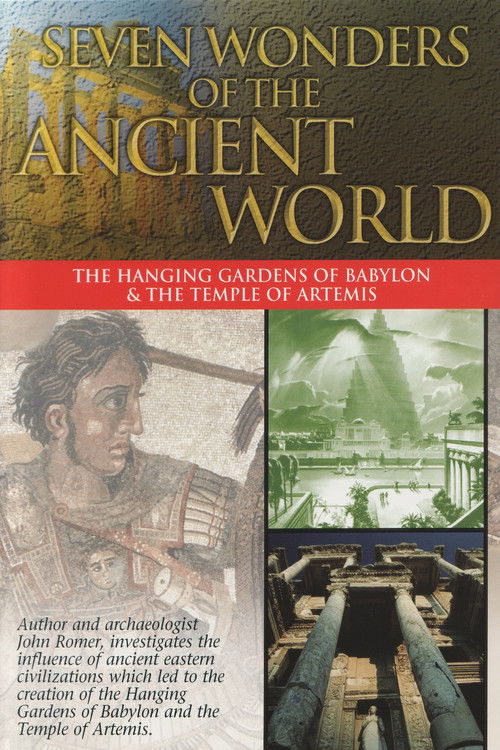
Explore with host John Romer, the influence of ancient eastern civilizations. The Hanging Gardens of Babylon, in what is now Iraq, were rumoured to be part of the palace of Nebuchadnezzar. Today, scientists believe that the exotic gardens were actually more fable than fact. The Temple of Artemis at Ephesusm in modernday Turkey, was built to honour the mother goddess. She was a powerful force for many different people - the Romans knew her as Diana, the Anatolians as Kybele - and her temple was one of the holiest shrines in Alexander the Great's world
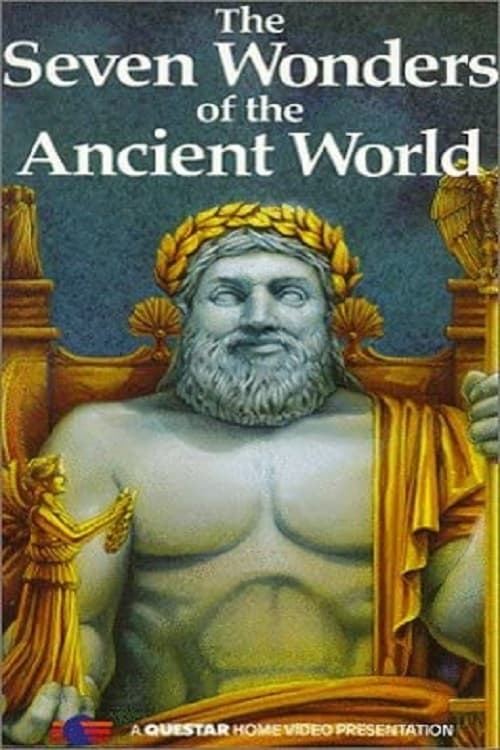
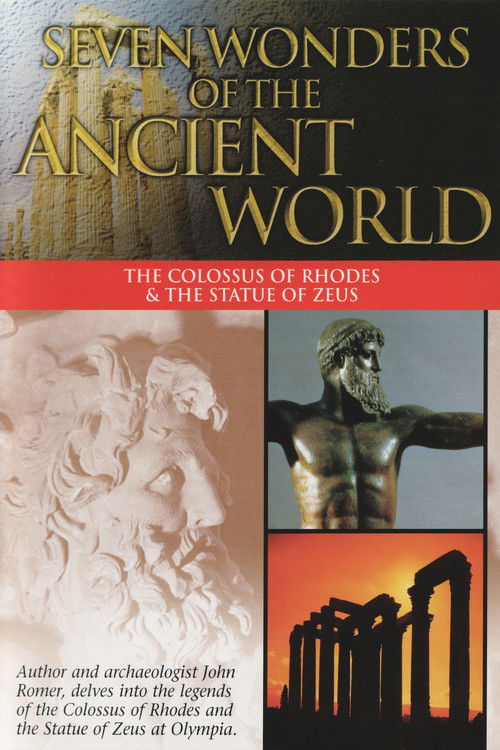
Explore the birth of the iage of "The New Man" in human hostory. Delving into the legends if the Colossus od Rhodes and the Statue of Zeus at Olympia, host John Romer demonstrates how these monuments projected a new vision of the human form into the popular consciousness. A mmoth figure of ivory and gold, the Statue of Zeus at Olympia ruled over the Olympic games. Before this venerable statue lay a huge, shallow pool of olive oil, which reflected light onto the figure. The Colossus of Rhodes was built with sheets of bronze and stood guard over the island of Rhodes. Perhaps the most astounding aspect of both monuments was that the sculptors modelled their faces in the image of man. Today, this image is mirrored in our own Statue of Liberty,
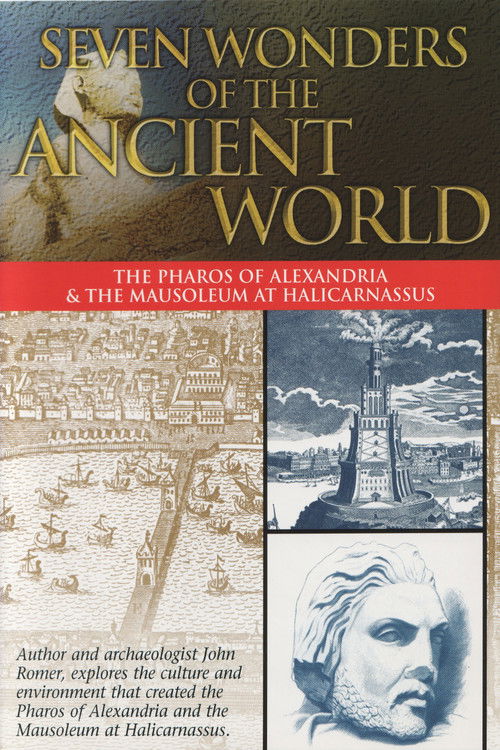
Host John Romer ventures to the sites of two ancient cities created by Alexander the Great - cities that were considered among the most beautiful and unusual the world had ever seen. We also explore the culture and environment that created several of the seven wonders. This episode examines two unparalleled testaments to the power of the era: The Pharos (Lighthouse) at Alexandria, which stood more that 300 feet, making it the tallest structure of its time, and the Mausoleum at Halicarnassus, which was considered one of the greatest tombs ever created. The Mausoleum's perimieter was not decoreated with icons of ancient gods, as was the custom of the time, but with ennobled and enlarged figures of real people. These statues are thought to have been an inspiration for the citizens - telling them they could be as great as the gods.
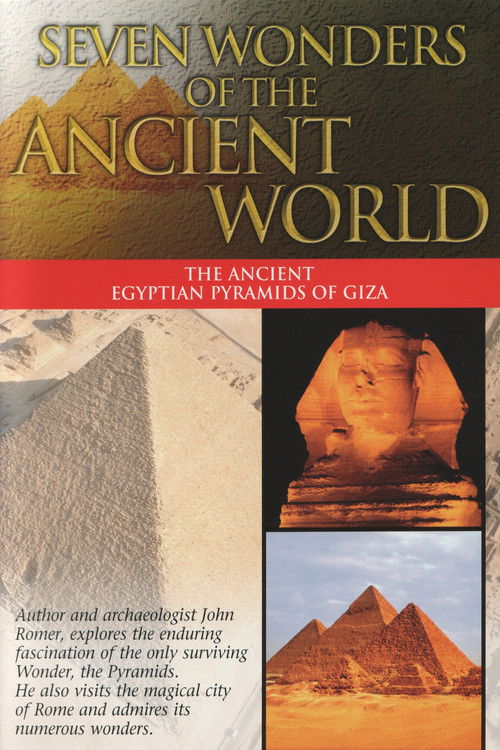
Author and archaeologist, John Romer, contemplates the mystical aspects of the Seven Wonders, exploring the enduring fascination of the only surviving Wonder, the Pyramids. John then focuses his attention on the city of Rome which had become a magical city, surrounded by a wall of iron enclosing seven hills, one for each day of the Creators rest. There were 365 squares in Rome, 365 streets, 365 palaces for the popes and each palace had 365 steps and each step was covered with bread enough to feed the world. It was a dream of poor people. imagining a legendary past. A past of endless wealth and wonder. Ghosts of Wonder demonstrates how the story of the Wonders is also the story of the modern imagination and has John Romere travelling from Australia to New York to illustrate how people are still haunted by ghosts of the ancient past.
Made entirely of Scottish film archive, a journey into our collective past, the film explores universal themes of love, loss, resistance, migration, work and play. Ordinary people, some long since dead, their names and identities largely forgotten, appear shimmering from the depth of the vaults to take a starring role. Brilliantly edited together, these silent individuals become composite characters, who emerge to tell us their stories, given voice by King Creosote's poetic music and lyrics
This film dives into the world of Amazon, its story and view of the world. It offers a large social fresco backed up by an in-depth investigation where private lives meet the mega-machine.
The film takes you on a journey from the conception of this musical partnership and the first demos recorded in Californian desert by - what became - the Post Pop Depression band that included Dean Fertita (QOTSA) and drummer Matt Helders (Arctic Monkeys), and onto the release of the album, proceeded by a sold-out American and European Tour that featured the epic performance at the Royal Albert Hall in London.
An investigation into the tragic end of Apollo 18, the last US mission to the moon in 1973.
A look back at the life and career of Japanese guitarist hide, who died under questionable circumstances in 1998.
A gifted singer, struggling with addiction on the streets of Skid Row, sets out on a journey to transform his life.
The Dirty Three are the rough and ready jewels in the crown of Australian rock and roll history. Born from the need to put food on the table and spawned from the intensely collaborative local Australian music scene in the 80's and early 90's, the Dirty Three pioneered the instrumental rock and roll music scene in Australia with their cathartic, sometimes violent and always spellbinding brand of music. Within a few short years, they achieved local and international success and left Australian shores to take their Music to the world. To this day the band continues to tour the world and serve the music that they see as a real, living and breathing thing that chooses the Dirty Three's custodianship.
Universally accepted as a true icon of the 20th century, Muhammad Ali’s phenomenal achievements spanned sport, politics and religion. One man – photographer William Klein had comprehensive access to the events that shaped Ali’s legend. In 1964, the young gregarious Cassius Clay successfully defeated the seemingly invincible Heavyweight Champion of the World Sonny Liston – the manner of Clay’s victory and his amazing persona made him an instant superstar. Through this incredible period, and Clay’s subsequent rematches with Liston, William Klein enjoyed unrivalled access top Clay’s camp – witnessing at first hand Cassius Clay becoming Muhammad Ali and angering the American people with his allegiance to Islam. Forward to Zaire 1974, and the return of Muhammad Ali to the world stage to face another invincible champion George Foreman. As Ali reclaimed the crown for a second time, Klein was ever present, capturing the full story at close quarter.
Having become a world star thanks to James Bond, Sean Connery, who died in 2020, has never stopped trying to shed the image of a sexy and slightly brutal macho that stuck to 007. A look back at an eclectic career, carried out with panache.