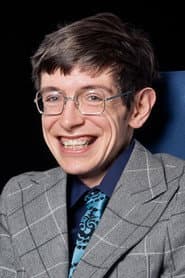
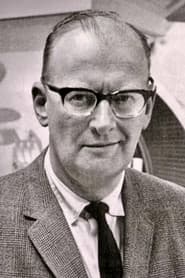
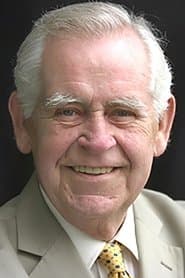
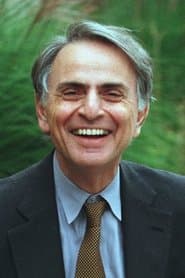
In a studio setting, Stephen Hawking, Arthur C. Clarke and Carl Sagan (who joins them via satellite) discuss the Big Bang theory, God, our existence as well as the possibility of extraterrestrial life.
Stephen Hawking
as Self
Arthur C. Clarke
Magnus Magnusson
as Presenter
Carl Sagan
This movie explores the saga of the telescope over 400 years - the historical development, the scientific importance, the technological breakthroughs, and also the people behind this ground-breaking invention, their triumphs and failures.
COLLISION carves a new path in documentary film-making as it pits leading atheist, political journalist and bestselling author Christopher Hitchens against fellow author, satirist and evangelical theologian Douglas Wilson, as they go on the road to exchange blows over the question: "Is Christianity Good for the World?". The two contrarians laugh, confide and argue, in public and in private, as they journey through three cities. And the film captures it all. The result is a magnetic conflict, a character-driven narrative that sparkles cinematically with a perfect match of arresting personalities and intellectual rivalry. COLLISION is directed by prolific independent filmmaker Darren Doane (Van Morrison: Astral Weeks Live at the Hollywood Bowl, The Battle For L.A., Godmoney).
A documentary film that takes us on a scientific and spiritual journey where we discover that by changing one's perceptions, the human body can heal itself from any disease.
Twelve men who belong to one of the world's most exclusive fraternities -- people who've walked on the surface of the moon -- are paid homage in this documentary. Using newsreel footage, rare NASA photographs, and digitally animated re-creations, Magnificent Desolation: Walking on the Moon examines the Apollo missions between 1969 and 1972 which put astronauts on the moon.
This extraordinary film features NASA film footage enhanced by AI-based software and other image processing. The clarity of the images gives viewers a whole new perspective on what it was like to step onto lunar soil and ramble about the alien landscapes. The film shows how teams of astronauts collected evidence that has revolutionized our understanding of the origin of both Earth and the moon.
A feature documentary about the journey of mankind to discover our true force and who we truly are. It is a quest through science and consciousness, individual and planetary, exploring our relationships with ourselves, the world around us and the universe as a whole.
Can Homo sapiens evolve into Homo spatius? For over 50 years now, we have been testing our human nature in our effort to conquer outer space, and still 30 years away from a possible human exploration of Mars, a question remains: Can our body take such travels? Will it ever adapt? Combining human adventure and the exploration of the human body, this film offers unique insights into the physical and psychological effects of space travel on the Astronauts and measures the impact on medical sciences.
World War II comes to an end. Tokyo is a destroyed place, without law, driven by hunger and greed. From over 100,000 pages of declassified CIA documents and hours of newly discovered footage, recorded by American occupation charges and private individuals, the documentary shows Tokyo during this crucial year, Year Zero. Observed from the point of view of a young man who finds himself transported in time, the NHK documentary uses color images and state-of-the-art video techniques to reveal how a desperate population is published as the foundations of today's megalopolis.
The Hobbit Enigma examines one of the greatest controversies in science today: what did scientists find when they uncovered the tiny, human-like skeleton of a strange creature, known to many as the Hobbit, on the Indonesian island of Flores in 2003?
Trees talk, know family ties and care for their young? Is this too fantastic to be true? German forester Peter Wohlleben and scientist Suzanne Simard have been observing and investigating the communication between trees over decades. And their findings are most astounding.
With exclusive access, the thrilling, untold story of Virgin Orbit's bid to launch satellites from Cornwall and propel the UK into the space race. Including the moment it all went wrong.
Laika, a stray dog, was the first living being to be sent into space and thus to a certain death. A legend says that she returned to Earth as a ghost and still roams the streets of Moscow alongside her free-drifting descendants. While shooting this film, the directors little by little realised that they knew the street dogs only as part of our human world; they have never looked at humans as a part of the dogs’ world.
This film consists of three parts. The first dramatizes the life of the founder of Soviet astronautics, Konstantin Tsiolkovsky; the second describes the development of rocket technology; and the third visualizes the future with enactments of the first manned spaceflight, spacewalk, space station construction and humans on the moon.
Klaus Kinski has perhaps the most ferocious reputation of all screen actors: his volatility was documented to electrifying effect in Werner Herzog’s 1999 portrait My Best Fiend. This documentary provides further fascinating insight into the talent and the tantrums of the great man. Beset by hecklers, Kinski tries to deliver an epic monologue about the life of Christ (with whom he perhaps identifies a little too closely). The performance becomes a stand-off, as Kinski fights for control of the crowd and alters the words to bait his tormentors. Indispensable for Kinski fans, and a riveting introduction for newcomers, this is a unique document, which Variety called ‘a time capsule of societal ideals and personal demons.’
Archival material from the original NASA film footage – much of it seen for the first time – plus interviews with the surviving astronauts, including Jim Lovell, Dave Scott, John Young, Gene Cernan, Mike Collins, Buzz Aldrin, Alan Bean, Edgar Mitchell, Charlie Duke and Harrison Schmitt.