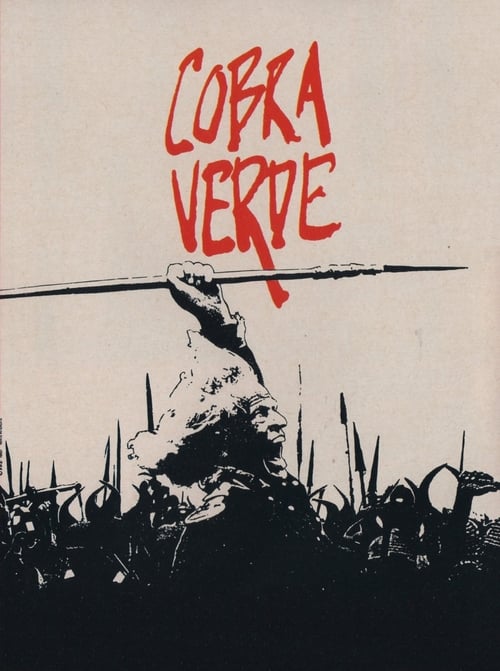
The film recounts in three parts by three different directors the Algerian people's struggle for independence after 130 years of French colonization: Ahmed Bedjaoui "Les Fedayines," Rabah Laradji "La Bombe," Sid Ali Mazif "Le Messager."
Dalila Ouyed
as
Areski Nebti
This excellent feature-length documentary - the story of the imperialist colonization of Africa - is a film about death. Its most shocking sequences derive from the captured French film archives in Algeria containing - unbelievably - masses of French-shot documentary footage of their tortures, massacres and executions of Algerians. The real death of children, passers-by, resistance fighters, one after the other, becomes unbearable. Rather than be blatant propaganda, the film convinces entirely by its visual evidence, constituting an object lesson for revolutionary cinema.
In prison in colonial Algeria, shortly after the end of the Second World War, three indigenous cellmates make out. Once free, they attack the authority represented by the triad of the boss, the gendarme and the administrator. “Living the colonial condition,” confided Tewfik Farès, “is something! It’s not sociologically or historically speaking. It’s life. And I think that’s all there in it. [...] For a hundred and thirty years, we wait. We hold back. We push back. We hope. At the same time, on different occasions, there are skirmishes, unrest.
An Italian in East Africa having an affair with a coloured woman realises that his treatment of her is as tyrannical as more overt superior colonialist dogma. Based on a novel by Enrico Emmanuele.
A landscape gardener is hired by famous architect Le Nôtre to construct the grand gardens at the palace of Versailles. As the two work on the palace, they find themselves drawn to each other and are thrown into rivalries within the court of King Louis XIV.
Paul, a teenager in the underground scene of early-nineties Paris, forms a DJ collective with his friends and together they plunge into the nightlife of sex, drugs, and endless music.
Based on the experiences of Agu, a child fighting in the civil war of a West African country. Follows Agu's journey as he's forced to join a group of soldiers. While he fears his commander and many of the men around him, his fledgling childhood has been brutally shattered by the war raging through his country, and he is at first torn between conflicting revulsion and fascination.
Film describes the miserable existence of a charcoal-burner who is barely able to feed his family. His search for work in town ends in failure and he is forced to return to his village.
A French teacher in a small Algerian village during the Algerian War forms an unexpected bond with a dissident who is ordered to be turned in to the authorities.
French-language version of "The Big House" (MGM, 1930), with Charles Boyer in Chester Morris's role, filmed by MGM parallel to the English-speaking version, at a time when good subtitles weren't yet in use.
After brilliant studies in France and a 15-year absence from his homeland, Adama, a young graduate of the Ecole Polytechnique, rushes back to Senegal. He is alarmed by a message informing him of the sudden decline in his grandmother's health. Upon arriving in Dakar, Adama discovers that his grandmother is in perfect shape... Was this a deliberate ploy to get him back home, and if so, why?
Algeria. Benjamin, Kateb and Antoine are three teenagers from three religious backgrounds who never should have met. But they share the same passion for football and the same disregard for the disapproving looks which their unusual friendship draws.
A French silent film serial which follows the exploits of the archvillain Fantômas, who commits crimes while eluding Inspector Juve's tireless persecution.
August Bolte, the richest man in a settlement in German East Africa in the period before World War I, is called "Mamba" by the locals, which is the name of a deadly snake. Despised by the locals and the European settlers alike for his greed and arrogance, Bolte forces the beautiful daughter of a destitute nobleman to marry him in exchange for saving her father from ruin. Upon her arrival in Africa, she falls in love with an officer in the local German garrison. When World War I breaks out, Bolte, unable to avoid being conscripted, foments a rebellion among the local natives.
In a single static shot a man is threatened with death at another's gunpoint.
The son of a French colonialist in Algeria returns to Algeria after learning that his father is ill. Memories from childhood return. He also must deal with some problems involving the Algerian fight for independence.
A trio of stepbrothers accompany their paralysed father on a jaunt to Normandy where the old boy saw combat and romantic action during the war.
The story of Charles de Foucauld, born September 15, 1858 in Strasbourg (France) and died December 1, 1916 in Tamanrasset in Algeria during the French colonial period, was a cavalry officer of the French army who became an explorer and geographer, then Catholic religious, priest, linguist and hermit in the Hoggar desert in Algeria.
Recognized as Uganda’s first action film, Who Killed Captain Alex? is about the aftermath of a police raid in Kampala in which a police captain is killed.