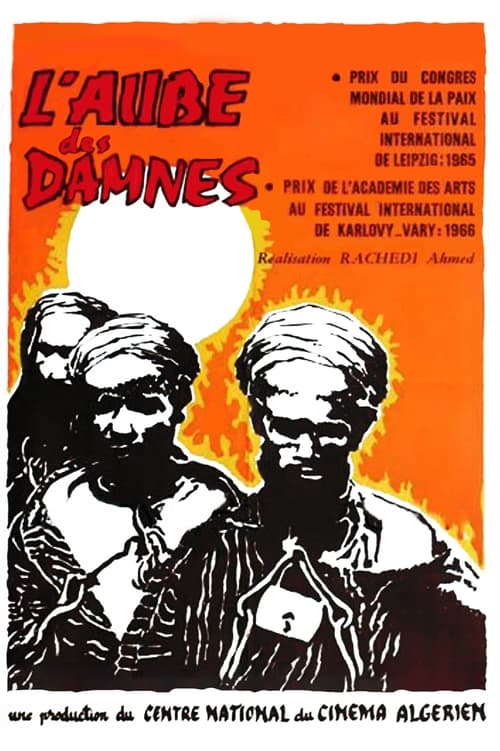
Composed of three parts, this montage film addresses all aspects relating to the role of women in Algerian society: their ambitions, the role of the State and the help of organizations that were created during the struggle for female emancipation. .
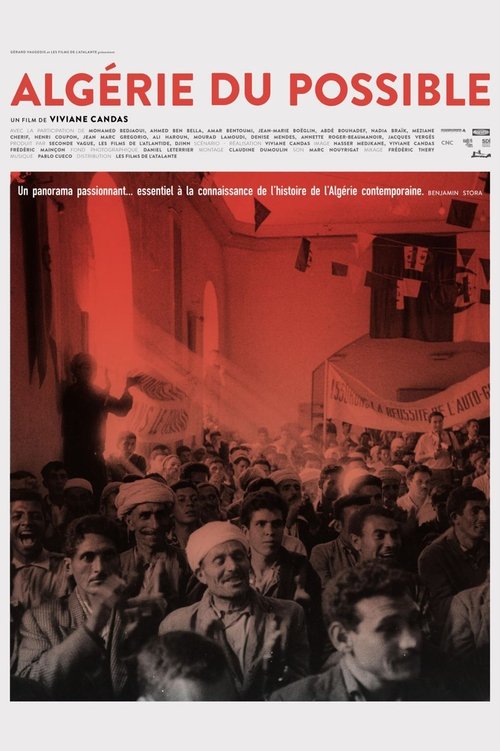
By meeting his former comrades in combat, the film follows the journey of Yves Mathieu, anti-colonialist in Black Africa then lawyer for the FLN. When Algeria became independent, he drafted the Decrees of March on vacant property and self-management, promulgated in 1963 by Ahmed Ben Bella. Yves Mathieu's life is punctuated by his commitments in an Algeria that was then called "The Lighthouse of the Third World". The director, who is his daughter, returns to the conditions of his death in 1966.
This excellent feature-length documentary - the story of the imperialist colonization of Africa - is a film about death. Its most shocking sequences derive from the captured French film archives in Algeria containing - unbelievably - masses of French-shot documentary footage of their tortures, massacres and executions of Algerians. The real death of children, passers-by, resistance fighters, one after the other, becomes unbearable. Rather than be blatant propaganda, the film convinces entirely by its visual evidence, constituting an object lesson for revolutionary cinema.
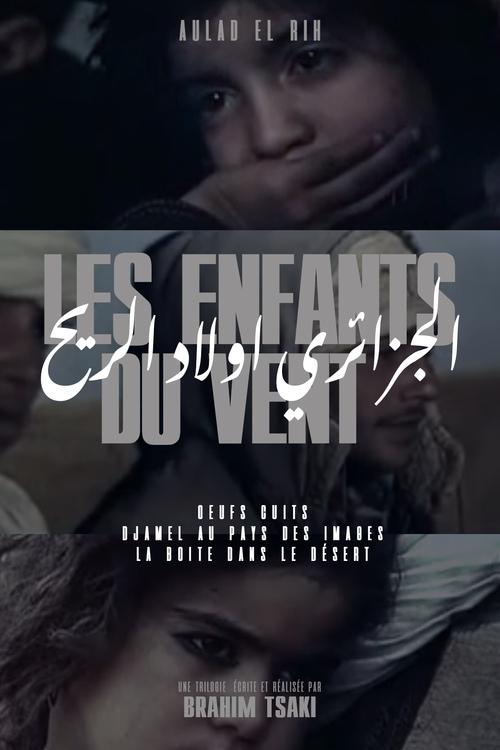
Three short films about abandoned children, left to the omnipotence of silence, of the eye and of the hand but also of abysmal loneliness
The architect André Ravéreau spent a large part of his life in Algeria, he is today an essential reference for Algerian builders of several generations. His daughter Maya, an architect herself, accompanies us to the places of his creations and his research, in the Mzab first where he lived, created, trained other architects in the "desert workshop" and had the oases of the Mzab classified as a UNESCO World Heritage Site. Inspired by tradition to better innovate as in the construction of the Ghardaïa post office, or in that of a very surprising villa... Then in Algiers where he worked to preserve the ancestral heritage of the Casbah, faithfully describing the principles of his construction in line with current concerns, such as the choice of environmentally friendly materials and avoiding energy waste, as testified by the architect Yasmine Terki, a great specialist in earth materials.
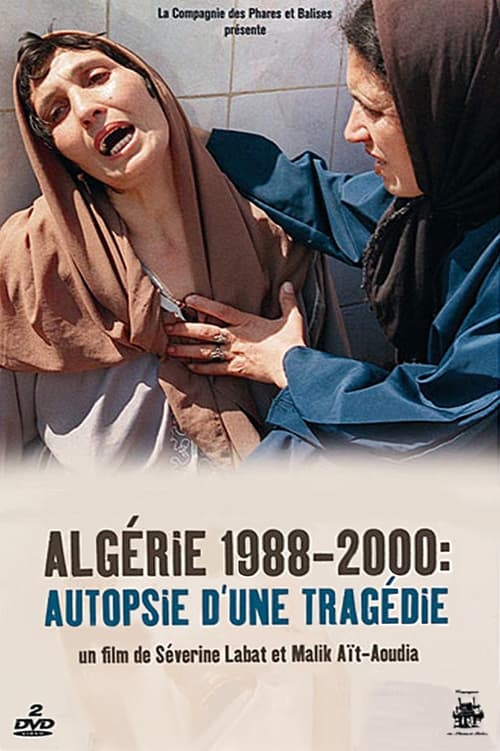
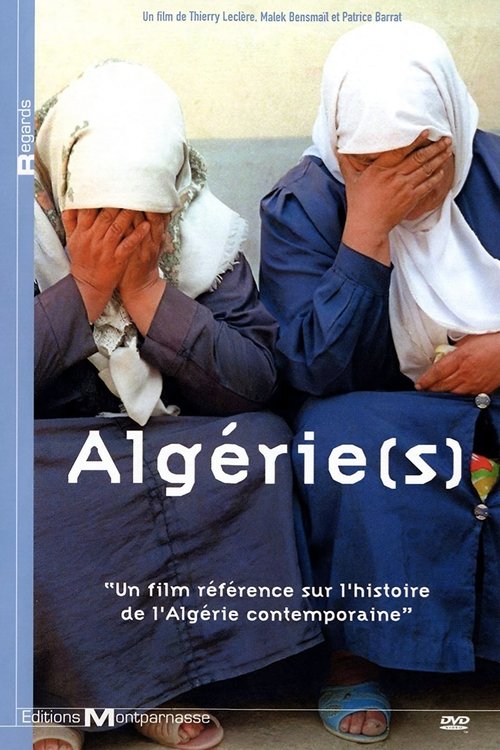
Documentary series in two parts: 1. A people without a voice (80'), 2. A land in mourning (78'). Part 1: A people without a voice: October 88, the Algerian Republic is faltering, the film goes back to the sources of this tragedy and explains how the face to face between the Islamists and those in power began. The interruption of the legislative elections of December 91, followed shortly after the assassination of President Boudiaf in June 92, plunged Algeria into chaos. Part 2: A land in mourning: the cycle of violence that leads to massacres and the economic and geopolitical underside of the war. More than 100,000 deaths, an incredible degree of barbarity, massacres, apparently incomprehensible... Behind the official window of power and its artificial political scene, hides a shadow power.
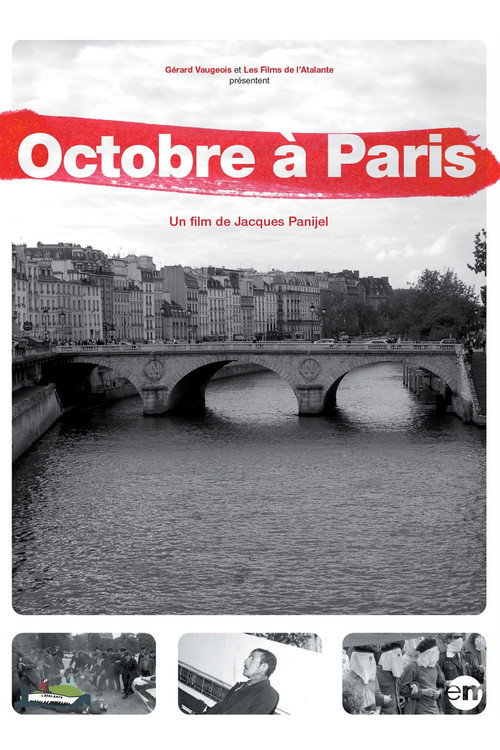
On October 17, 1961, 30,000 Algerians demonstrated peacefully in Paris to protest the discriminatory curfew imposed upon them and to demand Algerian independence. Under the authority of the then Prefect of Police, Maurice Papon, the demonstration was brutally repressed, resulting in the deaths of dozens of Algerians. Historians cite eleven thousand arrests, dozens of murders, demonstrators thrown into the Seine, hundreds of expulsions, and just as many complaints that went unanswered; all for a night that would become a blind spot in the national narrative. No investigation, no trial, and certainly no commemoration. The day after the demonstration, Jacques Panijel began filming *October in Paris* to alert the public to the massacre that had just taken place in the streets of Paris. The film was banned by the French authorities. It obtained a distribution license in 1973. It was first shown in theaters in October 2011.
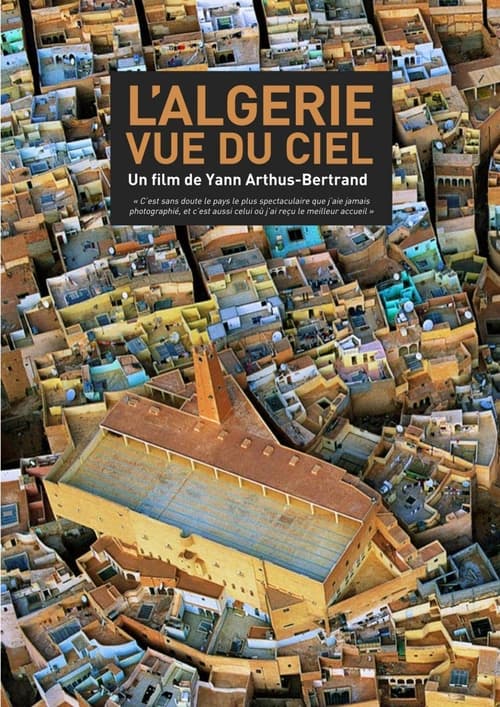
Algeria from above is the first documentary made entirely from the sky on Algeria. Through the eye of the famous Yann Arthus-Bertrand this documentary vividly depicts this great country, and its vibrant cultural and natural treasures. From North to South and from West to East, it shows us the entirety of Algeria, lives in the large hectic coastal cities, Atlas mountains, oases of the Sahara or gentle hills of the Sahel. With a rich past that seems to have crossed all civilizations, and a territory where all natural environments amalgamate, Algeria appears here in all its diversity and its unity.
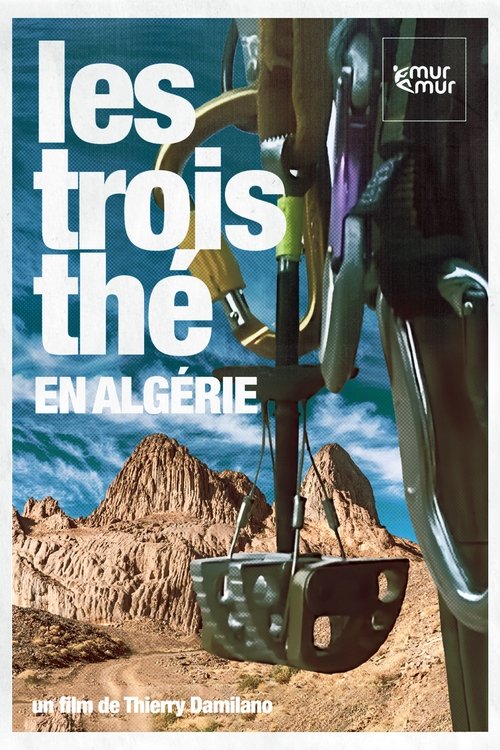
Thierry Damilano and his team of Tuareg guides will take you on a trek in the Algerian Sahara, to discover the local culture with a mandatory visit to the hermitage of Father de Foucauld facing Assekrem, then climbing the legendary peaks of the Hoggar massif.
It is with the architect Jean-Jacques Deluz, that we visit Algiers, "his city" since 1960 and that he left only two years during the worst moments of terrorism. From the Casbah, in the 19th century center, including the cities of Fernand Pouillon and Bab El Oued to arrive at the new city of Maelma which he built today. Tender look, but without concessions at the same time architectural promenade and meetings with actors of art and culture: Djamel Allam, the singer Kabyle, Djamel Amrani, the poet, friend of Jean Sennac, Mohamed Ben Gettaf, Dramaturge and director of the theater of Algiers, Souad Delmi-Bourras, young designer Boudjemàa Kareche, director of the Algerian cinema, Amine Kouider, conductor, who relaunches the opera in Algeria, the painter Malek Salah, and others. A look at Algeria and the Algerians, far from the clichés of certain media, the bias being to seek signs of hope rather than "blood and tears".
Le Chant du Hoggar, a fictionalized documentary directed by Pierre Ichac, which takes as its theme the adventurous life of the Tuaregs of yesteryear, the setting being the lesser-known mountains and valleys of the Hoggar, and the actors being the Tuaregs themselves. This production, of considerable interest, was filmed last year by Pierre Ichac, a project manager for the General Government of Algeria. For six months, the young director, who traveled more than 7,000 kilometers by car and about 1,000 kilometers by Méhari through the Hoggar mountains, recorded 8,000 meters of film. The beautiful Fatimata reigns over all hearts in the wandering Tuareg tribe, with her herds, in the high valleys of the Hoggar. But she loves The Lion, the bravest of the young warriors of an enemy tribe. And it is Fatimata's name that The Lion lovingly carves on the rocks of the mountain.
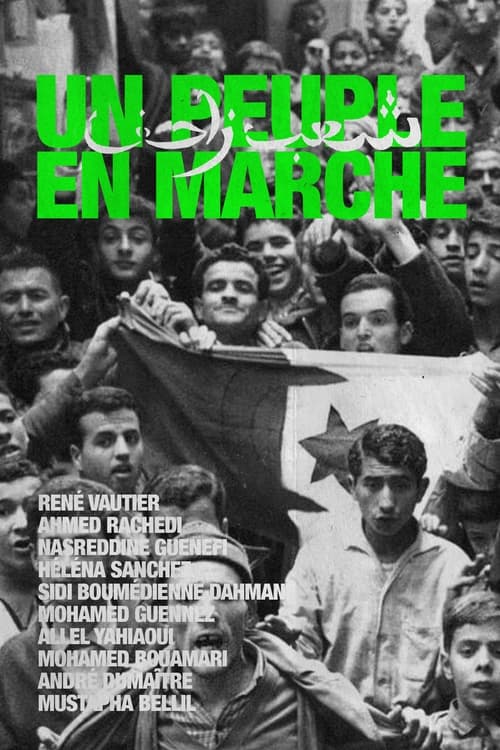
In 1962, René Vautier, together with some Algerian friends, organised the audio-visual formation centre Ben Aknoun to encourage a "dialogue in images" between the two factions. Together with his students he made a film that shows the history of the Algerian War and of the ALN (National Liberation Army), and life during the reconstruction.
Collectively made Algerian film.
The construction of a pipeline from the Sahara to the Mediterranean Sea.
In an age when women were incapable of joining the artistic dialogue, Lilias Trotter managed to win the favour of celebrated critics.
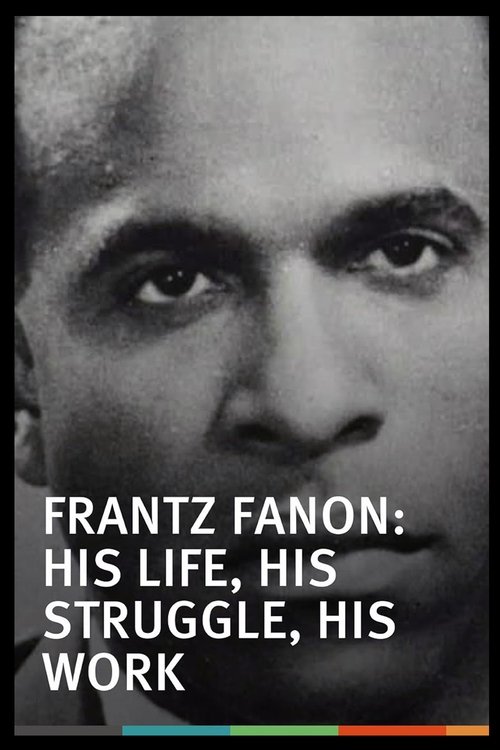
It is the evocation of a life as brief as it is dense. An encounter with a dazzling thought, that of Frantz Fanon, a psychiatrist of West Indian origin, who will reflect on the alienation of black people. It is the evocation of a man of reflection who refuses to close his eyes, of the man of action who devoted himself body and soul to the liberation struggle of the Algerian people and who will become, through his political commitment, his fight, and his writings, one of the figures of the anti-colonialist struggle. Before being killed at the age of 36 by leukemia, on December 6, 1961. His body was buried by Chadli Bendjedid, who later became Algerian president, in Algeria, at the Chouhadas cemetery (cemetery of war martyrs ). With him, three of his works are buried: “Black Skin, White Masks”, “L’An V De La Révolution Algérien” and “The Wretched of the Earth”.
A documentary road movie with René Vautier In the aftermath of Algeria's independence, René Vautier, a militant filmmaker, considered "the dad" of Algerian cinema, set up the cine-pops. We recreate with him the device of itinerant projections and we travel the country in ciné-bus (Algiers, Béjaïa, Tizi Ouzou, Tébessa) to hear the voices of the spectators on the political situation, youth and living conditions of men and Of women today.
This FitzPatrick Traveltalk short visits the cities of Casablanca, Rabat, and Marrakesh in Morocco, as well as the city of Algiers in Algeria.
Many of them participated in the struggle for Algerian independence. There are "those who believed in heaven", priests, Christians committed against torture, friends of the "natives", there are "those who did not believe in it", communist activists, students, progressive intellectuals, others remained in this country because they could not imagine living anywhere other than in this land of all passions. They are European and chose to stay in Algeria after independence, most of them opted for Algerian nationality. The film is another vision of the history of Algeria from the end of the fifties to the present day, told by these Europeans filmed at home, or in the context of their activities, illustrated by unpublished archive documents.