Review the discovery of Tutankhamun's tomb by Howard Carter in 1922 with archival photographs and reviews the highlights of the treasure trove with anecdotal stories and conjecture about the Boy King's life and death.
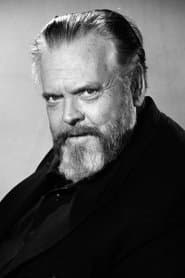
Orson Welles
as Himself - Host
Florida, 1994. Artist Mike Diana is convicted on an obscenity charge in the wake of an undercover police officer purchasing his limited edition zine Boiled Angel. Here is the very unusual story of what led to this First Amendment debacle happening for the first time in the United States.
Immigrant residents of a “shift-bed” apartment in the heart of New York City’s Chinatown share their stories of personal and political upheaval. As the bed transforms into a stage, the film reveals the collective history of the Chinese in the United States through conversations, autobiographical monologues, and theatrical movement pieces. Shot in the kitchens, bedrooms, wedding halls, cafés, and mahjong parlors of Chinatown, this provocative hybrid documentary addresses issues of privacy, intimacy, and urban life.
Follows the behind-the-scenes work of Studio Ghibli, focusing on the notable figures Hayao Miyazaki, Isao Takahata, and Toshio Suzuki.
Functions without theaters, murals without walls, clothes without fabrics and students without schools says the necessary about the state abandonment and but also talent and creativity of Colombians, which it has nothing to lose. The documentary tells the story of the beginnings and resilience of several artist from Barranquilla in different disciplines in continuing to maintain and diversify the living culture, that remain to exist.
This award-winning documentary looks at the life and times of Judith Deim, an artist and musician who gained an international reputation for her expressive paintings and her friendships with the likes of John Steinbeck and Garcia Lorca, and who also influenced many of her children and grandchildren to take up lives in the arts.
A fascinating exploration of the legends accredited to the mysterious religious and military order of the Knights Templar. The Order of the Templar, created after the first Crusade and disbanded by the King of France in 1307, gave birth to fabulous legends which persist to this day. Despite in-depth research, many enigmas still surround this mythical order and its legends - not least whether mysterious discoveries at Gisors and Oak Island can really hold the fabled Templar treasures. Now, this insightful documentary relives an epic adventure based on facts, places, puzzles and legends that feed faiths and have fascinated generations.
A stop motion/collaged based independent short film plays with the recontextualisation of memories and how time distorts them.
When an art gallery robbery leads to the death of the contemptible gallery manager, former Boston detective Jeff Jackson teams up with local doctor - and old flame - Dr. Zee Madeiras, to catch the killer.
The 25-minute long documentary details the entirety of the artistic process from Ralph Ziman’s inspiration for the project and acquisition of the MiG-21, to the international collaboration to create the beadwork and assemble the art piece, leading up to the project’s unveiling at The Museum of Flight. Also covered in the film is background on the MiG-21, including details about the plane used (decommissioned tail number 8971) and how MiGs’ presence in the Angolan Civil War ultimately hastened the end of white rule in South Africa. See historical footage and personal interviews, including the Polish pilot who flew tail number 8971 in the 1980s, a South African Border War pilot and the team of artists and craftspeople in Southern Africa and the United States who took on the huge task of covering the aircraft in tens of millions of glass beads.
Ashes and Snow, a film by Gregory Colbert, uses both still and movie cameras to explore extraordinary interactions between humans and animals. The 60-minute feature is a poetic narrative rather than a documentary. It aims to lift the natural and artificial barriers between humans and other species, dissolving the distance that exists between them.
The New Modernists: Folds, Blobs and Boxes, Architecture in the Digital Era approaches the topic of artistic technological advances, and the modern architects who were educated with this new influx of electronic techniques. In this detailed portrait we visit the exhibition entitled Folds, Blobs + Boxes at the Carnegie Museum of Art where ten architect/designers discuss their approaches to digital architecture with curator of the exhibition, Joseph Rosa. By abandoning the traditional notions of aesthetic beauty, scale and proportion, a new freedom has formed amongst these contemporary creators.
Up until the end of her life, Beatrice Wood continued to influence younger artists with her definitive, free-wheeling ways. She was central to the American Dada movement and was the last surviving member of this group. In this program she recalls her friends Man Ray, Picabia and others, and her ex-husband Marcel Duchamp. She died in 1999 at 105 years of age.
Art in glorious motion. Bright, colourful and often intensely dynamic, the 1970 'Kinetics' show at London's Hayward Gallery was a major international showcase of the new active sculptural art. Works by Jean Tinguely, Nam June Paik, Peter Logan, Takis, Jesus Raphael Soto and many others dazzled a wide-eyed public. This priceless film record of the show captures a kaleidoscope of neon lights, rotating metal, squirting water and stroboscopic projections. Director Lutz Becker, of the Slade School of Art Film Unit - who would go on to direct Double-Headed Eagle (1973), a documentary account of Hitler's rise to power - uses a variety of textural, electronic sounds (courtesy of Peter Sahla) to evoke the unusual experience. The show was enormously popular, with visitors filling out the gallery day after day.
The genesis of To Open Eyes: A Film on Josef Albers developed from Arnold Bittleman's appreciation for Albers while Bittleman was a student at Yale University in the 1960s. Wanting to preserve Albers’s teaching method—learning by doing—Bittleman set out with filmmaker and editor Carl Howard to make a visual record of Albers teaching students how to see and use color as a visual grammar. The film includes archival footage of Josef Albers at home in conversation with Bittleman, as well as footage from Black Mountain College and Yale University.
Belgian art historian and filmmaker Paul Haesaerts (1901–1974) made a significant contribution to the promotion of modern Flemish art. In the late 1940s, he started experimenting with the medium of film to practice a new form of lens-based art criticism. The understudied documentary "Quatre peintres belges au travail" (1952) presents Belgian artists Edgar Tytgat, Albert Dasnoy, Jean Brusselmans and Paul Delvaux at work in their studio. On a large sheet of glass placed in front of the camera, they each paint one of the seasons that also represent a stage in a person’s life. A close reading of this Kodachrome color film sheds light on the context of mid-century art reproductions, mass media and post-war Flemish culture. It also examines in what way this film operates as Haesaerts’s concept of cinéma critique, while raising questions as to the way Haesaerts attempted to reconcile the spatial art of painting with the temporal medium of film.
Since its opening in 1948, The Farnsworth Art Museum has been a source of community pride and a beacon that draws visitors to Rockland each year. Told through first person interviews with Rockland natives and residents, historical photographs and footage, the film follows the museum’s growth from the reading of Lucy Farnsworth’s will, through the construction of the museum facility, to the internationally renowned institution that it is today.
The documentary follows Polish artists on the first sailing expedition to Antarctica, their struggles, the first ever concert by Polish artists there, the first wet plate photography session & rare underwater encounters with leopard seals & other wildlife.