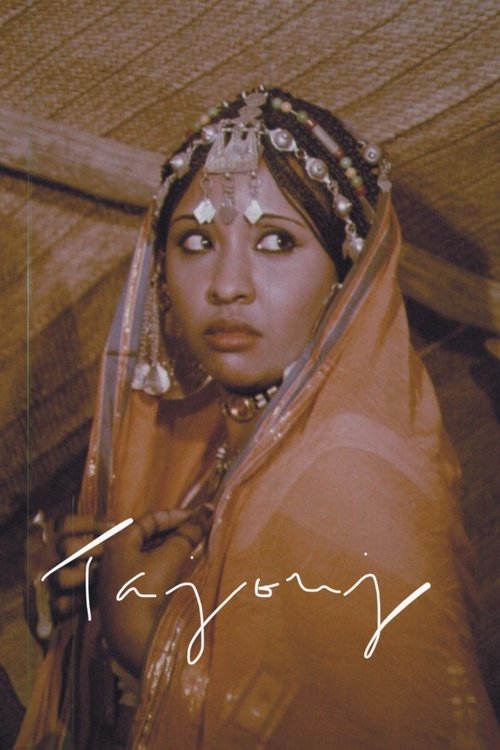
At the time of Tunisian independence, owners of large boats decide to sell, while many small fishermen soon find themselves without work. Their wives then decide to pool their gold rings to sell them and thus buy boats.
Claudia Cardinale
as A young woman
René Vautier
as Commentator
A couple sets up an African game preserve, only to have British and Italian armies fight over the waterholes.
In 1896, Ethiopia, an African nation, largely armed with spears and knives, defeats a well-equipped and organized Italian military bent on colonization.
An epic tale spanning forty years in the life of Celie, an African-American woman living in the South who survives incredible abuse and bigotry. After Celie's abusive father marries her off to the equally debasing 'Mister' Albert Johnson, things go from bad to worse, leaving Celie to find companionship anywhere she can. She perseveres, holding on to her dream of one day being reunited with her sister in Africa.
Tells the life story of Danish author Karen Blixen, who at the beginning of the 20th century moved to Africa to build a new life for herself. The film is based on her 1937 autobiographical novel.
In 1911, a willful and determined man from peasant stock named Charles Saganne enlists in the military and is assigned to the Sahara Desert under the aristocratic Colonel Dubreuilh.
Documentary made by the U.S. Army Signal Corps after the North African campaign.
The epic tale of a class struggle in twentieth century Italy, as seen through the eyes of two childhood friends on opposing sides.
Documentary following Serbian football coach Zoran Đorđević as he helps form South Sudan's first national football team.
Festival panafricain d'Alger is a documentary by William Klein of the music and dance festival held 40 years ago in the streets and in venues all across Algiers. Klein follows the preparations, the rehearsals, the concerts… He blends images of interviews made to writers and advocates of the freedom movements with stock images, thus allowing him to touch on such matters as colonialism, neocolonialism, colonial exploitation, the struggles and battles of the revolutionary movements for Independence.
The story of Dian Fossey, a scientist who came to Africa to study the vanishing mountain gorillas, and later fought to protect them.
In 2004, a successful banker known as "Mr. Dice" mysteriously disappeared off the face off the earth, along with millions of dollars from investors and friends alike. Desperate to find answers, his best friend Kaspars Roga embarks upon a journey, ultimately leading into the heart of Africa where Mr Dice has reinvented himself… this time as the owner of the diamond mine, begging the question - were they ever really friends? Or was he a pawn in Dice's greater scheme?
It's 1974. Muhammad Ali is 32 and thought by many to be past his prime. George Foreman is ten years younger and the heavyweight champion of the world. Promoter Don King wants to make a name for himself and offers both fighters five million dollars apiece to fight one another, and when they accept, King has only to come up with the money. He finds a willing backer in Mobutu Sese Suko, the dictator of Zaire, and the "Rumble in the Jungle" is set, including a musical festival featuring some of America's top black performers, like James Brown and B.B. King.
Sir Robert Beaumont is behind schedule on a railroad in Africa. Enlisting noted engineer John Henry Patterson to right the ship, Beaumont expects results. Everything seems great until the crew discovers the mutilated corpse of the project's foreman, seemingly killed by a lion. After several more attacks, Patterson calls in famed hunter Charles Remington, who has finally met his match in the bloodthirsty lions.
How African artists have spread African culture all over the world, especially music, since the harsh years of decolonization, trying to offer a nicer portrait of this amazing continent, historically known for tragic subjects, such as slavery, famine, war and political chaos.
A cast of unknown performers are used in this drama about child soldiers fighting a war in an unnamed African country.
25 years ago, Louis Sarno, an American, heard a song on the radio and followed its melody into the Central Africa Jungle and stayed. He than recorded over 1000 hours of original BaAka music. Now he is part of the BaAka community and raises his pygmy son, Samedi. Fulfilling an old promise, Louis takes Samedi to America. On this journey Louis realizes he is not part of this globalized world anymore but globalization has also arrived in the rainforest. The BaAka depend on Louis for their survival. Father and son return to the melodies of the jungle but the question remains: How much longer will the songs of the forest be heard?
Edeltraut Hertel - a midwife caught between two worlds. She has been working as a midwife in a small village near Chemnitz for almost 20 years, supporting expectant mothers before, during and after the birth of their offspring. However, working as a midwife brings with it social problems such as a decline in birth rates and migration from the provinces. Competition for babies between birthing centers has become fierce, particularly in financial terms. Obstetrics in Tanzania, Africa, Edeltraud's second place of work, is completely different. Here, the midwife not only delivers babies, she also trains successors, carries out educational and development work and struggles with the country's cultural and social problems.
This in-depth look into the powerhouse industries of big-game hunting, breeding and wildlife conservation in the U.S. and Africa unravels the complex consequences of treating animals as commodities.
A journey back through Dacia Maraini's and her trips around the world with her close friends cinema director Pier Paolo Pasolini and opera singer Maria Callas. An in-depth story of this fascinating woman's life. Maraini's memories come alive through personal photographs taken on the road as well as her own Super 8 films shot almost thirty years ago.
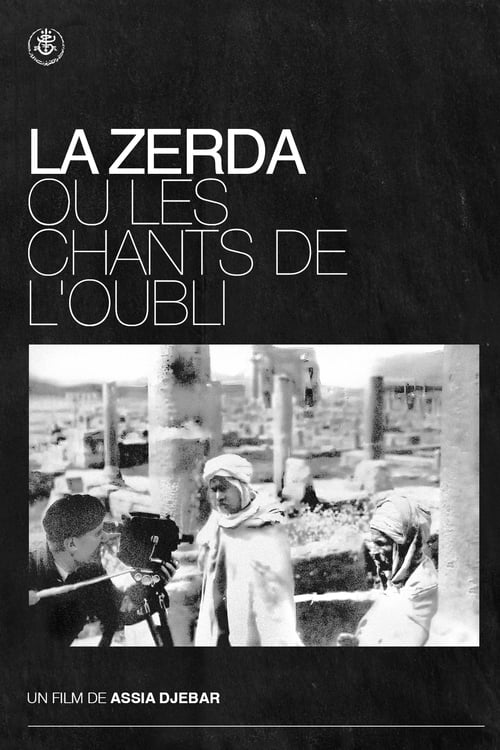
“La Zerda and the songs of oblivion” (1982) is one of only two films made by the Algerian novelist Assia Djebar, with “La Nouba des femmes du mont Chenoua” (1977). Powerful poetic essay based on archives, in which Assia Djebar – in collaboration with the poet Malek Alloula and the composer Ahmed Essyad – deconstructs the French colonial propaganda of the Pathé-Gaumont newsreels from 1912 to 1942, to reveal the signs of revolt among the subjugated North African population. Through the reassembly of these propaganda images, Djebar recovers the history of the Zerda ceremonies, suggesting that the power and mysticism of this tradition were obliterated and erased by the predatory voyeurism of the colonial gaze. This very gaze is thus subverted and a hidden tradition of resistance and struggle is revealed, against any exoticizing and orientalist temptation.