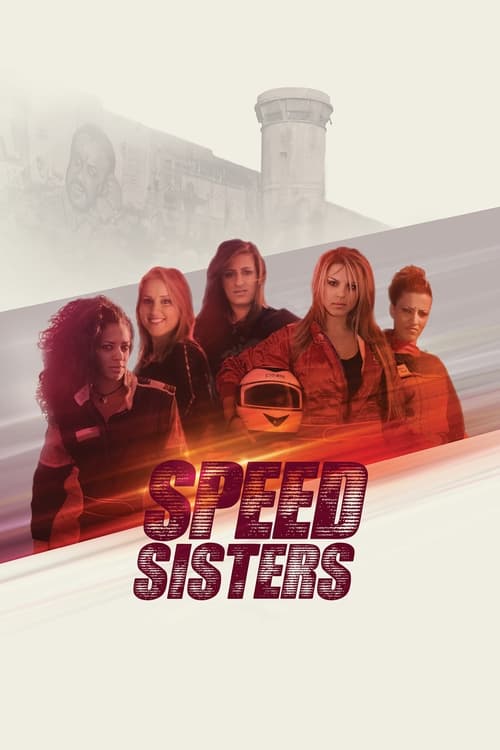
Four female friends from Egypt with opposing religious, social, and political views listen to one another's perspectives and argue openly, without ever breaking the bond that unites them.
Amina Rachid
as Self
Safynaz Kazem
Shahenda Maklad
Wedad Mitry
Nawara Negm
as
Starting with a long and lyrical overture, evoking the origins of the Olympic Games in ancient Greece, Riefenstahl covers twenty-one athletic events in the first half of this two-part love letter to the human body and spirit, culminating with the marathon, where Jesse Owens became the first track and field athlete to win four gold medals in a single Olympics.
Part two of Leni Riefenstahl's monumental examination of the 1938 Olympic Games, the cameras leave the main stadium and venture into the many halls and fields deployed for such sports as fencing, polo, cycling, and the modern pentathlon, which was won by American Glenn Morris.
Rafael - the minister of sports of an unrecognized country, and Natasha - a Russian opera singer, try living together in Abkhazia - a war-torn future-less country. Observing their difficult relations, we see life in a place marked by war and nationalism. The film portrays trapped people dreaming of peace, normality and happiness.
Amid the civil-military dictatorship implanted with the 1964 coup, Sergio Muniz had the idea of making a documentary about the action of the Death Squad. At the time, the press still had some freedom to disseminate the work of these death squads formed by police officers of various ranks, and that he acted on the outskirts of cities like Sao Paulo and Rio de Janeiro. The victims of police repression (as today) were men, poor and black, and this condition is supposed criminals.
Through rare and precious footages and gigs with great artists such as Gilberto Gil, Gal Costa, Hermeto Pascoal, Djavan, Nara Leao, Luiz Gonzaga, among many others, "Dominguinhos" reveals this genius of Brazilian music, creator of a deeply authentic, universal and contemporary work. The film values the sensory cinematic experience, a journey driven by Dominguinhos his own.
An 8-year journey into divided America, The American Question examines the insidious roots of polarization and distrust through past the past and present, revealing how communities can restore trust in each other to unite our country.
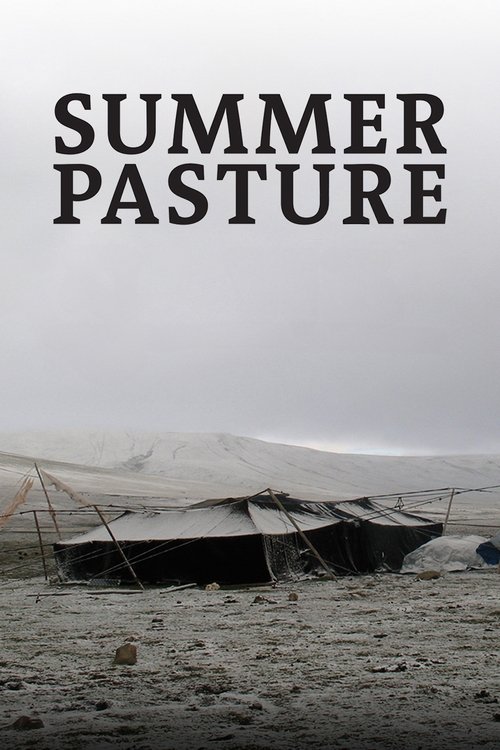
At an altitude of nearly 4,000 meters, Sking is one of the most isolated villages in the Himalayan region of Zanskar. In just three months, from August to October, the Zanskaris have to harvest and store all their food for the coming year. All the women-young and old alike-work nonstop, from dawn to dusk, and worry about the arrival of winter. Filmed from the point of view of a subjective camera by a young female ethnologist, Land of Women offers a sensitive and poetic immersion in the life of four generations of women during harvesting season. We share their rare intimacy and gradually grow attached to them.
A homeless musician finds meaning in his life when he starts a friendship with dozens of parrots.
Kua and Teriki will soon get married. They live on the distant Tureia island in the French Polynesia, Pacific Ocean and have just been told that something is wrong with their son Maokis heart. It is a consequence of living only 100 km away from the island of Moruroa, where France has tested 193 atom bombs for 30 years. Several of their family members are sick and Moruroa can soon collapse, which can lead to a tsunami likely to drown all of them. Vive La France is a personal and intimate story about harvesting the consequences of the French atomic program.
The film uses a documentary approach to tell the stories of 12 Chinese pioneers, chosen from the fields of business and the arts. The protagonists reflect upon their life journeys against the backdrop of modern China.
Edie Bouvier Beale and her mother, Edith, two aging, eccentric relatives of Jackie Kennedy Onassis, are the sole inhabitants of a Long Island estate. The women reveal themselves to be misfits with outsized, engaging personalities. Much of the conversation is centered on their pasts, as mother and daughter now rarely leave home.
A film about the Tibetan Freedom Concert in San Francisco in 1996.
Two Canadians, one Liberal and one Conservative, attend a U.S. convention focused on depolarizing politics, determined to engage in tough conversations for a healthier democracy.
Year after year hundreds of thousands of fans line the route of the Tour de France, cheering on their heroes and willing them to victory, while millions of viewers worldwide tune in on their televisions. Academy Award-winning director Pepe Danquart, fascinated by the spectacle of the three week race, chose to focus on the courage, the pain and the fear of the riders of the Tour. Training his lens on German superstar sprinter Eric Zabel and his loyal domestique Rolf Aldag, Danquart captures the thrill of the race and the teamwork behind the stars of the peleton. He also shines light on the Tour's supporting cast - the director sportifs, masseurs, and, of course, the wildly enthusiastic fans. Reveling in the stunning landscape - from the Alps to the Pyrenees to the Massif Central to Paris - and with a nice dollop of Le Tour's history, HELL ON WHEELS transcends the sport it celebrates to reveal an astonishing human endeavor.
Since the late 18th century American legal decision that the business corporation organizational model is legally a person, it has become a dominant economic, political and social force around the globe. This film takes an in-depth psychological examination of the organization model through various case studies. What the study illustrates is that in the its behaviour, this type of "person" typically acts like a dangerously destructive psychopath without conscience. Furthermore, we see the profound threat this psychopath has for our world and our future, but also how the people with courage, intelligence and determination can do to stop it.
Steyerl’s film traces the impact of an influx of transnational companies on the city dwellers of Berlin in post-reunification Germany. The effect of the changing economy and politics on the city and its inhabitants is echoed through their physical relocation to its outer edges. In 1990, squatters proclaim a socialist republic on the death strip. Eight years later, the new headquarters of Mercedes Benz are built in the same location. The film makes use of slow super-impositions to uncover a journey across changing architectural and cultural boundaries. "The Empty Centre" tries to give a voice and a history to those who continue to be marginalised by the simultaneous dismantling and reconstruction of the borders which they are trying to cross.
In 1984-85, people at Lake Tahoe fell ill with flu symptoms, but they didn't get better. Medical literature documents similar outbreaks: in 1934 at LA county hospital, in 1948-49 in Iceland, in 1956 in Punta Gorda, Florida. The malady now has a name, chronic fatigue syndrome, and filmmaker Kim Snyder, who suffered from the disease for several years, tells her story and talks to victims and their families, and to physicians and researchers: is it viral, it is psychosomatic, is it one disease or several (a syndrome) ; what's the CDC doing about it; what's it like to have a disease that's not yet understood? Her inquiry takes her to Punta Gorda and to a high-school graduation.
On January 6, 2021, Americans witnessed an attack on the U.S. Capitol without precedent in our history. Armed militiamen and QAnon followers made headlines, but among them were a sea of crosses and Christian flags, rosaries and "Jesus Saves" signs. What motivated so many Christians to participate in this violent assault?