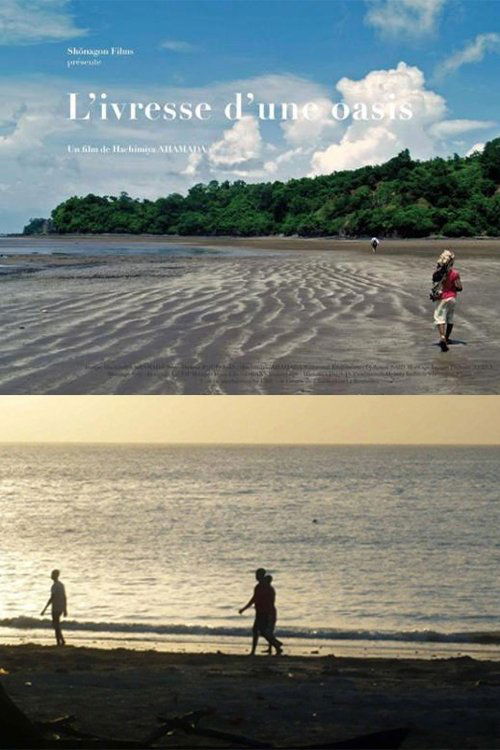
As French kindergarteners pour forth for recess, play takes on epic proportions. In every corner, some miniature drama is unfolding. Violence, love, jealousy, treachery are all here! This is human society in the making.
In the documentary, Melanie Spitta accompanies survivors and their children to Auschwitz. The film powerfully illustrates how the horrors of the concentration camps have shaped the survivors and their descendants across decades and generations—and why the victims’ trust in the Gadjé remains broken to this day.
This film recounts the murder of Vincent Chin, an automotive engineer mistaken as Japanese who was slain by an assembly line worker who blamed him for the competition by the Japanese auto makers that were threatening his job. It then recounts how that murderer escaped justice in the court system. Restored by the Academy Film Archive and The Film Foundation, in association with the Museum of Chinese in America. Restoration funding provided by the Hobson/Lucas Family Foundation, with additional support provided by Todd Phillips.
A humorous and provocative examination of one artist's dynamic work and its relevance within the cultural biography of America, documenting one man's journey as he traveled each of the 50 states to ask Americans of all races, shapes and body sizes to take off their clothes and pose in public, before his camera all for the sake of art. Artist Spencer Tunick's subjects are not paid models, but ordinary citizens. The film exposes America's current attitudes towards nudity, sexuality, body image, and all the other baggage that comes up when we take off our clothes.
Based on the memoir of Nicaraguan writer and revolutionary Omar Cabezas, this documentary traces his journey from student activist to guerrilla fighter during the Sandinista revolution.
Documentary about the Radium Dial Company and the aftereffects experienced by its workers from repeated exposure to radioactive paint.
Kaminah and Kusdalini, met as Indonesian political detainees in 1965, when both were on the cusp of adulthood. After being rejected by her hometown, Kaminah went to live with Kusdalini. Since then, they have been inseparable, living together in Surakarta, Central Java. Now, in their 70s, they survive on the kindness of their neighbours, and the crackers that they sell. Growing old hand in hand, You and I charts a delicate moment in time when the pair are faced with the heartbreaking realities of growing old.
“Sardar Gurcharan Singh was the father of studio pottery in India. "Daddyji" as most called him lovingly was very close to my father. I often tagged along to visit his home studio where pottery wheels were lined up under the big neem trees in his old brick house. My father wanted me to make a film on Daddyji, who was then 95. He was afraid that Daddyji's wonderful story would be left untold. He not only introduced studio pottery in India but due to his longevity, mentored many potters. So despite not knowing anything about films, I made the documentary, Imprint in Clay with a classmate of mine, which was mostly funded by my father.”
The story of one woman's mission to defeat cancer and help others do the same.
As Hollywood biographies go, Judy Garland's story is one of the saddest success stories you'll ever hear. The sanitized studio version of her life presented a smiling kid with the big voice, who, alongside Mickey Rooney, just wanted to put on a show. But drugs, overwork, even psychological abuse at the hands of the studio is now part of the Garland legend. But despite the number of Garland books and documentaries, one account has always been missing -- Garland herself never managed to write a memoir. She did make several attempts at an autobiography, often recording stories on a tape recorder. Judy Garland: By Myself (2004), finally fills in the blanks - using Judy's personal recordings to tell the story in her own words.
A Montreal girl takes a disastrous trip inside the porn industry.
Like many Japanese Americans released from WWII internment camps, the young Omori sisters did their best to erase the memories and scars of life under confinement. Fifty years later acclaimed filmmaker Emiko Omori asks her older sister and other detainees to reflect on the personal and political consequences of internment. From the exuberant recollections of a typical teenager, to the simmering rage of citizens forced to sign loyalty oaths, Omori renders a poetic and illuminating picture of a deeply troubling chapter in American history.
A portrait of a dedicated filmmaker who is a charming yet elusive figure in thrall to cinema and the constant perfection of his craft.
An intimate portrait of a Chinese-European couple in New Zealand, and their journey to get a blessing for marriage from traditional Chinese parents. The story that led to the film, My Wedding and Other Secrets.
This heartbreaking documentary depicts the extreme poverty of an African-American family and their Mississippi Delta school district. LaLee's Kin takes us deep into the Mississippi Delta and the intertwined lives of LaLee Wallace, a great-grandmother struggling to hold her world together in the face of dire poverty, and Reggie Barnes, superintendent of the embattled West Tallahatchie School System. The film explores the painful legacy of slavery and sharecropping in the Delta.
The film is a portrayal of Zanele Muholi, a lesbian photographer working in the South African GLBT community. This thin, combative person is already a world-wide famous artist. They define themselves as a "visual activist" in order to highlight their commitment to politics, to communicating ideas and to art. Their work includes: provocative nudes (like a female Mapplethorpe); young Zulu couples, dressed in traditional costumes, embracing each other; a homeless socially excluded lesbian couple; a dignified portrait of Victor Mukasa, the gay human rights leader from Uganda; wonderful shots of Zanele with their white partner. Beautiful and poetic pictures which are "militant" in nature since they condemn homophobia, poverty, and the public and private conflicts of a country divided between tradition and modernity.
A theatrically-released compilation of three Varda shorts: "Salut les Cubains," "Ulysse" and "Ydessa, les ours et etc."