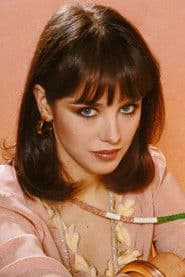
Documentary that retraces Isabelle Adjani's life and career.
Isabelle Adjani
as Self (archive footage)
Jérémy Kapone
as Narrateur
A chronicle of the first nine years of Pope Francis' pontificate, including trips to 53 countries, focusing on his most important issues - poverty, migration, environment, solidarity, and war - while also giving rare access to the public life of the pontifical.
Can you become a star without being a loudmouth? Absolutely, and Bourvil is proof of that. This discreet artist had many talents: he was both an actor and a singer, with equal success and enjoyment. First noticed for his songs and sketches, in which he created the character of the village idiot, he learned through experience the art of creating characters who were naive, certainly, but increasingly subtle. We propose to look back on the all too brief life of this man who was as endearing as he was discreet.
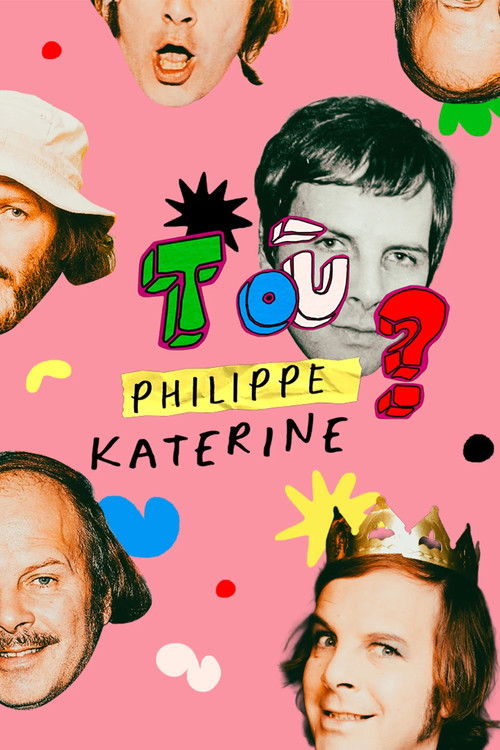
Gaëtan Chataigner has been filming his friend Philippe Katerine for nearly thirty years. The director revisits all these accumulated images in an attempt to understand how and why his artist friend became such a phenomenon. By following him step by step, sometimes questioning him, listening to his loved ones, he weaves a touching, funny, and moving portrait of this unique artist.
The film is about the director’s mother, the movie actress Nina Antonova. Now she is 80. She has had hundreds of roles – big and small. It is a personal story about an honest and sad life, about self-sacrifice and freedom. Real fame as an actress came to her only once in her life. It was the leading role in the first Soviet colour TV series Varka’s Land. That was 45 years ago…
She was the first to study gorillas in their natural environment: the high mountains of Rwanda, where she settled in 1967. For nearly twenty years, Dian Fossey lived with the gorillas, observed their behavior, and changed the way people viewed them. Her relentless fight against poaching prevented the species from becoming extinct. But in December 1985, the primatologist was murdered, and the mystery surrounding her death remains unsolved. Former colleagues, scientists, and biographers shed light on the impact of her work, but also on the darker sides of her personality and her uncompromising commitment.
Fifteen years have passed since the spectacular images of Jean-Paul Janssen's "Life at Your Fingertips" introduced the general public to free climbing and its embodiment: Patrick Edlinger. We witnessed the birth of a sporting phenomenon that would leave a lasting mark on generations of climbers. But fifteen years later, in 1997, beyond the myth, where is Patrick Edlinger? Gilles Chappaz found him on some of the most beautiful walls of the Verdon Gorge and other cliffs during the filming of Maurice Rebeix's documentary "Roc'n Wall 97," where he shares his climbing practice and philosophy with the younger generation, including Liv Sansoz and Arnaud Petit.
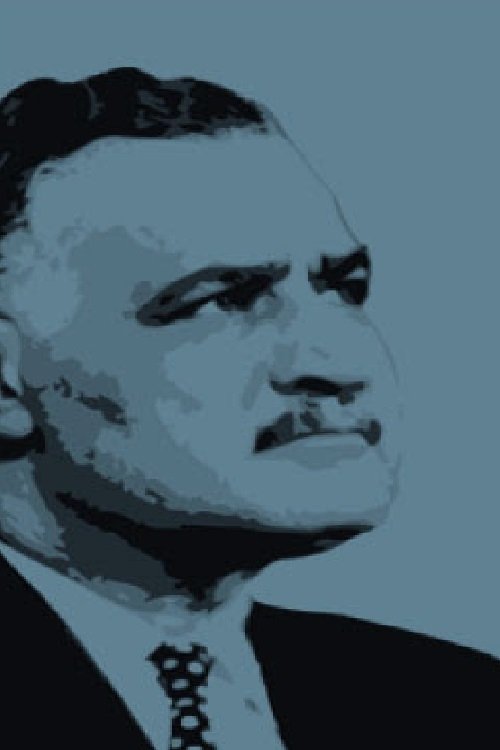
Through eyewitness accounts and archival footage, viewers are taken on a journey through the great battles that defined President Gamal Abdel Nasser's life—from dramatic economic development initiatives to his ambitions for creating a unified Arab nation. The film chronicles his inspiring success and tragic failures while also exploring how he inspired generations of global leaders in both politics and activism.
Alanis Obomsawin, a North American Indian who earns her living by singing and making films, is the mother of an adopted child. She talks about her life, her people, and her responsibilities as a single parent. Her observations shake some of our cultural assumptions.
A young woman of the Tarahumara, well-known for their extraordinary long distance running abilities, wins ultramarathons seemingly out of nowhere despite running in sandals.
Through vintage film clips of past Bond movie epics, and with the participation of several former "Bond Girls" as interviewees (among them Dr. No's Ursula Andress and Diamonds Are Forever's Jill St. John), the documentary traces the evolution of the typical James Bond heroine from decorative damsel in distress to gutsy (but still decorative) participant in the action.
Albert Camus died at 46 years old on January 4, 1960, two years after his Nobel Prize in literature. Author of “L'Etranger”, one of the most widely read novels in the world, philosopher of the absurd and of revolt, resistant, journalist, playwright, Albert Camus had an extraordinary destiny. Child of the poor districts of Algiers, tuberculosis patient, orphan of father, son of an illiterate and deaf mother, he tore himself away from his condition thanks to his teacher. French from Algeria, he never ceased to fight for equality with the Arabs and the Kabyle, while fearing the Independence of the FLN. Founded on restored and colorized archives, and first-hand accounts, this documentary attempts to paint the portrait of Camus as he was.
This documentary explores the inner life of François Mitterrand from a unique perspective: that of the writer he never ceased to be. From bookworm child to prolific author, from his brilliant speeches to his literary friendships, François Mitterrand's life cannot be separated from the literary world. His daughter Mazarine Pingeot undertakes to read the texts left behind by her father.
In this portrait film, we meet Inger Christensen in her apartment in Østerbro, Copenhagen, where she tells of her life and work, and reads excerpts from her major works.
New light is shed on the complex relationship between Romy Schneider and her mother Magda, a German film star of the 1930s admired by Hitler - who welcomed her and her daughter to his chalet in Berchtesgaden.
In this short documentary, five black women talk about their lives in rural and urban Canada between the 1920s and 1950s. What emerges is a unique history of Canada’s black people and the legacy of their community elders. Produced by the NFB’s iconic Studio D.