A decade after taking a series of photographs of skinhead members of a far-right group for his book Public Enemies, Leo Regan returns to three members of the gang to see what has happened to them in the intervening years.
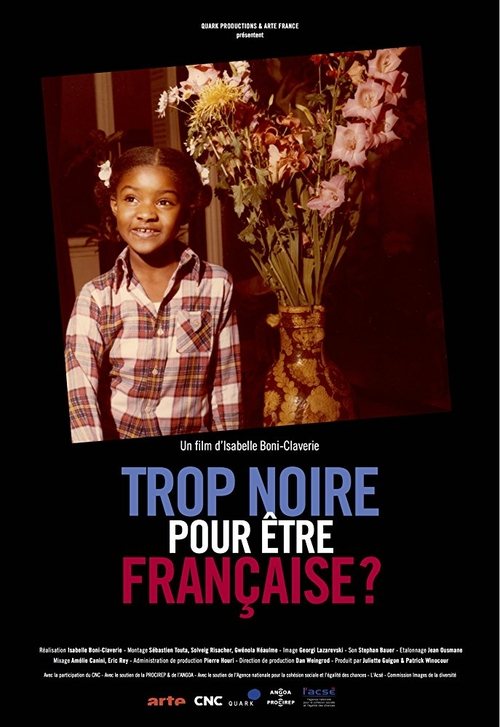
In this unprecedented primetime program, 50 volunteers take part in experiments without knowing that the aim of the program is to understand the unconscious mechanisms that can lead us to discriminatory behavior. Because if they knew, it would bias the results of the experiments.
October 2003, Alma and Lila Levy are excluded from the Lycée Henri Wallon in Aubervilliers solely because they were wearing a headscarf. What follows is a deafening political and media debate, justifying in most cases the exclusion of girls wearing head-scarves to school. February 2004, a law was eventually passed by the National Assembly. "A thinly veiled racism" is about this controversy since the affair of Creil in 1989 (where two schoolgirls were excluded for the same reasons) and attempts to "reveal" that maybe what hides behind is the desire to exclude these girls. This film gives them a voice as well as others - teachers, community activists, feminists, researchers - gathered around the group "A School for You-All" fighting for the repeal of this law they consider sexist and racist ... This movie was censured in Septembre 2004 in France.
A film about the cultural evolution of the Sydney beach side suburb of Maroubra and the social struggle faced by it's youth - the notorious surf gang known as the Bra Boys.
Clarissa, the wife of a Foreign Office diplomat, is given to daydreaming. 'Supposing I were to come down one morning and find a dead body in the library, what should I do?' she muses. Clarissa has her chance to find out when she discovers a body in the drawing-room of her house in Kent.
Portrait of a unique weekly magazine that, for more than fifty years, has been shaking up French society by confronting it with its taboos and unspoken truths.
The events that took place at the beach of El Tarajal in Ceuta (Spain) in February 2014 - the killing by the border police of 15 people who were trying to reach the Spanish coast - are an example of how the police force can violate the laws of its own country and international conventions with total impunity. The worst part is that this violation of human rights is protected by the Spanish Ministry of Interior itself, which hinders any effective action by the prosecution. For this reason, the civil society plays a fundamental role in revealing the facts. This is where the figure of collective complaints (DESC Observatory and the association Coordinadora de Barrios) steps in.
Between 1930 and 1945, Eastern Europe experienced mass violence on an unprecedented scale. Hitler and Stalin exploited the vast region for their respective expansionist plans. It is estimated that around 14 million civilians were murdered—primarily Jews, Poles, Balts, Belarusians, and Ukrainians.
The natural sciences museum of La Plata, Argentina, had indigenous people held captive as study objects in the past, and their skeletons were on exhibit for many decades. The story of Krygi, served as a trigger to look back at the ideologies that defined us as individuals and as a people.
In a career spanning sixty years, Britain's absolute darling has brought his mocking nonchalance and formidable gravelly voice to every genre, from hard rock to jazz and pop. Portrait of a pop aristocrat who has managed to stay in touch with the people.
A historic three-day race riot erupted in two African American neighborhoods in the northern, mid-sized city of Rochester, New York. On the night of July 24, 1964, frustration and resentment brought on by institutional racism, overcrowding, lack of job opportunity and police dog attacks exploded in racial violence that brought Rochester to its knees. Combines historic archival footage, news reports, and interviews with witnesses and participants to dig deeply into the causes and effects of the historic disturbance.
The lives of Stan Laurel (1890-1965) and Oliver Hardy (1892-1957), on the screen and behind the curtain. The joy and the sadness, the success and the failure. The story of one of the best comic duos of all time: a lesson on how to make people laugh.
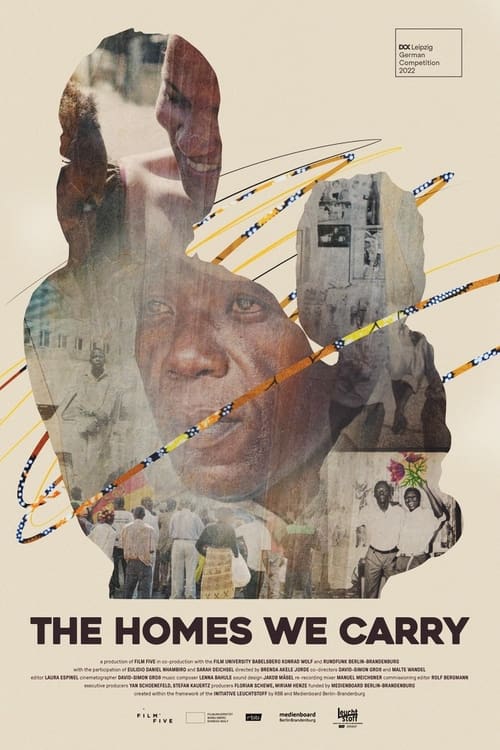
At America's elite MIT, a Ghanaian alum follows four African students as they strive to graduate and become agents of change for their home countries Nigeria, Rwanda, Tanzania, and Zimbabwe. Over an intimate, nearly decade-long journey, all must decide how much of America to absorb, how much of Africa to hold on to, and how to reconcile teenage ideals with the truths they discover about the world and themselves.
Twenty-five films from twenty-five European countries by twenty-five European directors.
In 1892, Ellis Island, in New York Bay, became the main gateway to the United States for immigrants arriving increasingly from Europe. The story of immigration to the United States from 1892 to 1954, an enthralling polyphonic narrative that embraces both small and great history.
The long lasting Palestinian-Israeli conflict has created appaling phenomenons that have horrified the Israeli society. the "politically conscience-refusals" or those individual soldiers refusing to fight in the occupied territories, are one of those phenomenons. In opposition to them stand a thousand immigrants from the former Soviet Union, ex-military men from the Red Army, who yearn to be recruited into the IDF and fight for Israel, but who are denied the right to serve in the army. Through the stories of Oleg and Alex, immigrants and the battalion's charismatic commanders, the story of the Russkii Battalion is told. It is a story of contrasts between the hardships of the daily struggles they face as new immigrants against the pride and the sense of belonging they find in the battalion. The Russkii Battalion is a film about a militaristic social bubble, in a country that is in constant war.
Shawn Huff and Ervin Latimer Jr. are the children of African-American basketball players Leon Huff and Ervin Latimer Sr. who arrived in Finland in the 1970s. They have grown up to become Finnish social and political influencers through their fathers' perseverance, ambition and the societal racism that has been passed down through the generations to their sons. The sons channel the experiences of their silent fathers into action and both generations fight for a more equal world.
When a mystery illness infects the pigs of a village farmer and a local boy is also taken ill, the villagers try to convince a veterinarian that it is caused by a curse from a woman they believe to be a witch.