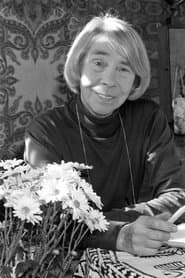
The life and work of Tove Jansson, mainly known for creating the Moomins but also a writer and painter.
Tove Jansson
as Self (archive footage)
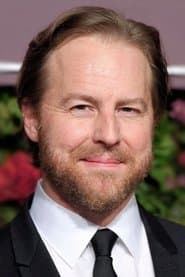
Samuel West
as Narrator (voice)
Janet Suzman
as Tove Jansson (voice)
Featuring unprecedented access inside the White House and State Department, The Final Year offers an uncompromising view of the inner workings of the Obama Administration as they prepare to leave power after eight years.
Recy Taylor, a 24-year-old black mother and sharecropper, was gang raped by six white boys in 1944 Alabama. Common in Jim Crow South, few women spoke up in fear for their lives. Not Recy Taylor, who bravely identified her rapists. The NAACP sent its chief rape investigator Rosa Parks, who rallied support and triggered an unprecedented outcry for justice. The film exposes a legacy of physical abuse of black women and reveals Rosa Parks’ intimate role in Recy Taylor’s story.
In 2010, the iconic Tote Hotel – last bastion of Melbourne’s vibrant music counterculture – was forced to close by unfair laws. Filmed over 7 years, “Persecution Blues” depicts the struggle of more than 20,000 fans – and the bands who inspire them – to preserve their history and protect their future, and puts the audience on the front line of an epic-scale culture war.
A fantastic journey through the world of Renato Casaro, one of the most important illustrators that the world’s film poster industry has ever known.
Oscar-winning filmmaker Julia Reichert reflects on the social, economic and personal forces that led to her career as a pioneering documentarian.
The Real Adam Smith: A Personal Exploration by Johan Norberg, takes an intriguing, two-part look at Smith and the evolution and relevance of his ideas today, both economic and ethical. It’s difficult to imagine that a man who lived with horse drawn carriages and sailing ships would foresee our massive 21st century global market exchange, much less the relationship between markets and morality. But Adam Smith was no ordinary 18th century figure. Considered the “father of modern economics,” Smith was first and foremost a moral philosopher. The revolutionary ideas he penned in The Wealth of Nations and The Theory of Moral Sentiments, changed the world. Norberg explores Smith’s insights regarding free trade and the nature of wealth to the present, where they are thriving and driving the world’s economy.
This one hour documentary examines the life of the famed Sharp Shooter and Wild West performer, Annie Oakley from her birth in mid nineteenth century rural Pennsylvania to her death in 1926. Many myths are overturned and the program also features a little known trial when Annie Oakley had to sue The Hearst Newspaper chain all throughout the country for libel when they reported the activities of someone who was impersonating the famed sharpshooter and besmirching her reputation.
Documentary filmmaker Amy Berg investigates the life of 30-year pedophile Father Oliver O'Grady and exposes the corruption inside the Catholic Church that allowed him to abuse countless children. Victims' stories and a disturbing interview with O'Grady offer a view into the troubled mind of the spiritual leader who moved from parish to parish gaining trust ... all the while betraying so many.
A documentary on seniors at a high school in a small Indiana town and their various cliques.
The Beastie Boys are among the most influential groups of the last two decades. As their music has opened hip-hop to a wider audience and changed the parameters of its sound, their ambitious music videos have carried the medium to new levels of artistic expression. This groundbreaking two-disc anthology showcases eighteen videos containing alternate visual angles and multiple audio tracks. Loaded with never-before-seen footage and unreleased music tracks, this special edition also contains a trove of rare still photos and exclusive audio commentary by the band and the video directors.
Ydessa Hendeles' exhibition entitled "The living and the Artificial" (consisting of works of art all comprising a photograph of living persons in the company of one or several teddy bears) had puzzled Agnès Varda so much that she decided to go to Toronto where the artist lives and interview her. In front of Agnes Varda's DV camera, Ydessa tells about the singularity of her artistic approach. She also expresses herself about the Holocaust, which both her parents survived.
In 1984-85, people at Lake Tahoe fell ill with flu symptoms, but they didn't get better. Medical literature documents similar outbreaks: in 1934 at LA county hospital, in 1948-49 in Iceland, in 1956 in Punta Gorda, Florida. The malady now has a name, chronic fatigue syndrome, and filmmaker Kim Snyder, who suffered from the disease for several years, tells her story and talks to victims and their families, and to physicians and researchers: is it viral, it is psychosomatic, is it one disease or several (a syndrome) ; what's the CDC doing about it; what's it like to have a disease that's not yet understood? Her inquiry takes her to Punta Gorda and to a high-school graduation.
A funny walk through the life story of Billy Wilder (1906-2002), a cinematic genius; a portrait of a filmmaker who never was a boring man, a superb mind who had ten commandments, of which the first nine were: “Thou shalt not bore.”
Portrait of the writer Elsa Triolet, wife of poet Louis Aragon. The tile is a play on a famous poem by Louis Les yeux d'Elsa.
Filmed on location in Montana and Washington State, this 1976 biography of poet and teacher Richard Hugo features readings of some of his most famous poems as well as interviews with his family and friends.