Petra Epperlein and Michael Tucker take a powerfully personal journey through the former East Germany, as Epperlein investigates her father’s 1999 suicide and the possibility that he may have worked as a spy for the dreaded Stasi security service.
Petra Epperlein
as Herself
Christa Epperlein
Uwe Epperlein
as Himself
Volker Epperlein
Udo Grashoff
Hubertus Knabe
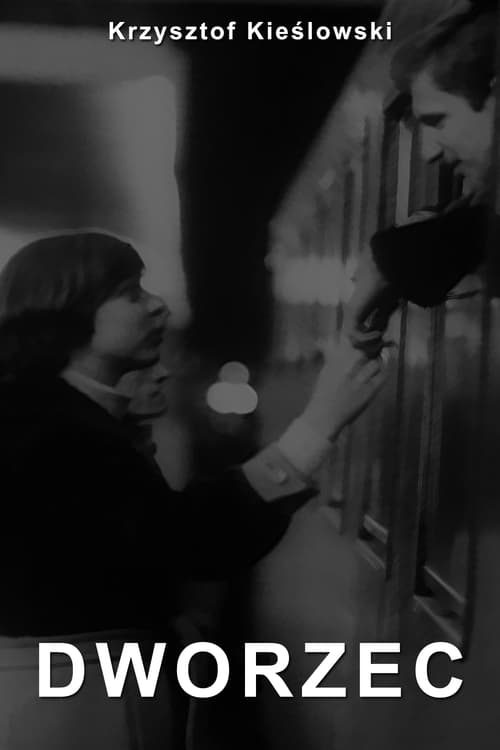
Warsaw's Central Railway Station. 'Someone has fallen asleep, someone's waiting for somebody else. Maybe they'll come, maybe they won't. The film is about people looking for something.
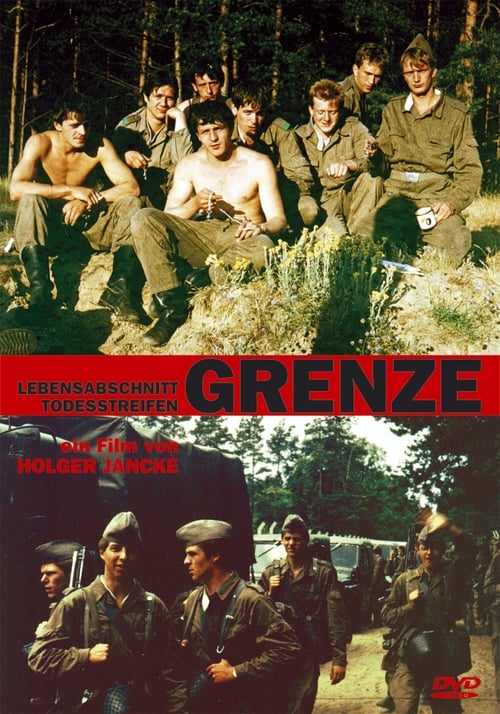
Documentary reports on the annual icing of the Oder in the 160-kilometer border area between the GDR and the People's Republic of Poland. Icebreakers from both countries with experienced skippers join forces to make the international waterway between Frankfurt and Szczecin navigable again. Everyone works hard as a team and even a broken-down ship cannot stop them from achieving their goal. A look back at the winter of 1947 with its flooding shows what the freezing of the river and the subsequent thaw can do if the ice floes are not drained into the Baltic Sea via Lake Dammsch in good time. The skippers from both countries have known each other for years and trust each other; the camaraderie that has developed on the Oder unites the people, they control the river in winter for the common benefit of all.
This documentary-drama hybrid explores the dangerous human impact of social networking, with tech experts sounding the alarm on their own creations.
NOTHING TO HIDE is an independent documentary dealing with surveillance and its acceptance by the general public through the "I have nothing to hide" argument. The documentary was produced and directed by a pair of Berlin-based journalists, Mihaela Gladovic and Marc Meillassoux. It was crowdfunded by over 400 backers. NOTHING TO HIDE questions the growing, puzzling and passive public acceptance of massive corporate and governmental incursions into individual and group privacy and rights. After the emotion initially triggered by the Snowden revelations, it seems that the general public has finally accepted to live in a monitored digital world.
Journalist Sandra Harkow produces a promotional film for the RFID industry. Through a time traveler, she learns about the dark future triggered by RFID chips. Her encounter with the time traveler makes her prick up her ears and she researches the radio chips. The so-called docu-fiction style, which coherently combines real interviews with film scenes, gives the viewer the impression of being part of this reality.
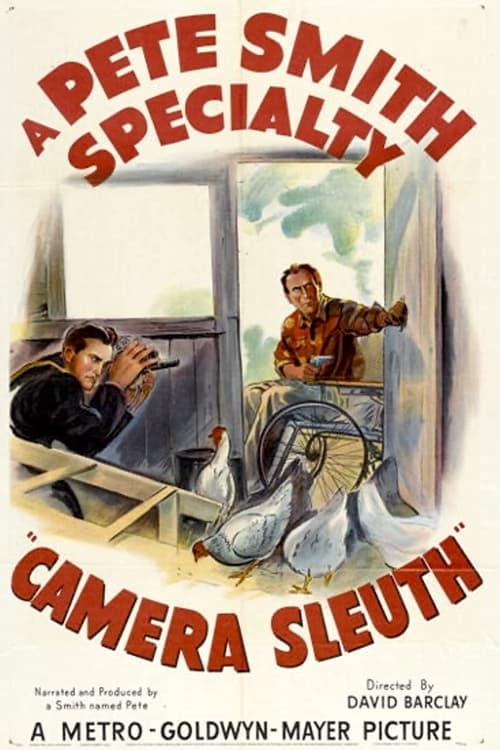
In this Pete Smith Specialty short, we see how real-life investigator Jo Goggin used a motion picture surveillance camera to gather evidence and disprove a fraudulent insurance claim.
Few aircraft have attracted more attention than the ominous black supersonic jet that for years has ranged the world on reconnaissance missions. This is the definitive tribute to an extraordinary peacekeeper, the SR-71 Blackbird. The History. The Technology. The Missions. The Pilots. And compelling, gripping footage of the Blackbird itself, on its "rocket ride" through the world's airspace.
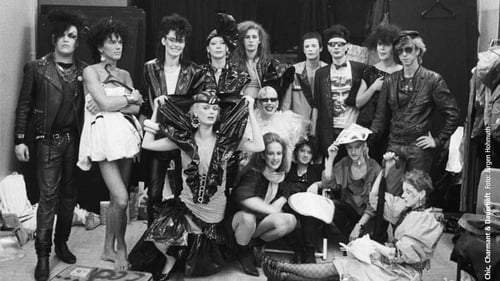
This film undertakes a journey into the amazing parallel universe of East Berlin’s fashion designers and experts in the art of survival. For, in the midst of the constraints of life in the GDR, there existed a fantasy world where it was possible to dance to another tune, be individual and even provocative. The most important characteristic of this bohemian scene was one’s per- sonal style. But this certainly wasn’t something that could be bought off the peg in the GDR. In this parallel universe it was up to you to create your own individual image – with your own hands. This film tells the story of the desires, the passion and the dreams that were tried and tested, lived and performed in the shadow of the Berlin Wall.
Uncover the insidious ways in which our daily lives are being surveilled by the state. In a gripping chase, Ronan Farrow travels across the world following breadcrumbs and finally exposing a dark world of spywares, hacking, and peddling of private information, where activists and journalists are persecuted, and no one is protected from the watchful and vicious eyes of authoritarianism.
A thought provoking documentary feature film providing a comprehensive exploration of the evolution of signals intelligence over the past century. Whether you're intrigued by the secretive world of intelligence agencies or concerned about the implications of digital surveillance, this film will leave you with a deeper understanding of the role signals intelligence plays in society.
In the documentary Last To Know political prisoners, sent to jail for openly opposing the East German regime that existed until the German reunification in 1990, talk about their times of trial and their lives today. Neither they, nor their families have come to terms with what happened.
Last bastion of freedom of expression or playground for extremists and criminals? Opinions are divided on the messaging service Telegram. Just like on its mysterious founder, tech billionaire Pavel Durov. Is this man an uncompromising advocate of radical freedom or an accomplice of criminals of all kinds? Author Aleksandr Urzhanov searches for answers.
Journalist Assia Boundaoui sets out to investigate long-brewing rumors that her quiet, predominantly Arab-American neighborhood was being monitored by the FBI.
Was my father really a spy, as his file in the former East German Secret Service (STASI) suggests? This question marks the starting point of a son’s journey into his late father’s past which still remains somewhat mysterious even today. Eric Asch is looking for answers – in the Stasi archives, at the NSA and in his own family history. The result is a very personal documentary which reports ironically about the practices of secret service during the Cold War.
Some things can be seen more clearly at night.. . A film poem about a continent at night, a culture on which the sun’s going down, though it’s hyper alert at the same time, an “Abendland” that, often somewhat self-obsessively, sees itself as the crown of human civilization, while its service economy is undergoing rapid growth in a thoroughly pragmatic way. Nikolaus Geyrhalter takes a look at a paradise with a quite diverse understanding of protection. Night work juxtaposed with oblivious evening digression, birth and death, questions that await answers in the semi-darkness, a Babel of languages, the routine of the daily news, and political negotiation: All this has been captured in images with a wealth of details that make us look at things in a new way. The longer you consider a word, the more distant is its return gaze: ABENDLAND.
Over the past hundred years, dramatic social upheavals have taken place in the name of Karl Marx's theories. In Western Europe, the student movement of 1968 and the Eurocommunists were inspired. And in recent times, the thinker has experienced a renaissance.
Under the pretext of fighting terrorism or crime, the major powers have embarked on a dangerous race for surveillance technologies. Facial recognition cameras, emotion detectors, citizen rating systems, autonomous drones… A security obsession that in some countries is giving rise to a new form of political regime: numerical totalitarianism. Orwell's nightmare.
"Busch singt" consists of 6 films "About the first part of our century" and does not present Ernst Busch only as a singer but is a film with and about Busch as a chronicler and fighter for communist ideals of his time. Konrad Wolf died during the production, he directed part 3 "1935 oder Das Faß der Pandora" and part 5 "Ein Toter auf Urlaub".
Thirty years after the Cold War ends, a former political prisoner of the East German secret police searches for the truth after learning his brother spied on him for the regime, and discovers the lasting effects of living in a surveillance state.