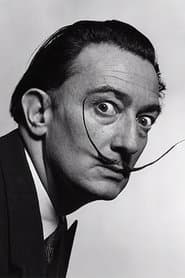
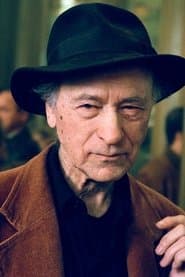
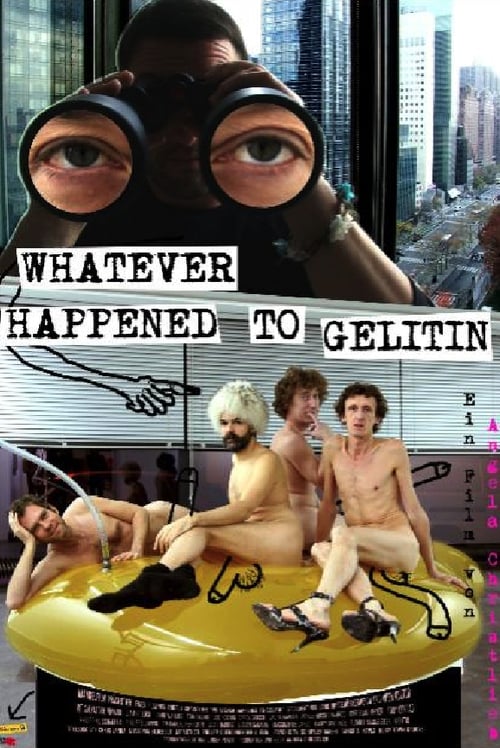
Filmmaker Jonas Mekas follows the surrealist artist around the streets of New York documenting staged public art events.
Salvador Dalí
as Self (archive footage)
Veruschka von Lehndorff
as Self
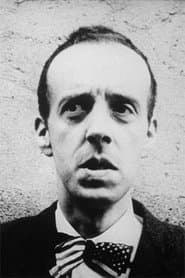
Taylor Mead
Jonas Mekas
This film looks at the world of children with hearing loss and the importance of early diagnosis. With its straightforward, rigorous cinematic style and intimate approach to the subject, the film focuses on the human rather than the technical side of the problem of hearing impairment.
A documentary short that gives you an exclusive look behind the groundbreaking original series, "Ms. Marvel", from its comic book origins to its development and production as Marvel Studios’ next hit series on Disney+. It features interviews with its award winning filmmaking team and the show’s captivating star, newcomer Iman Vellani.
In a closed locker room, rugby players perform the last pre-match rituals. Warming up their souls and bodies, all tense in anticipation of the fight.
Plotless and wordless, beautifully edited shots of young (often naked or semi-naked) people in various positions, illustrating different emotions, actions and situations, underlined by rock music.
This documentary film is about one of Georgia's regions - Racha. The title of the film is taken from the name of one of Racha's high mountain villages. It tells about the poorest in society living in the mountains and the rise of the SSSR. The product of a remarkable collaboration between the first Georgian female filmmaker and the leading Georgian avant-garde artist David Kakabadze.
A short documentary about Arthur Penn.
IN 1988, rising star Kenneth Branagh tackled the role of Shakespeare’s prince of Denmark for the first time in his professional career under the guidance of celebrated actor Derek Jacobi. Narrated by Patrick Stewart, this hour-long film documents how Kenneth Branagh and Derek Jacobi, two intelligent and passionate men, found new depths in Shakespeare’s classic drama, Hamlet. Filmmakers Mark Olshaker and Larry Klein follow the company through four weeks of rehearsals, from the first read-throughs to opening night.
This short travelogue depicts snippets of locations in Hollywood, California, most of them as seen from the streets. Considerable time is taken showing the kinds of architecture of private homes. There are images of various important buildings, and a depiction of the Hollywood Bowl. Finally, there is a sequence revolving around the premiere of the film “Dirigible” (1931) at the famed Chinese Theatre.
The earliest surviving motion-picture film, and believed to be one of the very first moving images ever created, was shot by Louis Aimé Augustin Le Prince using the LPCCP Type-1 MkII single-lens camera. It was taken on paper-based photographic film in the garden of Oakwood Grange, the Whitley family house in Roundhay, Leeds, West Riding of Yorkshire (UK), on 14 October 1888. The film shows Adolphe Le Prince (Le Prince’s son), Mrs. Sarah Whitley (Le Prince’s mother-in-law), Joseph Whitley, and Miss Harriet Hartley walking around in circles, laughing to themselves, and staying within the area framed by the camera. Roundhay Garden Scene is often associated with a recording speed of around 12 frames per second and runs for about 2 to 3 seconds.
A film by Louis Aimé Augustin Le Prince, shot in late October 1888, showing pedestrians and carriages crossing Leeds Bridge.
A synaesthetic portrait made between French Polynesia and Brittany, Color-blind follows the restless ghost of Gauguin in excavating the colonial legacy of a post-postcolonial present.
A documentary that invites the viewer to immerse themselves in a intimate and thoughtful walk through Poblenou Cemetery in Barcelona, better know as "El Santet", to see what is happening at its surrounding areas and, especially, inside: work, buildings, people watching over those who are no longer here, cemetery workers... A trip through a space that is closer than we think.
As daylight breaks between the border cities of El Paso, Texas, and Juarez, Mexico, undocumented migrants and their relatives, divided by a wall, prepare to participate in an activist event. For three minutes, they’ll embrace in no man’s land for the briefest and sweetest of reunions.
The first woman to appear in front of an Edison motion picture camera and possibly the first woman to appear in a motion picture within the United States. In the film, Carmencita is recorded going through a routine she had been performing at Koster & Bial's in New York since February 1890.
Hedda Hopper plays hostess at a party for her (grown) son William (DeWolfe Jr.). Hopper, attends the dedication of the Motion Picture Relief Fund's country home and goes to the Mocambo. There is also a sequence dedicated to the Milwaukee, Wisconsin world premiere of the first short in this series attended by more that a few film stars.
From polar bears in the arctic tundra to black bears in the Northern Rockies, you'll see some of the most spectacular footage ever shot of these enterprising omnivores. Catch salmon with a group of hungry grizzlies on the McNeil River in Alaska. Crawl inside a den with a mother black bear and her cubs. Learn about the challenges facing each of these species as their habitat diminishes.
In 1928, as the talkies threw the film industry and film language into turmoil, Chaplin decided that his Tramp character would not be heard. City Lights would not be a talking picture, but it would have a soundtrack. Chaplin personally composed a musical score and sound effects for the picture. With Peter Lord, the famous co-creator of Chicken Run and Wallace & Gromit, we see how Chaplin became the king of slapstick comedy and the superstar of the movies.