“Namibia Crossings” takes a trip through a country of archaic beauty and bizarre contradictions. The film creates polyphonies of soulful landscapes made up of each individual's highs and lows.
Fredy Studer
as
Hans Hassler
While managers of Swiss banks in the USA ruefully apologize for their tax evasions practices and customer data is disclosed to the American authorities, Rudolf Elmer, former auditor at bank Julius Bär, is indicted for violating the Swiss banking secrecy law on the Cayman Islands. Rudolf Elmer: from insider to critic.
An intimate portrayal of the everyday lives of Carthusian monks of the Grande Chartreuse, high in the French Alps (Chartreuse Mountains). The idea for the film was proposed to the monks in 1984, but the Carthusians said they wanted time to think about it. The Carthusians finally contacted Gröning 16 years later to say they were now willing to permit Gröning to shoot the movie, if he was still interested.
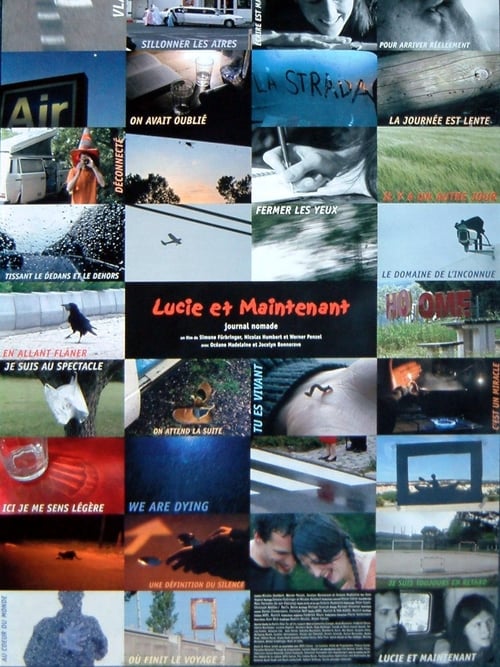
In May of 1982 Julio Cortázar, the Argentinean writer and his companion in life, Carol Dunlop set out in their VW bus on a journey along the highway from Paris to Marseille that, for each of them, was to be their final one. Twenty-five years later, Océane Madelaine and Jocelyn Bonnerave set out to undertake the journey again.
Nearing the end of a long and successful stage career, Miriam Goldschmidt finds her prowess as an actress increasingly on the wane. She struggles to memorize her lines and as her last project with lifelong collaborator, the legendary director Peter Brook, threatens to fall apart, Miriam looks back. Referencing Brook’s ground-breaking book «The Empty Space», she uses an empty rehearsal room in Berlin to invoke her archetypal life journey that took an orphaned black child from post-war Germany to the world’s biggest stages. We «Call Her Miriam» is a bewitching and moving portrait of a great artist living between dream and reality, truth and fction and life and death.
'From One Day To The Next' follows four elderly people through their everyday lives, observing how they cope with a gradual loss of autonomy.
Zurich-born Hugo Koblet was the first international cycling star of the post-war period. He was a stylist on the bicycle and in life, and a huge heartthrob. Koblet had a meteoric rise and won the Giro d'Italia in 1950. Once he had reached the zenith of his career, Koblet was put under pressure by overly ambitious officials and ended up ruining his health with drugs. In 1954, he married a well-known model and they became a celebrity dream couple. After his athletic career ended, Koblet began to lose his footing. Threatened by bankruptcy, he crashed his Alfa into a tree.
At the far end of the Alaskan peninsula, for filmmaker Roman Droux a childhood dream comes true. He discovers together with the bear researcher David Bittner the universe of wild grizzlies. The two adventurists face bears at smelling-distance, experience the struggle for survival of a bear family and witness dramatic fighting scenes. Driven by a desire to explore the unknown the film tells a personal story of wilderness, framed in breathtaking pictures of unique creatures.
Tracing the emigrations of his family over more than half a century, this riveting documentary epic from acclaimed expatriate Iraqi filmmaker Samir pays moving homage to the frustrated democratic dreams of a people successively plagued by the horrors of dictatorship, war and foreign occupation of Iraq.
A disturbing exploration of what it means to be a man Desert Wind unveils the innermost thoughts of 13 men about their lives and male identity, making a clean sweep of clichés. Their revelations -- a glimpse of the hidden side that few men spontaneously reveal -- are of equal interest for women.
The story of three Turkish men. They all grew up in Switzerland and all got deported after various criminal offenses.
A documentary about healers from the Swiss canton of Appenzell.
The real place where the penguin congress takes place is also the most fictional place on this planet where you can stand on your own two legs. Here, even the animals can talk. This land of dreams and nightmares is called Antarctica. In this desert of ice surrounded by a stormy sea, a few dozen human beings also live. Using sophisticated instruments, they observe the worrying changes affecting our world: the hole in the ozone layer, climate change, and so on.
A documentary film about Tibetan traditional medicine.
Filmmakers Nicolaus Humbert and Werner Penzel examine the nature of nomadic existence in this documentary, from the literal nomads of North Africa to the more metaphorical kind of wanderer, such as American poet and ex-pat Robert Lax. Humbert and Penzel focus especially on the nomad's paradoxical ability to fully inhabit every moment while remaining coolly detached from specific locales and anxious thoughts about the past or future.
The first film about second-generation Swiss immigrants: A Turkish ice hockey player explains why, in Switzerland, he could only fall in love with an Italian. A young Italian woman explains why she prefers to rap in English. A hip-hop artist with Hispanic origins fights for his political rights and the director reminisces on how, despite his Arabic roots, he's been persecuted as a Jew. Babylon 2 reflects the rise of a new urban culture in Switzerland, which is instigated by the second generation of immigrants and the help of electronic media.
The Internet has changed everything, also for journalism: business models are falling by the wayside, news is available for free, anywhere and at any time.
Five highly original musicians from different countries form the Accordion Tribe. Together they aim to reinforce the original power of the long disdained instrument. The film follows the energetic soundscapes and their performers on a journey through Europe. An extraordinarily intensive documentary on the communicative, connecting power of music.