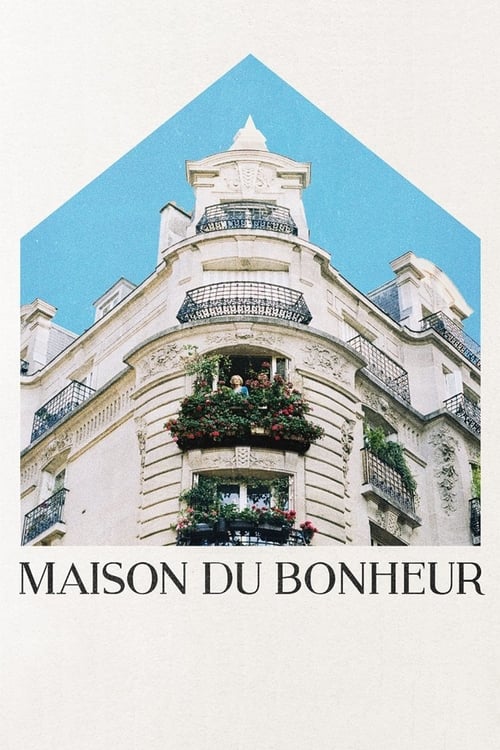
After five years studying in Paris, Arash has not adjusted to life there and has decided to return to Iran to live. Hoping to change his mind, his two friends Hossein and Ashkan convince him to take a last trip through France.
Short subject on how fashion is created-- not by the great couturiers, but on the street.
The lives of three generations of women who suffered political persecution during the military dictatorship in Brazil.
All the cool kids were wearing it. This documentary explores A&F's pop culture reign in the late '90s and early 2000s and how it thrived on exclusion.
Niaqornat in North West Greenland has a population of 59. If the population falls below 50, the village will lose its Danish subsidies and risks being relocated to the nearest town. While the rest of the community pull together to try and re-open the fish-factory, Lars -- the only teenager in town -- plans his escape.
John Wayne, Henry Fonda and James Stewart discuss working with John Ford
On November 13, 2015, the attacks in Paris and Saint-Denis, carried out by three Islamist commandos and claimed by ISIS, were the deadliest in France since the end of World War II. In the months that followed, the November 13 Program was launched by the CNRS and Inserm to study the construction of individual and collective memory around an event that profoundly marked French society. Today, the testimonies of 27 volunteers—among some 1,000 people—who participated in the study form a mosaic of experiences that shows how trauma extends beyond the immediate circle to permeate the national collective memory.
In 1988, Tilda Swinton toured round the Berlin Wall on a bicycle - starting and ending at the Brandenburg Gate - accompanied by filmmaker Cynthia Beatt. As Swinton travels through fields and historic neighborhoods, past lakes and massive concrete apartment buildings, the Wall is a constant presence.
A small group of girls in one of the most remote forests left on earth attend a radical high school where they learn to protect the threatened forest and forge a better future for themselves. Set in the untamed wilds of the Mbaracayu Reserve in rural Paraguay, this intimate verite documentary offers a rare glimpse of a disappearing world where timid girls grow into brave young women even as they are transformed by their unlikely friendships with one another.
This short documentary focuses on the very end of Washington Boulevard, where the city of Los Angeles meets the ocean and the Venice Pier begins. The rough and simplistic concrete pier braves pacific storms and provides stillness and stability. People come to walk, to fish and ease their minds. The film takes a closer look at the diverse people all around the pier. Among them the filmmakers find two citizens, both immigrants, who take us on their personal journey through history.
The story of what happens when "The Mighty Cheetahs," an undefeated all-girls soccer team, competes in the boys division. With humor and candor this documentary gets at the heart of the boy-girl issues and explores what "Kick Like A Girl" really means on and off the playing field. Kick Like A Girl reminds us all of the lessons learned in competitive athletics and how sports has been one of the most effective instruments of social change in our lifetime.
Legendary rumba musician Alberto Zayas serves as a guide for this vibrant journey through Cuban musical history and culture. The short features interviews, footage of impromptu street performances, and studio recordings.
This black-and-white film is a loving portrait of Santiago de Cuba and its people. It provides a view of Cuba as a picturesque country, the product of an earthy mix of black and criollo cultures. The film uses historical images which portray the end of the eighteenth century when Haitian slave owners fled with their slaves to Cuba after the Haitian Revolution.
The film focuses on the role played by the parental home and vocational school alongside the training center in the life of an apprentice.
The Devil Never Sleeps is a “whodunit” documentary about family secrets. Filmmaker Lourdes Portillo received a phone call informing her of the mysterious death of her wealthy Mexican uncle Oscar. Officially ruled a suicide, Portillo’s relatives claimed murder, offering several possible suspects including a business partner, a ranch hand, and Oscar’s young widow who stood to inherit everything. Traveling to Mexico, Portillo attempts to learn the truth about her powerful uncle. Using interviews, old snapshots and home movies, she finds a complicated web of family secrets, intrigue, rumor and betrayal that makes her enigmatic uncle’s murder seem ever more likely, yet ever more obscure. As the Mexican saying goes, “When evil is lurking, the devil never sleeps.”
Forty years before WikiLeaks and the NSA scandal, there was Media, Pennsylvania. In 1971, eight activists plotted an intricate break-in to the local FBI offices to leak stolen documents and expose the illegal surveillance of ordinary Americans in an era of anti-war activism. In this riveting heist story, the perpetrators reveal themselves for the first time, reflecting on their actions and raising broader questions surrounding security leaks in activism today.
This documentary tells two stories simultaneously: it's a profile of Bernard Tapie, a wealthy man who rises and falls spectacularly in French society and may be on the rise again; and, it's a look at Marina Zenovich's fascination with Tapie, behaving oddly in spite of her awareness that she's being irrational. Politicians, athletes, friends, companions, and journalists comment on Bernard's charm, his rise to prominence in sports and politics, and his subsequent trouble with the law. Zenovich becomes fixated on her need to interview Tapie, becoming virtually a stalker in her quest.
This haunting film comprises of footage shot during WWI from opposite sides of the conflict: Czarist Russia and the Austro-Hungarian empire. The filmmakers tinted the material with sensual colors from sepia to red, blue, and purple and slowed the footage to analyze the material. The total absence of commentary renders the material eloquent and disturbing. - MoMA