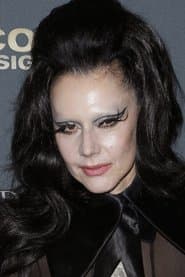
Dubbed New York's "Queen of the Night," proto–club kid Susanne Bartsch has been throwing unforgettable parties for over 30 years and is still going strong.
Susanne Bartsch
as Self
RuPaul
Amanda Lepore
Having become a world star thanks to James Bond, Sean Connery, who died in 2020, has never stopped trying to shed the image of a sexy and slightly brutal macho that stuck to 007. A look back at an eclectic career, carried out with panache.
The extraordinary life of beloved acting teacher and theatre producer Wynn Handman is recalled in this portrait of a provocative, innovative artist.
Claude Lelouch was a Jewish child in occupied France. In this documentary, he talks about the trauma he still feels from that experience, but also how it inspired him to become a filmmaker. The 1940s appear to be a formative period, key to understanding the work and career of this famous director, whose films and life have always been inseparable.
In the early nineties, before the massive gentrification of many of New York's then slums, several young people from very disparate backgrounds left their broken homes and ventured onto the brutal streets of the city. United by their love of skateboarding, they formed a family and built a unique lifestyle that eventually inspired Kids, a groundbreaking and outrageous film directed by photographer Larry Clark and released in 1995.
The story of how Norma Jeane Mortenson became Marilyn Monroe (1926-62), a lucid path of self-discovery, from anonymity to stardom: the painful birth of a myth.
The life of Frank Sinatra, as an actor and singer and the steps along the way that led him to become such an icon.
Trailblazing double bassist Orin O'Brien never wanted the spotlight, but when Leonard Bernstein hired her in 1966 as the first female musician in the New York Philarmonic, it was inevitable that she would become the focus of much interest and fascination. Now 87 years old and recently retired, Orin looks back on her remarkable life and career, insisting that a fuss should not be made, much preferring to play a supporting role to the family, students, friends, and colleagues that surround her.
The Europeans want to be forgiven for the tragic colonial period. The aborigines try to preserve their ancient roots from the present and the future. In the North Territory.
Mustafa Kemal Atatürk (1881-1938) was a Turkish field marshal, revolutionary statesman, author, and the founding father of the Republic of Turkey, serving as its first president from 1923 until his death in 1938.
Profile of actress Greta Garbo, narrated by Glenn Close
Follows the lives of students and their teachers based on the director's childhood memories. The events of the film take places in the actual boarding school called "Gymnasium Canisianum", founded in 1946 by a German catholic priest.
Federico Fellini died on October 31st, 1993. Thirty years later, he is still considered as one of the most irreverant moviemaker in the history of cinema. Through a long-previously-unseen interview, directed by Jean-Christophe Rosé in 1981, through extracts of his films and through behind-the-scenes, this documentary draws an intimate portrait of Fellini by himself.
The story of one of Australia's greatest 20th century painters, incorporating rich archive material including rare interviews with Smart and his long-term partner Ermes De Zan.
The Spanish journalist Manuel Chaves Nogales (1897-1944) was always there where the news broke out: in the fratricidal Spain of 1936, in Bolshevik Russia, in Fascist Italy, in Nazi Germany, in occupied Paris or in the bombed London of World War II; because his job was to walk, see and tell stories, and thus fight against tyrants, at a time when it was necessary to take sides in order not to be left alone; but he, a man of integrity to the bitter end, never did so.
"This film explores how freedom of speech — including dissent — is afforded to all Americans, and shows freedom of expression in art, music, dance, architecture, and science. The film also emphasizes the importance of the individual’s contribution to the whole of society and demonstrates how a productive and creative society is formed by the open and respectful exchange of ideas. The film was written, produced, and directed by William Greaves" (National Archives).
Tony Silver and Henry Chalfant's PBS documentary tracks the rise and fall of subway graffiti in New York in the late 1970s and early 1980s.