Serge Bromberg
as Himself
Jean-Paul Darras
Nicolas Teichner
Dita Parlo
as Juliette (archive footage)
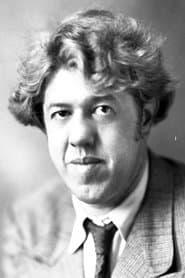
Michel Simon
as Le père Jules (archive footage)
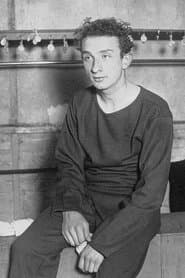
Jean Taris
as Himself (archive footage)
Jean Vigo
as Himself in pictures
A day in the city of Berlin, which experienced an industrial boom in the 1920s, and still provides an insight into the living and working conditions at that time. Germany had just recovered a little from the worst consequences of the First World War, the great economic crisis was still a few years away and Hitler was not yet an issue at the time.
Any given Sunday of 1974 in Spain, soccer games in several stadiums, the sarcastic voice of commentators, the inevitable presence of advertising. Goal! The victors and the defeated.
The film evokes all the aspects of bullfighting - its history, the bulls, the toreros, the arena, the audience - and involves numerous matadors from the era.
An unconventional point of view on one of the most successful Italian bands: Elio e le Storie Tese.
Anna Osborn and Sonia Rockhouse were forever changed when the Pike River Mine Disaster stole their loved ones, but instead of sitting down, they stood up! But They Did tells Anna and Sonia's story, following them through the period of time before and during the re-entry of the mine.
Paparazzi explores the relationship between Brigitte Bardot and groups of invasive photographers attempting to photograph her while she works on the set of Jean-Luc Godard's film Le Mépris (Contempt). Through video footage of Bardot, interviews with the paparazzi, and still photos of Bardot from magazine covers and elsewhere, director Rozier investigates some of the ramifications of international movie stardom, specifically the loss of privacy to the paparazzi. The film explains the shooting of the film on the island of Capri, and the photographers' valiant, even foolishly dangerous, attempts to get a photograph of Bardot.
Flubs and bloopers that occurred on the set of some of the major Warner Bros. pictures of 1938.
Working men and women leave through the main gate of the Lumière factory in Lyon, France. Filmed on 22 March 1895, it is often referred to as the first real motion picture ever made, although Louis Le Prince's 1888 Roundhay Garden Scene pre-dated it by seven years. Three separate versions of this film exist, which differ from one another in numerous ways. The first version features a carriage drawn by one horse, while in the second version the carriage is drawn by two horses, and there is no carriage at all in the third version. The clothing style is also different between the three versions, demonstrating the different seasons in which each was filmed. This film was made in the 35 mm format with an aspect ratio of 1.33:1, and at a speed of 16 frames per second. At that rate, the 17 meters of film length provided a duration of 46 seconds, holding a total of 800 frames.
Explore the mysterious Amazon through the amazing IMAX experience. Amazon celebrates the beauty, vitality and wonder of the rapidly disappearing rain forest.
The Academy Award® nominee Cosmic Voyage combines live action with state-of-the-art computer-generated imagery to pinpoint where humans fit in our ever-expanding universe. Highlighting this journey is a "cosmic zoom" based on the powers of 10, extending from the Earth to the largest observable structures in the universe, and then back to the subnuclear realm.
Filmmaker Alain Resnais documents the atrocities behind the walls of Hitler's concentration camps.
A trip that the author makes to a distant beach trying to find the place where his grandfather made a painting years ago.
Yolanda has a special relationship with objects, she obtains them, knows them and accumulates them. The protagonist bears witness to the bond she has with the objects she treasures and gives a glimpse of its origin: the loss and love; as we enter her living space, her home.
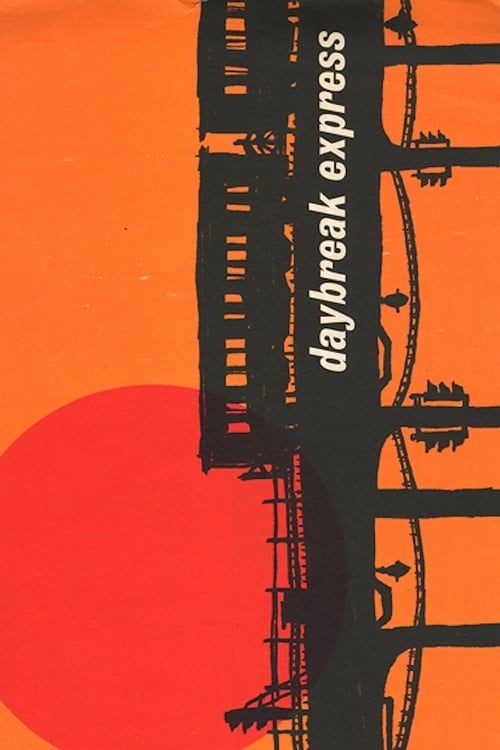
Set to a classic Duke Ellington recording "Daybreak Express", this is a five-minute short of the soon-to-be-demolished Third Avenue elevated subway station in New York City.
Alcoholism and its Ill-Effects was considered to be one of the most popular science propaganda (or educational) films produced in Russia before the revolution of 1917. Alexander Khanzhonkov, the most prominent Russian film producer of that era, financed a special department dedicated to non-fictional cinema, despite the fact that such films were not commercially successful. Unfortunately, not a single copy of the film has survived to the present day. All that remains are 12 frames, which were used by Izvolov to create this reconstruction. He also used extracts from critical reviews, published at the time of the film’s release, to produce a soundtrack.
“Let’s describe it as a desire to be outward followed by a fear of being seen,” The 1975’s Matty Healy tells Apple Music. “I think that is the conversation that happens in this record.” This short film finds Healy reflecting on his motivations and complexities as he and his bandmates reveal the ideas that fuelled their fourth album, Notes on a Conditional Form. It’s a unique and unguarded look at one of Britain’s most venturous bands.