A journey through the night that Princess Diana died and the four independent investigations in two separate countries that followed. Included: a look at Princess Diana's life through her sons.
Gayle King
as Self
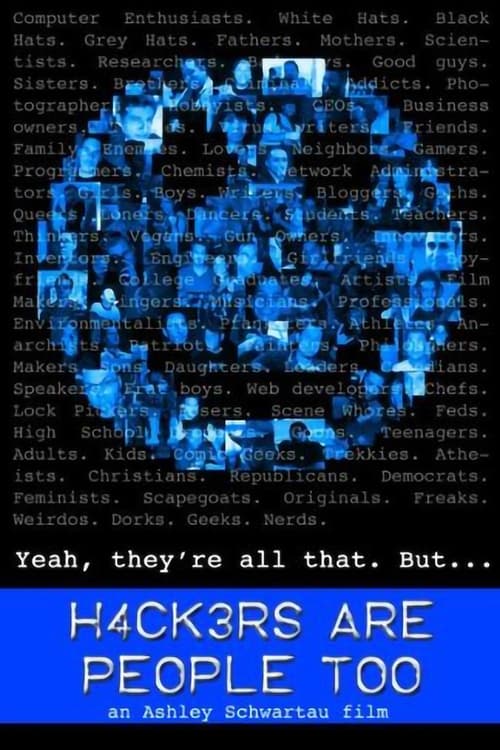
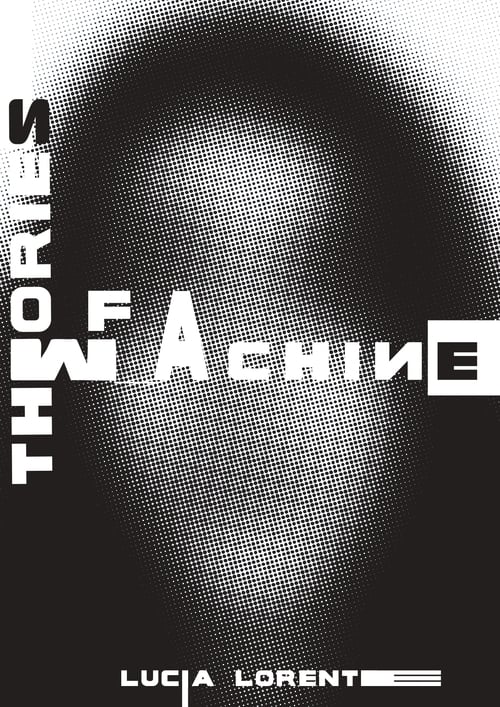
Documentary and reflection about the effects of technology.
Guy Debord's analysis of a consumer society.
In this unprecedented primetime program, 50 volunteers take part in experiments without knowing that the aim of the program is to understand the unconscious mechanisms that can lead us to discriminatory behavior. Because if they knew, it would bias the results of the experiments.
Crump's mission to raise the value of Black life as the civil lawyer for the families of George Floyd, Breonna Taylor, Black farmers and banking while Black victims, Crump challenges America to come to terms with what it owes his clients.
Maria Luiza da Silva is the first transgender in the history of the Brazilian Armed Forces. After 22 years of work in the military, she retired due to disability. The film explores the complex barriers she faced and her path of affirmation as a trans, military and Catholic woman.
Are the face and voice mirrors of the soul? This documentary reveals in detail their impact on our immediate perception of others and recounts astonishing experiments on our psyche.
Originally founded as Freedman’s Town after the Civil War, The Fourth Ward is one of the oldest and most culturally significant black communities in Houston, Texas. In the 1970s, the city along with big business interests planned to redevelop the Fourth Ward in order to revitalize the dilapidated real estate and freshen the image of downtown Houston. The price of progress in this case would be the removal of many poor black families. The film explores a complex series of encounters with elected city officials, businessmen and the people of Fourth Ward in order to better understand how a city like Houston works. Who makes the decisions about where resources are spent and so determines the growth and wealth of the community.
The art of drag represents an artistic transformation where individuals create characters by amplifying gendered traits, challenging established social norms. This practice, known for its spectacular performances, has evolved through periods of repression and acceptance. Through humor and self-mockery, drag disrupts conventions and is deeply rooted in the history of LGBT+ movements. This documentary traces the history of Drag in France and around the world, from William Dorsey Swann—a young emancipated slave considered the first drag queen—to RuPaul, Nicky Doll, and Paloma. Featuring contributions from historians, anthropologists, and sociologists specialized in drag, as well as testimonies from drag artists who are shaping or have shaped this history.
An exploration —manipulated and staged— of life in Las Hurdes, in the province of Cáceres, in Extremadura, Spain, as it was in 1932. Insalubrity, misery and lack of opportunities provoke the emigration of young people and the solitude of those who remain in the desolation of one of the poorest and least developed Spanish regions at that time.
Due to the increasing privatization of basic public services in Spain, companies such as BB Serveis are accused of misappropriating several million euros of public money intended to finance care for the elderly and other dependent persons.
One night seven years ago, Rafael came home after work and discovered that people he did not know had come looking for him. He immediately fled, without looking back. From that moment on, his life changed, as if that night had never ended. One evening, around an improvised fire near a factory, he decides to confide his journey to a stranger. Rafael’s intimate account meets the collective testimony of an entire nation oppressed by poverty, police repression and institutional corruption.
The story of those Italian women who, for eighty years, have fought against power in all its forms.
The life of a female weaver is thrown onto the socio-political canvas of pre-war and post-war communist Poland through the use of expressive allegorical and symbolic imagery in this imaginative take on the documentary form.
A film about the collective psychological traumas of Ukrainians.
This first co-production between the GDR and Great Britain is intended to contribute to an understanding of the situation and attitudes of millions of working people in opposing social orders. Using the example of shipyard workers, fishermen, the brigade and family of a trade union active cook and unemployed person of various ages and professions in Newcastle on the one hand and a brigade of crane operators of the Warnowwerft and fishermen of the Warnemünde cooperative on the other hand, insights into the way of life and attitudes of people of our time are to be conveyed.
A documentary on the expletive's origin, why it offends some people so deeply, and what can be gained from its use.
The stories of a group of Latina migrant mothers whose kids have been taken away by an unfair system in Italy.
Palermo, Sicily, Italy, 2017. Twenty-five years after the murders of anti-mafia judges Giovanni Falcone, on May 23, 1992, and Paolo Borsellino, on July 19, 1992; and on the occasion of the tributes held in memory of both heroes, skeptical photographer Letizia Battaglia, chronicler of their titanic combat, criticizes the opportunism of shady characters who, like businessman Ciccio Mira, profit from the commemoration of both tragedies.