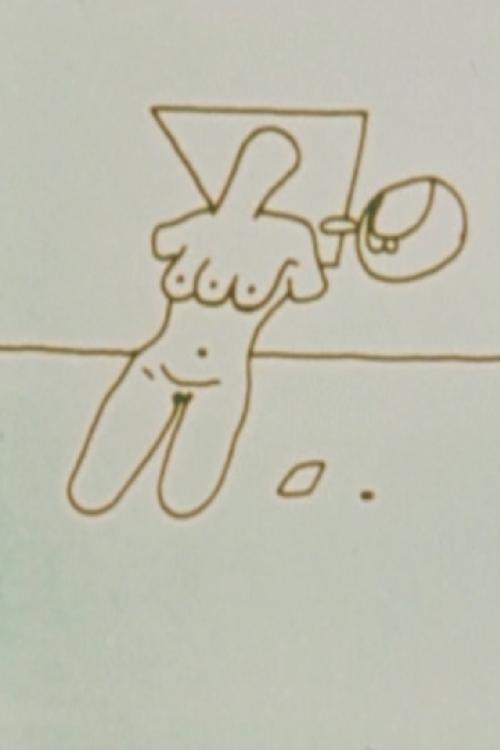
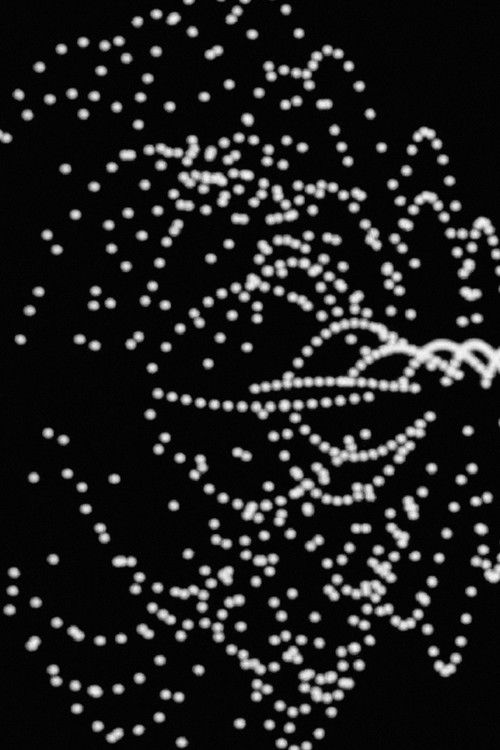
A mathematical play on one repeated movement. It imparts a sense of possibilities: that something simple can produce complex and unexpected patterns. As with an atom, the variety of possibilities from a base movement is potentially infinite.
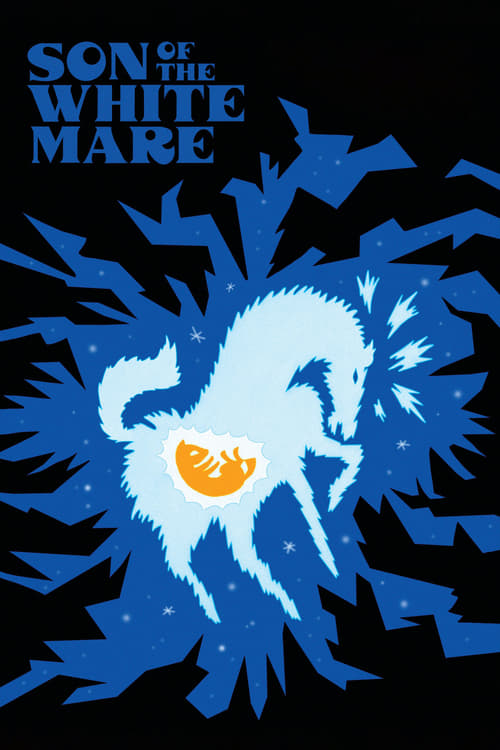
A horse goddess gives birth to three powerful brothers who set out into the Underworld to save three princesses from three evil dragons and reclaim their ancestors' lost kingdom.
Art student Ian Jing impresses the realism-loving art teacher Mrs. Hui from the get-go. Following her advice, he draws exactly what he sees, straining his eyes in the process. To Mrs. Hui’s horror, Ian’s artwork gets progressively blurrier. In turn, his online fame skyrockets, as art critics on social media praise his unique style as an abstract artist. They ascribe deep, profound (pretentious) intentions and meanings to his stylistic choices, when all he's actually doing is drawing exactly what he sees.
Enigma is something of a more glamorous version of White Hole, with a wide variety of elaborate textures (often composed of iconographic and religious symbols) converging towards the centre of the screen.
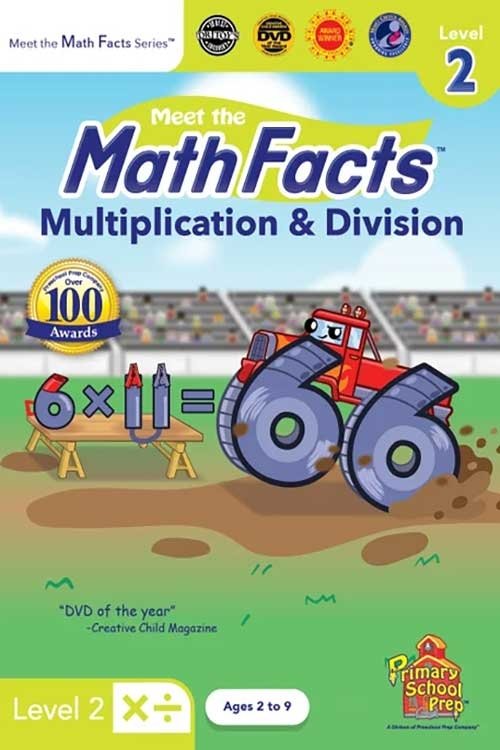
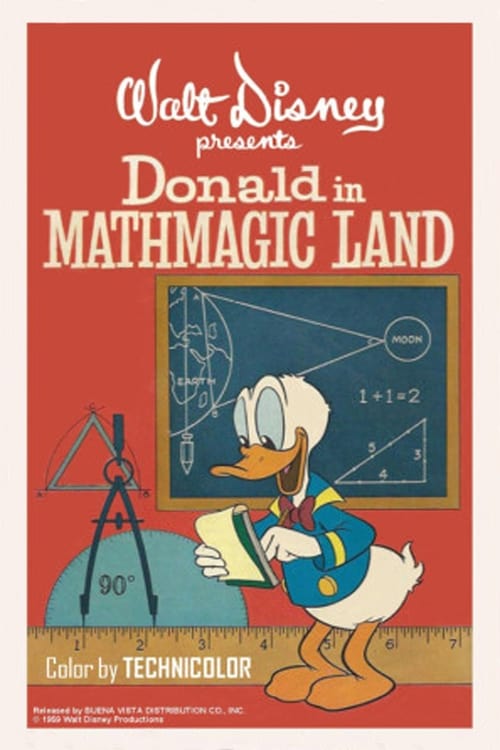
Join Tad and Lily a they blast off on an exciting educational adventure! Tad and Lily need the perfect collection of things to take to school for their math assignment. When they finally decide on moon rocks, there's just one problem - how will they get them? With some magical help from their firefly friend, Edison, they board a rocket to start their quest. Soon the twins learn that math is everywhere, even in outer space!
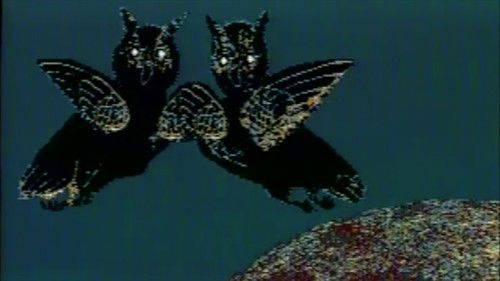
Made entirely on Roger Wagner's HyperStudio software, Chris Marker explores set theory, using Noah's Ark as an example.
In this animated short, simple geometric forms as thin and flat as playing cards constantly form and re-form to the sound of the koto, a 13-stringed Japanese instrument.
A raccoon on a voxel boat talks about his job.
A burst of cheer and refreshment that it seems perfectly suited to a late July afternoon.
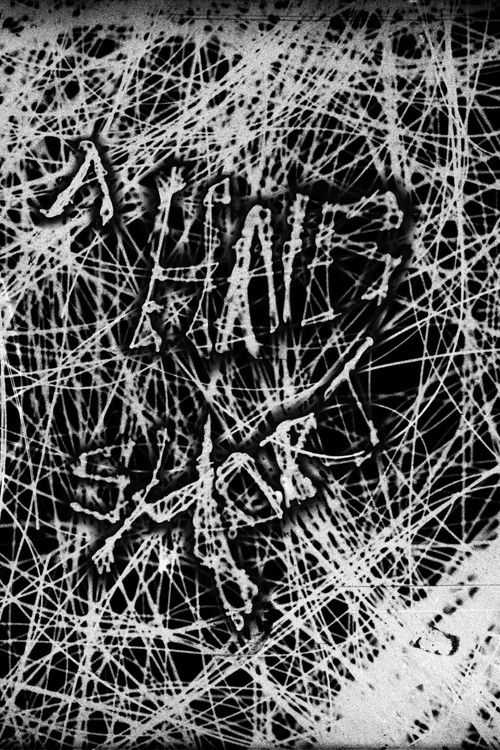
An attempt to constitute a human / machine dialogue. It shows the filmmaker’s blood as seen / heard with the eyes / ears of the machine which is a film projector with optical sound. He affixed his blood onto clear film leader by cutting into the flesh and then pressing the film leader onto the wound. Additionally he had blood taken with a syringe and afterwards dripped it on the film leader. fresh and clotted blood was used.
Nine chapters, two hours of maths, that take you gradually up to the fourth dimension. Mathematical vertigo guaranteed!
Mamori transports us into a black-and-white universe of fluid shapes, dappled and striated with shadows and light, where the texture of the visuals and of the celluloid itself have been transformed through the filmmaker’s artistry. The raw material of images and sounds was captured in the Amazon rainforest by filmmaker Karl Lemieux and avant-garde composer Francisco López, a specialist in field recordings. Re-filming the photographs on 16 mm stock, then developing the film stock itself and digitally editing the whole, Lemieux transmutes the raw images and accompanying sounds into an intense sensory experience at the outer limits of representation and abstraction. Fragmented musical phrases filter through the soundtrack, evoking in our imagination the clamour of the tropical rainforest in this remote Amazonian location called Mamori.
Torn from their home by a hand in the sky, colorful entities seek freedom from a rigid binary in this short experimental animation.
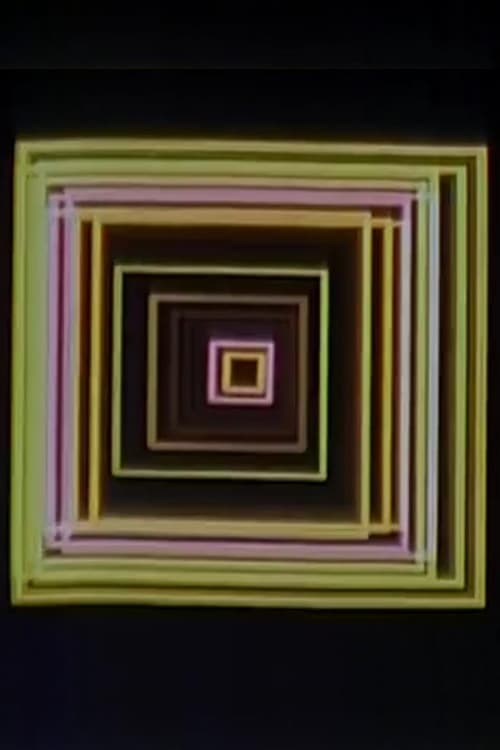
This is a didactic film in disguise. A progression of brilliant geometric shapes bombard the screen to the insistent beat of drums. The filmmaker programmed a computer to coordinate a highly complex operation involving an electronic beam of light, colour filters and a camera. This animation film, without words, is designed to expose the power of the cinematic medium, and to illustrate the abstract nature of time.
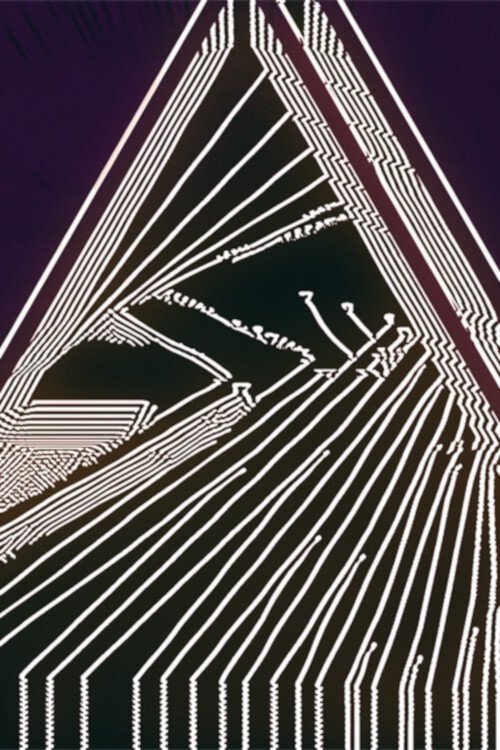
A unique journey across a topography created entirely from a form of digital light and shadow—a bristling terrain of poles bending the light in every direction. This film is the remake of Barcode, an abstract road-movie about light and shadows.
Three books: a film festival catalogue, a dictionary, the Bible. Three works whose materiality has become obsolete by the digital dematerialization. A commentary on the fragility of culture.
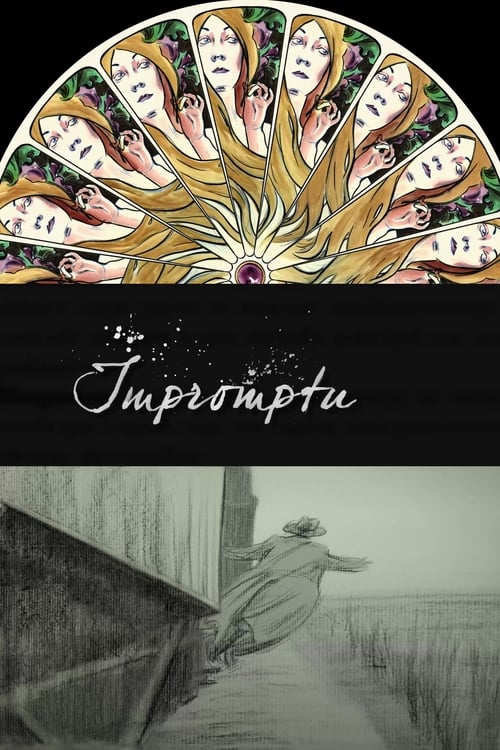
A journey to the origins of cinema, starting with its forgotten fathers: the pioneers who achieved moving images before 1895, the official year of the Lumière cinematograph. Through five studies by Frédéric Chopin, 'Impromptu' is also a tribute to the end of the 19th century, to its immortal muses, and to the fascination with movement itself.
A student finds out he is late for his train.
SPEED is the result of an artificial intelligence transforming bin footage into something beautiful in order to free the planet from pixel pollution. By video recycling trash shots into video art using the latest algorithm technology, visual art may help to understand our limited resources on earth and how to use them in a respectful manner. Every day we produce millions of clips sharing them on social media without even noticing anymore how much pixel garbage we create. At the same time, we produce every day millions of tons of plastic waste, polluting our environment without even noticing it anymore. SPEED wants to be a symbol of change as we are running out of time.