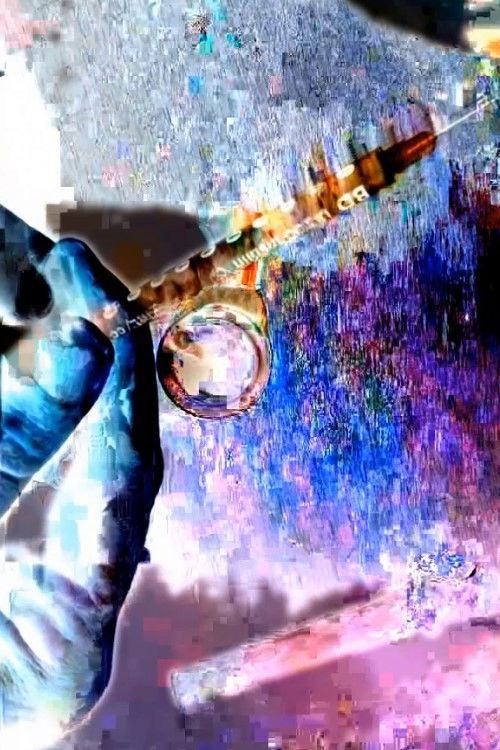
A short experimental animation influenced by micrographic images of cells, acids, bacteria, and viruses using the technique of painting on glass and stop-motion animation. Ink, canvas, paint, glycerin, water, oil, and glass.
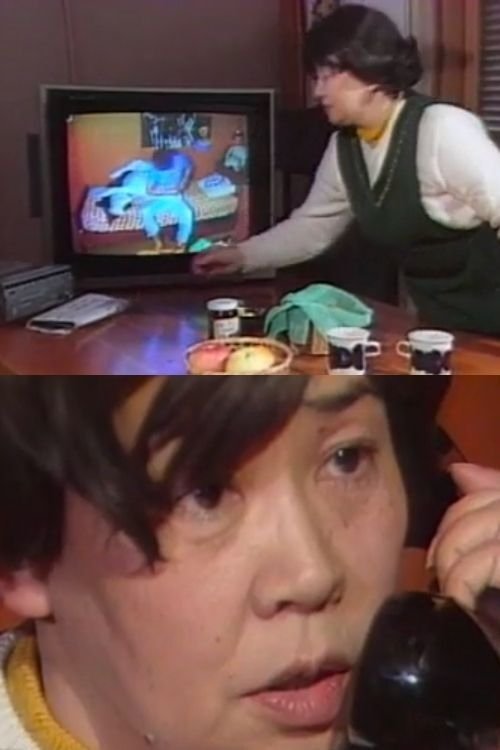
Hideo, a young man living away from his parents, is kept under constant surveillance by his doting mother via an omnipresent television monitor. Mama can only communicate with her beloved, absent son through the video screen.
The pantomime of two characters exchanging roles is accompanied by a three-layered phonogram, where sophisticated narrative text is interrupted by slightly accelerated excerpt from Brezhnev’s speeches, as well as by fragments of statements of the mentally ill person with the schizophasia symptom.
A young model falls victim to a sadistic cult of sexual slavery, snuff tapes and black magic.
Simultaneously sumptuous and gorgeous, garish and grim, this is a re-working of Pinocchio for the neo-liberal era. Rachel Maclean’s dark fairytale, which represented Scotland at the Venice Biennale 2017, depicts a brash and baroque binary world of poverty and riches where the prospect of easy wealth tempts even good boys like Pic into bad ways. But if everyone believes the lie, what’s the problem?
An experimental documentary about the intertwining of bodies and lives in a cattle ranch in Les Avins, Belgium, with cattle of the breed Blanc Bleu Belge, known for its fascinating musculature.
Three screams in a mental system composed of barbed wire and napalm. A plastic tank encloses the geometry of a sex. Outside is a corrupt clue. Incisions are the incantation of melancholy. No way out. (Industrial drone improvised on improvised images, deficient results).
The evolution of mainstream pornography’s extremities and the early days of pay-per-view channels' noise.
“Peter Kubelka…was teaching at Staatliche Hochschule für Bildende Künste – Städelschule (Städel) at the time. His classes, filmmaking and cooking, were very unique, and this film was made around the time I was studying with him at Städel… This is a single-shot film, moving along the passageway using a handmade dolly. I used an Arriflex 16ST camera, and I changed the filming speed from 48fps to 4-6 fps while shooting.” - Yo Ota
“The visual harmony of the landscape is disturbed by a screen that allows us to see into the distance (television). The film is composed of six scenes that feature a television in the landscape. The speed of the television (in NTSC) is 30 frames per second, and never changes in this film. But the landscape views pass at different speeds.” - Yo Ota
“The structure of human vision is the visual knowledge of the world. Individuals do not visually understand the world through the eyes, but through the brain. That is to say, human vision has been formed by knowledge and experience. The film can show a new vision, provided that the cinema is also a kind of visual experience and visual knowledge.” - Yo Ota
“This film offers a metacinematic study of tempo and change and a figure of velocity. […] Ota recorded [three different locations in Tokyo] at the interval of hours, and sometimes even days, by using different filters and by alternating the camera speed. The result…represents an inquiry into the abstract space-time of cinema where Ota plays with the physical fact that time is a ‘function of movement in space.’” –Malin Wahlberg
“Sequences of space-time manipulation that raise the problem of continuity in the shot.” - Yo Ota
“My attempt at a filmic interpretation of Haraguchi Noriyuki’s ‘Inclined Horizon,’ a three-dimensional physical work featured in the ‘Dance Hakushu 2006’ exhibition held in the Hakushu district of Hokuto City, Yamanashi Prefecture. Haraguchi’s work was modeled out of earth that will return to its original form after about a month, and my aim was to resurrect the concept of this work on film.” - Yo Ota
An experimental documentary about the spectacle of substance abuse on social media. More than 45 hours of footage, hundreds of pages of blog posts and interviews were distilled and remixed using glitch and cut-up techniques to insure anonymity, transcend the shock factor and unfold this complex, singular and stratified use of social media.