An expansion upon an idea put forward in Marie Menken's film Notebook; single-frame footage of the moon shot on various nights, blinking and darting around within Menken's field of vision.
Anne Bean, John McKeon, Stuart Brisley, Rita Donagh, Jamie Reid and Jimmy Boyle are interviewed about their artistic practice and the legacy of Surrealism on their work.
The Kuwaiti short film العاصفة (The Storm) explores Kuwait's social and economic shifts before and after the discovery of oil. Through the perspectives of an older father and his modernized son, it delves into the challenges of tradition versus rapid modernization.
Part of a collection of restored early works by Nam June Paik, the haunting Beatles Electronique reveals Paik's engagement with manipulation of pop icons and electronic images. Snippets of footage from A Hard Day's Night are countered with Paik's early electronic processing.
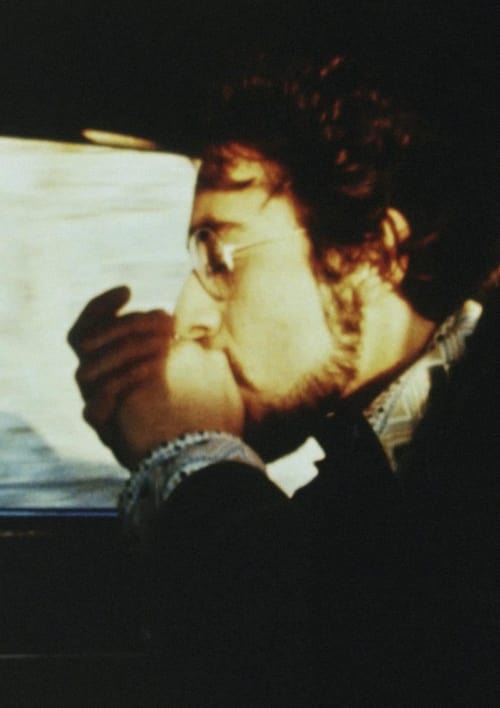
Arguably Larry Gottheim’s most exuberant experiment in the single-shot, single-roll format (and his first with a soundtrack), HARMONICA trains the camera on a friend improvising a tune in the backseat of a moving car. Held out the window, the harmonica becomes a musical conduit for the wind, while Gottheim's film transforms before our eyes into a playful meditation on wrangling the natural elements into art. - Max Goldberg
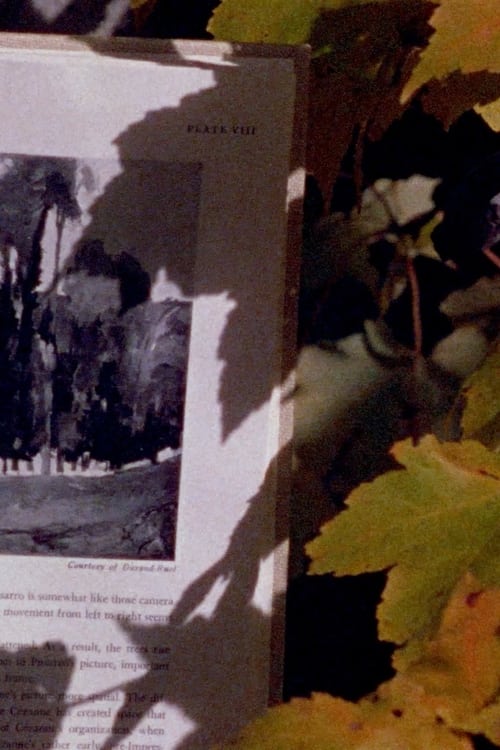
Four four-minute image sections and four four-minute sound sections are linked in all combinations of the sound sections with each of the image sections. This established affinities between each of the image sections to the others, and the sound sections to each other. The image sections are: surveyors measuring the land near my house as seen through an old window, a family of Siamang Gibbon apes in the Washington zoo, an industrial site, and a page turned from a book on Cézanne’s composition showing a diagram of his painting Mardi Gras, filmed against bright leaves. The sound sections are: a dramatic scene from Debussy’s opera “Pelléas et Mélisande”, a passage from William Wordworth’s autobiographical poem “The Prelude,” sounds from rowing on a lake at night, and the sounds of the apes vocalizing.
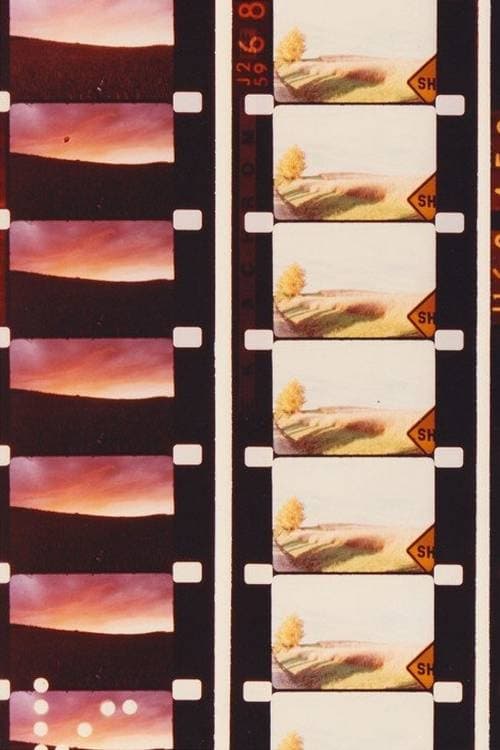
Working with Virgil’s four-part poem “Georgics” and Antonio Vivaldi’s concertos “The Four Seasons” as models, Gottheim arranged his painterly compositions into four distinct sections, each edited according to its own exacting pattern. The seasonal flux thus informs both the form and content of the image, with the basic elements of trees, sky, hills and the occasional crisscrossing clothesline filmed in every imaginable light.
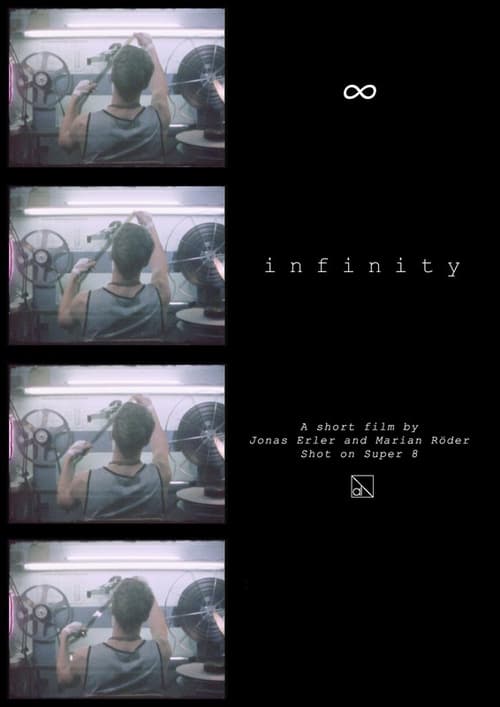
In the old projection room of a cinema something comes to life. 24 frames per second. 24 beats per minute. The analogue film is infinite. ∞
This experimental nature documentary by Minna Rainio and Mark Roberts depicts climate change and the wave of extinction from the point of view of our near future. Actually, it depicts the age we live in now, or rather its fateful consequences.
A gang of women wreak havoc in the city, killing various men who have treated women poorly. And sometimes they do it just for fun.
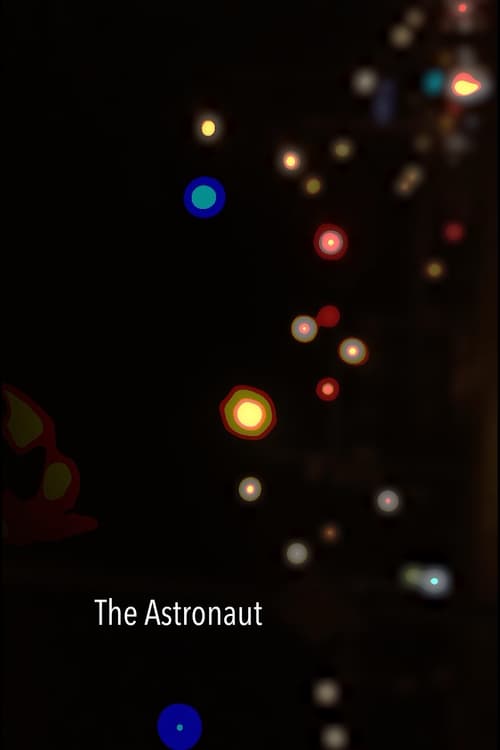
A short film recounting the travels of a lonely astronaut confronted by the unknown. Unfolding as a mystery, it becomes a carefully subtle, autobiographical examination of the feeling of loneliness and the existential issue of not understanding life on earth and ones place among it.
"Ryuta is 5 years old. Even though he is my son, I sometimes wonder what this small person is to me. Even though I see his joys and sadnesses and know the feel of his warmth on my skin when I hold him, there are moments when my feelings for him become vague and blank." - Takashi Ito
A work produced for the Morimura Yasumasa Exhibition at the Yokohama Museum of Art, (April 6 to June, 1996). It was shown in an old-style theater constructed within the exhibit space that featured photographs of Morimura playing famous foreign and Japanese actresses.
An average working man who is alone in a world of deception finds himself in a marriage of convenience.
"The filming of the entrance to the company dormitory in which the film-maker was living. Centering the film on one pillar, he warps the spaces to the left and right and creates an unstable space similar to painting that employs anamorphosis. Made as were SPACY and BOX with a large number of photographs, the film ends with a violent movement, but is poetic for this." - Takashi Nakajima
I turned my gaze to the various events in daily life and made this filmic diary in a manner as if confessing my feelings. Of course, since I was making the film, I wanted to depict these feelings and events with tricky techniques. I used various methods to shoot photographs of a relative's wedding, the landscape I see from window of my house, commemorative travel photographs and the like frame-by-frame.
The main protagonist is a young fellow who tries to live his life within 30 frames. He's a person suitable for any atmosphere, which makes him different from the rest. He's like a plant that differs from others, an informer who wants to escape out from his skin. This man loves, hates, eats, drinks, lies ill, laughs, cries, kisses, plays... These are agonies of a contemporary man.
In 1967, experimental filmmaker Jorgen Leth created a striking short film, The Perfect Human, starring a man and women sitting in a box while a narrator poses questions about their relationship and humanity. Years later, Danish director Lars von Trier made a deal with Leth to remake his film five times, each under a different set of circumstances and with von Trier's strictly prescribed rules. As Leth completes each challenge, von Trier creates increasingly further elaborate stipulations.