Marc Minkowski
as Direction musicale
Salzburger Bachchor
as Choeur
Genia Kühmeier
as Soprano
Elisabeth Kulman
as Alto
Julien Behr
as Ténor
Charles Dekeyser
as Basse
Alois Glassner
as Chef de choeur
Bartabas
as Mise en selle et chorégraphie
Letters, Riddles and Writs is a one act opera for television by Michael Nyman broadcast in 1991.
The incredible tale of Mozart's Prague years.
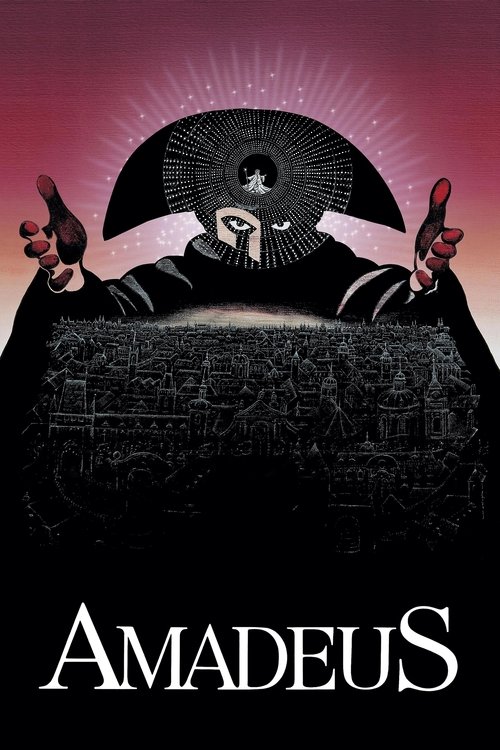
Disciplined Italian composer Antonio Salieri becomes consumed by jealousy and resentment towards the hedonistic and remarkably talented young Salzburger composer Wolfgang Amadeus Mozart.
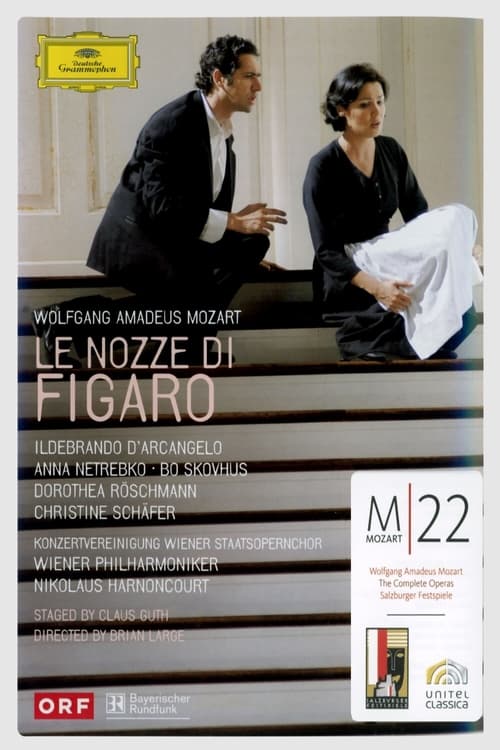
This release contains the celebrated 2006 production of Mozart's Nozze di Figaro that was directed for the stage by Claus Guth at that year's Salzburg Festival. Ildebrando D'Arcangelo takes the title role, and gets support from Anna Netrebko as Sussanna, Bo Skovhus as Il Conte Di Almaviva, and Dorothea Roschmann as La Contessa. Nikolaus Harnoncourt conducts the orchestra.
The Marriage of Figaro is a continuation of the plot of The Barber of Seville several years later, and recounts a single "day of madness" in the palace of the Count Almaviva near Seville, Spain. Rosina is now the Countess; Dr. Bartolo is seeking revenge against Figaro for thwarting his plans to marry Rosina himself; and Count Almaviva has degenerated from the romantic youth of Barber into a scheming, bullying, skirt-chasing baritone. This follows the Count trying to obtain favours from Susanna, Figaro's bride to be, under the nose of the Countess.
Martha Argerich, is considered as one of the greatest pianists of our time. Sophie Pacini, on the other hand, has been praised by critics and loved by her fans for her 'effectful, but never affected piano playing'. An intimate and lightning personal and artistic friendship connects Sophie Pacini with Martha Argerich, who has now become her personal musical mentor. The two female pianists play at the Konzerthaus Wien with festive splendor on four hands with works by Mozart and Liszt.
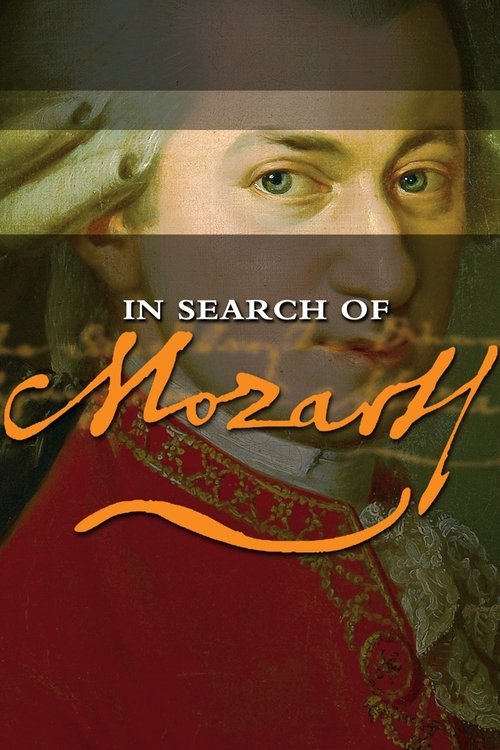
Made to celebrate the 250th anniversary of Mozart's birth, IN SEARCH OF MOZART is the first feature-length documentary on Mozart's life. Produced with the world's leading orchestras and musicians, told through a 25,000 mile journey along every route Mozart followed, this detective story takes us to the heart of genius. Throughout, it is the music that takes center stage, with the jigsaw of Mozart's life fitting around it.
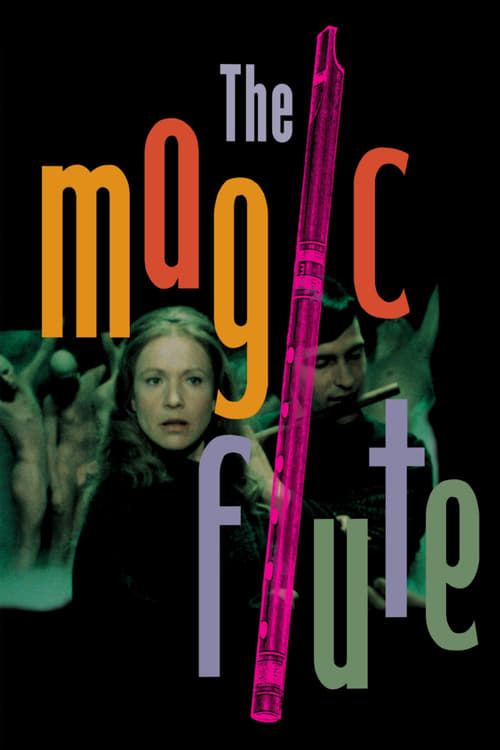
The Queen of the Night enlists a handsome prince named Tamino to rescue her beautiful kidnapped daughter, Princess Pamina, in this screen adaptation of the beloved Mozart opera. Aided by the lovelorn bird hunter Papageno and a magical flute that holds the power to change the hearts of men, young Tamino embarks on a quest for true love, leading to the evil Sarastro's temple where Pamina is held captive.
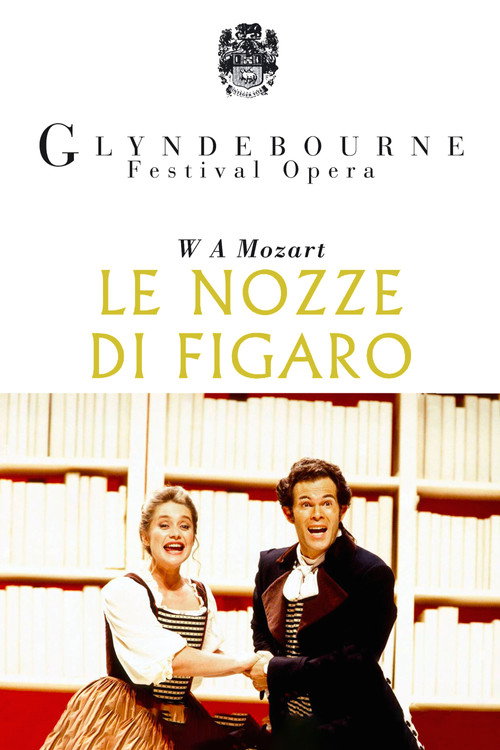
Count Almaviva lives with his Countess on their estate near Seville. The Count has his eye on his wife’s maid Susanna, who is betrothed to the Count’s servant, Figaro. Much to Figaro’s dismay, the Count plans to seduce Susanna on wedding night. Meanwhile, Cherubino, the Count’s young page, is infatuated with the Countess, but has just been dismissed after being discovered with Barbarina, the gardener Antonio’s daughter.
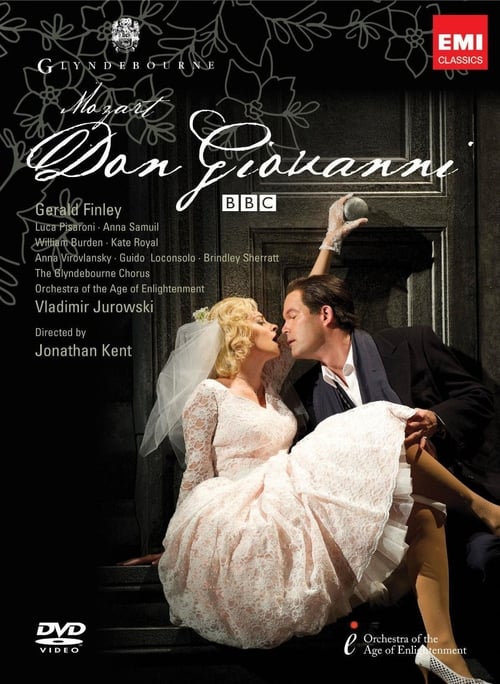
Mozart's second collaboration with the mercurial librettist Lorenzo da Ponte is among the very blackest of black comedies. Glyndebourne welcomes back the winning team of director Jonathan Kent and designer Paul Brown, while the music is conducted by Vladimir Jurowski. In the title role, the bass-baritone Gerald Finley, joined by Luca Pisaroni, Kate Royal and the young Russian soprano Anna Samuil.
Prince Tamino promises the Queen of the Night that he will rescue her daughter Pamina from the enchanter Sarastro. He begins his quest, accompanied by the bird-catcher Papageno – but all is not as it seems… Tamino and Papageno discover Sarastro is a wise and kind leader. They undergo three ordeals. By the end they are united with their true loves: Tamino with Pamina, and Papageno with his Papagena.
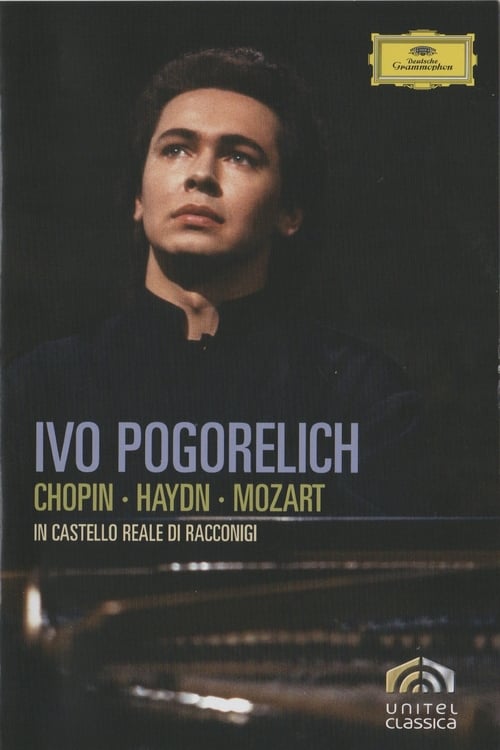
At the peak of his career, Ivo Pogorelich was filmed at Racconigi Castle in Italy playing four major works by Chopin as well as sonatas by Haydn an dMozart. Director Horant H. Hohlfeld captures the pianist's virtuosity in revealing close-ups. The program includes: CHOPIN Polonaise in c op40/2; Nocturne in E♭ op55/2; Prelude in c♯ op45; Sonata in b op58 // HAYDN Sonata in A♭ H16.46 // MOZART Sonata in A K331 "alla turca".
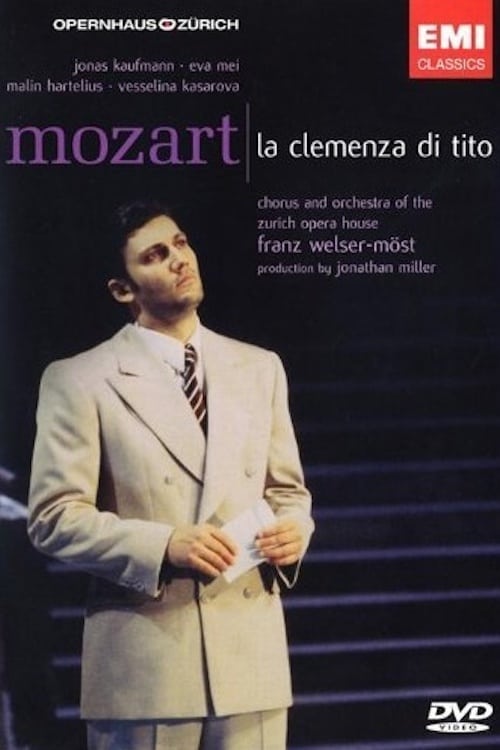
This is an effective staging, though the set looks medieval and the costumes are modern. It’s well paced, well played, well sung. Jonas Kaufmann is an ideal Tito. His voice is not only beautiful and flexible, it’s also ample, retaining warmth and sweetness when he sings out. The character of Tito is too good to be true, but Kaufmann makes him intense, noble, and beliveable. Vesselina Kasarova is riviting as Sesto. Her voice is gorgeous and multi-colored, her technique exquisite, her immersion in the role complete.
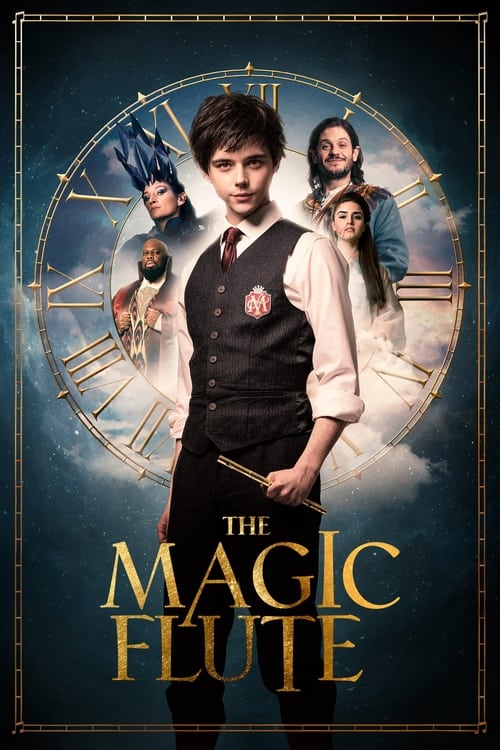
A seventeen year old travels from London to the Austrian Alps to attend the legendary Mozart boarding school. There, he discovers a centuries-old forgotten passageway into the fantastic world of Mozart's "The Magic Flute".
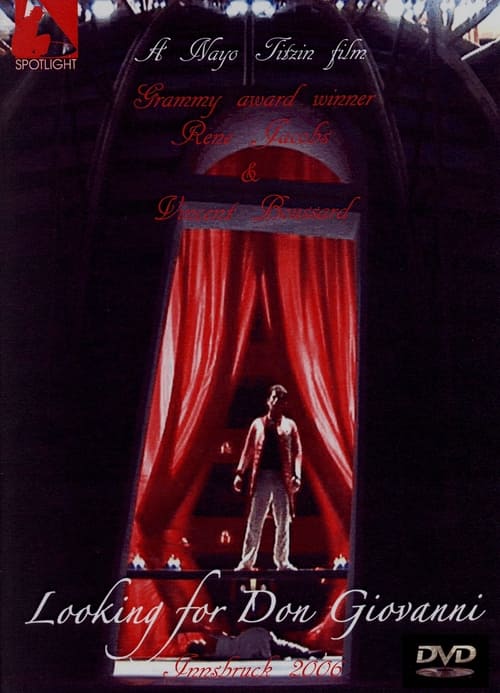
In Baden-Baden, Nayo Titzin follows the producers of the opera Don Giovanni, created for the Innsbruck Festival of 2006. He is looking for a musical truth... What if Mozart's masterwork Don Giovanni had been interpreted in a wrong way for more than two centuries? Conductor René Jacobs, famous for his performance of Così fan tutte and laureate of a Grammy Award for his innovative recording of The Marriage of Figaro, comes back with new ideas on the comprehension of one of the greatest operas of all times. In this relevant documentary, Nayo Titzin clarifies and highlights all the brightness of those melodies and recitatives. Rewarded with many praises in the international press, this production shows the dramaturgical perfection of the "opera of the operas," the absolute of the genre, as Wagner once said. Once more, the Bulgarian director offers a fun and subtle report, and makes sure that everyone will understand this myth.
In the garden of a Baroque villa, a chamber orchestra is playing Mozart’s wonderful quartets and quintets, and everywhere is pervaded with echoes and references to the composer’s world. As if by magic or conjured by the imagination, figures emerge from the shadows of the labyrinthine garden: they are Mozart’s characters, and they play with – or perhaps make fun of – the guests at the party, embroiling them in their well-known amorous dalliances. This piece, in which the spectator encounters among the dreamlike medley many well-known protagonists from Mozart’s operas (including Figaro, Don Giovanni, and the Queen of the Night), is a full-length choreographic work by Massimiliano Volpini, who himself performed on stage for many years as a dancer with the Scala ensemble.
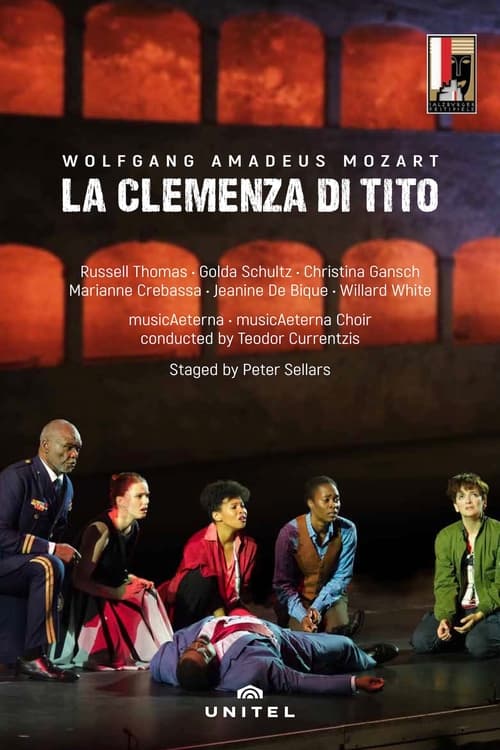
How do we live together in an age of conflict? How do you heal a divided and angry people? In their 2017 production of Mozart’s La clemenza di Tito, Peter Sellars and Teodor Currentzis examine these questions through the story of a warrior-emperor who brings peace to his divided land and pardons his own would-be assassins. Written under a time crunch (legend has it that it was written in only 18 days, although it is likely an exaggeration) during the last year of Mozart’s life, the opera is based on a libretto written more than half a century earlier by Pietro Metastasio. It was commissioned for the coronation of Leopold II as King of Bohemia, and received its first public performance at the Estates Theatre in Prague on September 6, 1791.