Through interviews we meet some of the people who risked their lives to hide Jewish children during World War II and how this experience has continued to affect the survivors.
The classic story of English POWs in Burma forced to build a bridge to aid the war effort of their Japanese captors. British and American intelligence officers conspire to blow up the structure, but Col. Nicholson, the commander who supervised the bridge's construction, has acquired a sense of pride in his creation and tries to foil their plans.
In 1920s Ireland young doctor Damien O'Donovan prepares to depart for a new job in a London hospital. As he says his goodbyes at a friend's farm, British Black and Tans arrive, and a young man is killed. Damien joins his brother Teddy in the Irish Republican Army, but political events are soon set in motion that tear the brothers apart.
In post–civil war Spain, 10-year-old Ofelia moves with her pregnant mother to live under the control of her cruel stepfather. Drawn into a mysterious labyrinth, she meets a faun who reveals that she may be a lost princess from an underground kingdom. To return to her true father, she must complete a series of surreal and perilous tasks that blur the line between reality and fantasy.
What would your family reminiscences about dad sound like if he had been an early supporter of Hitler’s, a leader of the notorious SA and the Third Reich’s minister in charge of Slovakia, including its Final Solution? Executed as a war criminal in 1947, Hanns Ludin left behind a grieving widow and six young children, the youngest of whom became a filmmaker. It's a fascinating, maddening, sometimes even humorous look at what the director calls "a typical German story." (Film Forum)
Au revoir les enfants tells a heartbreaking story of friendship and devastating loss concerning two boys living in Nazi-occupied France. At a provincial Catholic boarding school, the precocious youths enjoy true camaraderie—until a secret is revealed. Based on events from writer-director Malle’s own childhood, the film is a subtle, precisely observed tale of courage, cowardice, and tragic awakening.
L, a student in India witness to the government's violent response to university protests, writes letters to her estranged lover while he is away.
The true story of pianist Władysław Szpilman's experiences in Warsaw during the Nazi occupation. When the Jews of the city find themselves forced into a ghetto, Szpilman finds work playing in a café; and when his family is deported in 1942, he stays behind, works for a while as a laborer, and eventually goes into hiding in the ruins of the war-torn city.
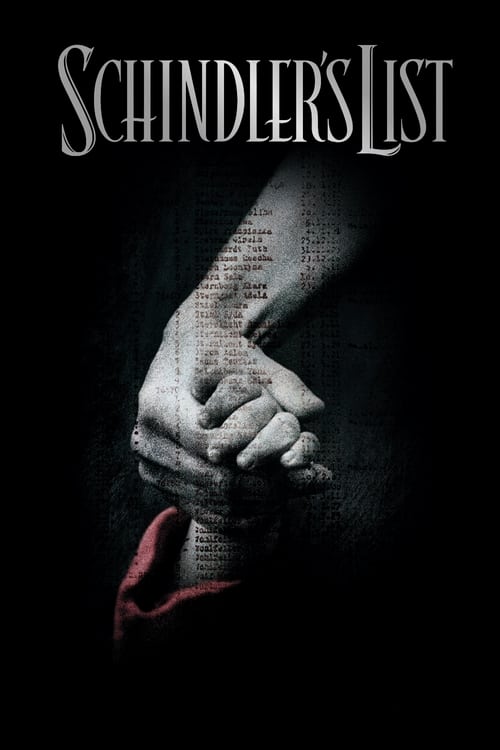
The true story of how businessman Oskar Schindler saved over a thousand Jewish lives from the Nazis while they worked as slaves in his factory during World War II.
The story of a German singer named Willie, who while working in Switzerland, falls in love with a Jewish composer named Robert, whose family is helping people to flee from the Nazis. Robert’s family is skeptical of Willie, thinking she could be a Nazi as she becomes famous for singing the song “Lili Marleen”.
During the Nazi occupation of 1944 Rome, Resistance leader Giorgio Manfredi is pursued by the Nazis as he seeks refuge and a means of escape.
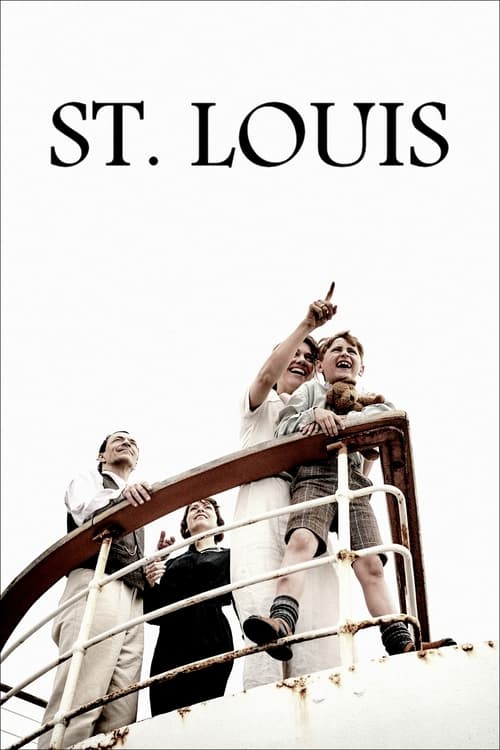
Hamburg, Germany, 1939. Getting a passage aboard the passenger liner St. Louis seems to be the last hope of salvation for more than nine hundred German Jews who, desperate to escape the atrocious persecution to which they are subjected by the Nazi regime, intend to emigrate to Cuba.
A pig farm in Lety, South Bohemia would make an ideal monument to collaboration and indifference, says writer and journalist Markus Pape. Most of those appearing in this documentary filmed in Slovakia, the Czech Republic, Poland, France, Germany and Croatia have personal experience of the indifference to the genocide of the Roma. Many of them experienced the Holocaust as children, and their distorted memories have earned them distrust and ridicule. Continuing racism and anti-Roma sentiment is illustrated among other matters by how contemporary society looks after the locations where the murders occurred. However, this documentary film essay focuses mainly on the survivors, who share with viewers their indelible traumas, their "hole in the head".
The Polish city of Łódź was under Nazi occupation for nearly the entirety of WWII. The segregation of the Jewish population into the ghetto, and the subsequent horrors are vividly chronicled via newsreels and photographs. The narration is taken almost entirely from journals and diaries of those who lived–and died–through the course of the occupation, with the number of different narrators diminishing as the film progresses, symbolic of the death of each narrator.
September 1st, 1939. Nazi Germany invades Poland. The campaign is fast, cruel and ruthless. In these circumstances, how is it that ordinary German soldiers suddenly became vicious killers, terrorizing the local population? Did everyone turn into something worse than wild animals? The true story of the first World War II offensive that marks in the history of infamy the beginning of a carnage and a historical tragedy.
A documentary chronicling the adolescent years of Elie Wiesel and the history of his sufferings. Eliezer was fifteen when Fascism brutally altered his life forever. Fifty years later, he returns to Sighetu Marmatiei, the town where he was born, to walk the painful road of remembrance - but is it possible to speak of the unspeakable? Or does Auschwitz lie beyond the capacity of any human language - the place where words and stories run out?
Gunman Flame and his partner Citron assassinate Nazi collaborators for the Danish resistance. Assigned targets by their Allies-connected leader, Aksel Winther, they relish the opportunity to begin targeting the Nazis themselves. When they begin to doubt the validity of their assignments, their morally complicated task becomes even more labyrinthine.
Documentary about an annual beauty contest held in Haifa, Israel, in which only women who survived the Holocaust - and are therefore between 77 and 95 years old - are allowed to take part.
The 43 Group was an English anti-fascist group set up by Jewish ex-servicemen in the immediate wake of World War II when, on their return to London, they encountered British fascist organisations such as Jeffrey Hamm’s “British League of Ex-Servicemen” and later Oswald Mosley’s reformed fascist party, the Union Movement.
This is a story of faith, renewal and redemption. Joe Engel, with an unwavering will to live, overcame unimaginable horrors to become a treasured citizen, community leader, teacher and philanthropist.