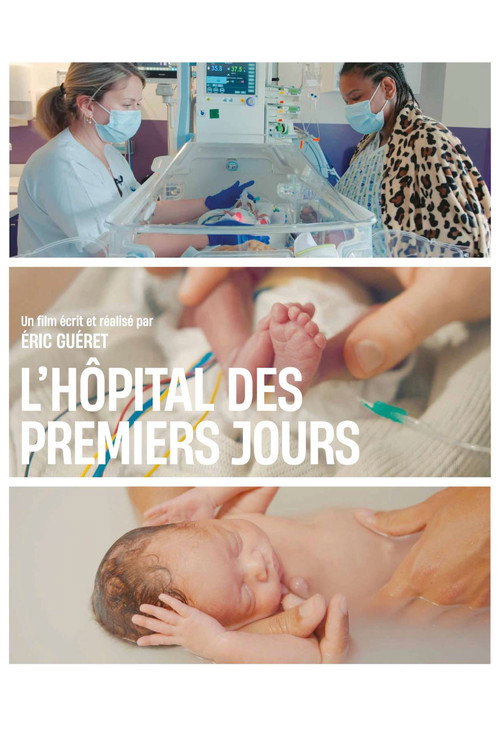
If We Knew is a documentary about paediatricians in an intensive-care unit for newborns. A film about the compassion needed to heal the sick and occasionally needed to hasten the death of a child.
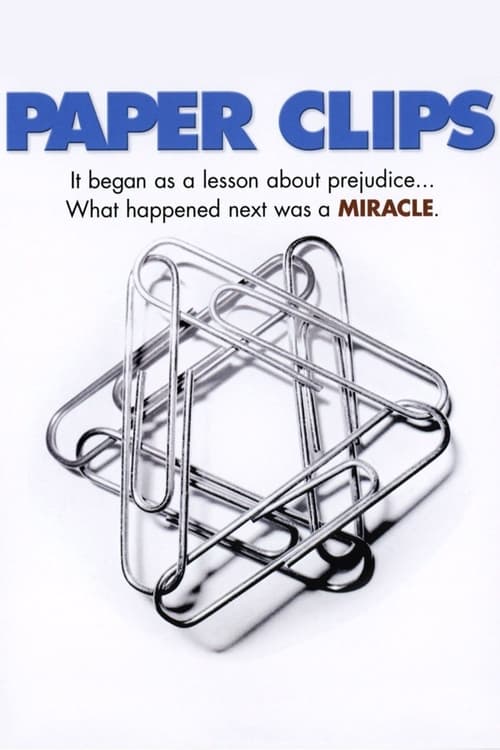
Whitwell, TN is a small, rural community of less than two thousand people nestled in the mountains of Tennessee. Its citizens are almost exclusively white and Christian. In 1998, the children of Whitwell Middle School took on an inspiring project, launched out of their principal's desire to help her students open their eyes to diversity in the world and the horrors and enormity of the holocaust.
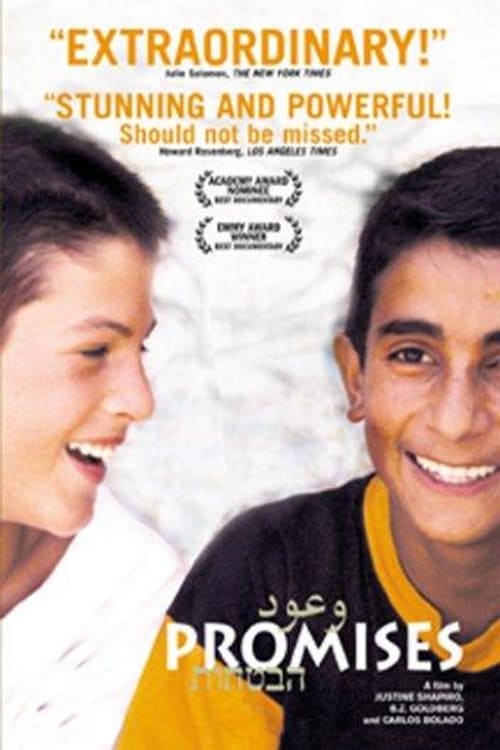
Documentarians Justine Shapiro and B.Z. Goldberg traveled to Israel to interview Palestinian and Israeli kids ages 11 to 13, assembling their views on living in a society afflicted with violence, separatism and religious and political extremism. This 2002 Oscar nominee for Best Feature Documentary culminates in an astonishing day in which two Israeli children meet Palestinian youngsters at a refugee camp.
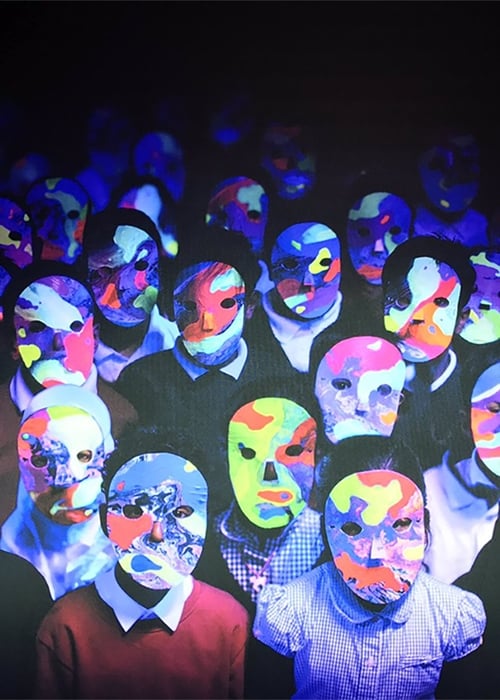
Ted Hughes's 1993 novel The Iron Woman is the springboard for this multi-media project by Mikhail Karikis. The video section of the installation features seven-year-olds from Mayflower Primary School in East London discussing the novel's environmental themes.
The industrial noise of a factory in the Isle of Grain provides a percussive backbeat as a group of local children rap about their lives and play in the woods, sometimes wearing luminous tribal masks.
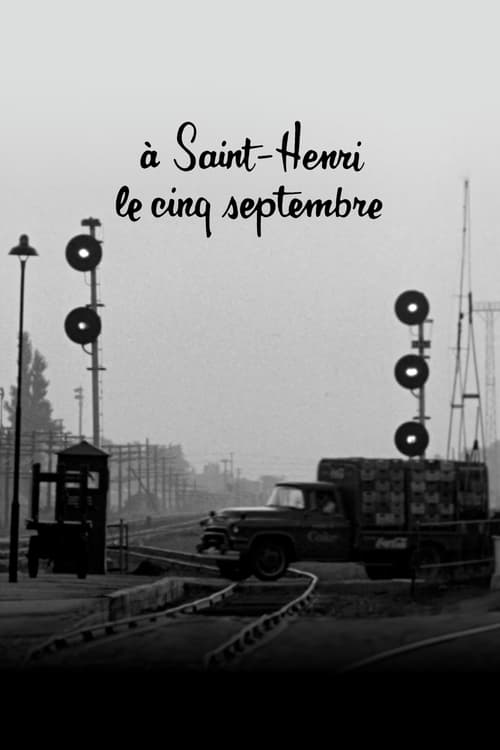
This short film is a series of vignettes of life in Saint-Henri, a Montreal working-class district, on the first day of school. From dawn to midnight, we take in the neighbourhood’s pulse: a mother fussing over children, a father's enforced idleness, teenage boys clowning, young lovers dallying - the unposed quality of daily life.
A serious Swiss melodrama/documentary about abortion, marketed as a sexy exploitation movie in the US. The film contains real medical footage.
Phases of Matter follows living and inanimate residents of a teaching hospital in Istanbul, moving from the operating room to the morgue, between life and other states, the real and the virtual.
The Connection is a film about how frontier research is proving that there is a direct connection between your mind and your health.
A Wisconsin doctor's controversial allergy treatment is shunned by the medical community for over half a century. Is a cure for the growing allergy epidemic on the horizon or will red tape keep patients wheezing?
Tractor Ted visits two farms, one is a cow dairy and the other is a sheep dairy! He meets the amazing forage harvester which is very busy making silage from the grass and the maize, singalong to the harvesting song. Les forgets something rather important - what can it be?
Where does our bread come from? A trip to Tractorland shows us the ploughing, seeding and harvesting of the corn that is made into flour to make bread. Fantastic scenes of some great machines at work.
This is a Dutch documentary about the last weeks of life in a Portuguese clinic for Emma Caris, a 18 year old girl who had been suffering anorexia nervosa since she was 16 years old.
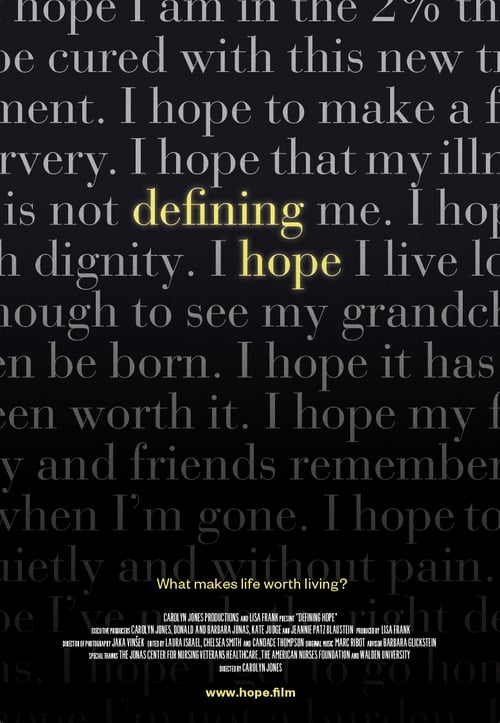
We aren't dying the way we used to. We have ventilators, dialysis machines, ICUs-technologies that can "fix" us and keep our bodies alive-which have radically changed how we make medical decisions. In our death-denying culture, no matter how sick we get, there is always "hope." Defining Hope tells the story of patients dealing with life-threatening illness as they move between ICUs, operating rooms, hospice care and home. Diane is a nurse caring for end-stage cancer patients when she is diagnosed with ovarian cancer herself. 23-year-old Alena undergoes a risky brain surgery that destroys her short-term memory. 95-year-old Berthold lives with his elderly wife who struggles to honor his wish of dying peacefully at home. Defining Hope follows these patients and others- and the nurses that guide them along the way- as they face death, embrace hope, and ultimately redefine what makes life worth living.
Edeltraut Hertel - a midwife caught between two worlds. She has been working as a midwife in a small village near Chemnitz for almost 20 years, supporting expectant mothers before, during and after the birth of their offspring. However, working as a midwife brings with it social problems such as a decline in birth rates and migration from the provinces. Competition for babies between birthing centers has become fierce, particularly in financial terms. Obstetrics in Tanzania, Africa, Edeltraud's second place of work, is completely different. Here, the midwife not only delivers babies, she also trains successors, carries out educational and development work and struggles with the country's cultural and social problems.
Every day, at Lapeyronie hospital in Montpellier, France, a psychologist and a psychiatrist treat pedophiles and child sexual offenders. Behind closed doors, hidden away from sight, they listen to their stories, help put words to acts and impulses. And they fight for basic prevention systems to be funded and put into practice.
After a tragic series of events in his life, Rob discovers the over-the-counter drug known as codeine. The effects of the pill are so strong and addictive, that soon, Rob becomes dependant and consumes them daily. But the less he feels the more he misses, as his life degrades into a deep, dangerous, oblivion of bliss.
After 20 years of living in Berlin, the director Olga Delane goes back to her roots in a small Siberian village, where she is confronted with traditional views of relationships, life and love. The man is the master in the home; the woman’s task is to beget children and take care of the household (and everything else, too). Siberian Love provides unrivaled insights into the (love) life of a Siberian village and seeks the truth around the universal value of traditional relationships.