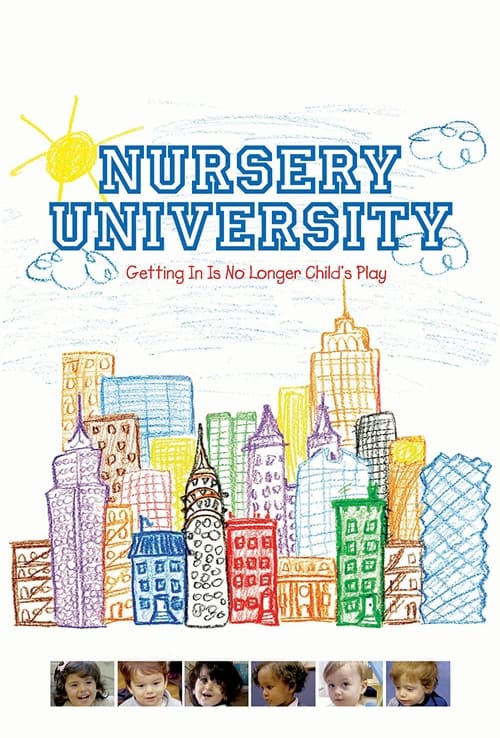
A look at the issue of high-quality early care and education in America, from home to childcare to preschool; the tragic cost of getting it wrong; and the huge payoff - for our kids, our families and our country - of getting it right.
Alfre Woodard
as Narrator (voice)
Mike Brunlieb
as Himself
In the vast expanse of desert East of Atlas Mountains in Morocco, seasonal rain and snow once supported livestock, but now the drought seems to never end. Hardly a blade of grass can be seen, and families travel miles on foot to get water from a muddy hole in the ground. Yet the children willingly ride donkeys and bicycles or walk for miles across rocks to a "school of hope" built of clay. Following both the students and the teachers in the Oulad Boukais Tribe's community school for over three years, SCHOOL OF HOPE shows students Mohamed, Miloud, Fatima, and their classmates, responding with childish glee to the school's altruistic young teacher, Mohamed. Each child faces individual obstacles - supporting their aging parents; avoiding restrictions from relatives based on traditional gender roles - while their young teacher makes do in a house with no electricity or water.
The documentary's title translates as "to be and to have", the two auxiliary verbs in the French language. It is about a primary school in the commune of Saint-Étienne-sur-Usson, Puy-de-Dôme, France, the population of which is just over 200. The school has one small class of mixed ages (from four to twelve years), with a dedicated teacher, Georges Lopez, who shows patience and respect for the children as we follow their story through a single school year.
Revised 1998 version. When you're ready to tackle advanced calculus, The Standard Deviants are ready to help! Part 2 covers applications of the derivative, antiderivatives and the definite integral. By combining a relaxed and enjoyable format with computer graphics and animation, the Standard Deviants enhance understanding and increase retention of difficult subjects. The key to a better grade in calculus is only a play button away.
Revised 1998 version. Beginning with a review of functions and graphing, Part 1 jumps into the world of calculus by covering limits, vertical and horizontal asymptote, slopes and derivatives. The Standard Deviants take students by the hand and walk them through the most difficult topics with a relaxed and approachable format, step-by-step illustrations and plenty of examples.
A group of uniformed Japanese schoolchildren make their way to class. But what they will be taught when they get there is a subject increasingly under government scrutiny. EDUCATION AND NATIONALISM traces growing government intervention in Japanese history and social science education over the last decade — a process embraced by the late Japanese Prime Minister Shinzo Abe.
Morgan Spurlock tours the Middle East to discuss the war on terror with Arabic people.
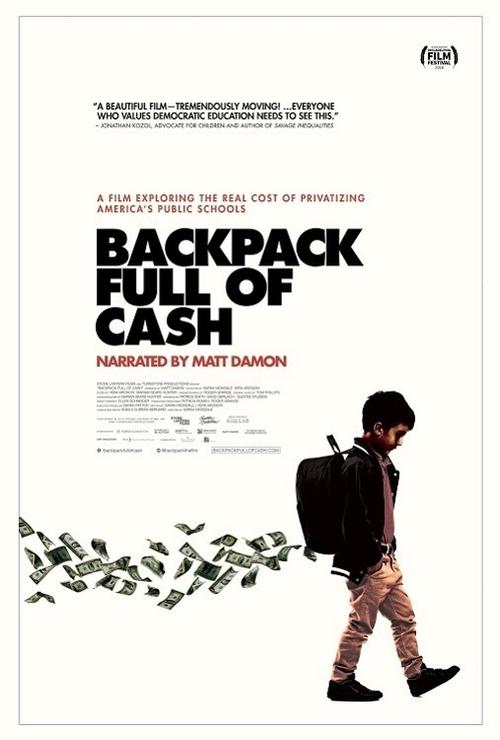
Documentary warning about the decline of American public schools as they become more and more privatized.
This edition includes topics such as exponential functions, common log or base 10, rules of exponents, natural log or base e, applications of exponents, rules of logs, logarithms, solving log equations and converting logs to base 10 or base e.
A teacher in a disadvantaged community rebels against a system that neglects many of its vulnerable students. Gloria Merriex transforms into a trailblazer, using rap, dance and other innovations to enable children to thrive in school—and beyond.
In the late 1960s, with the triumph of bilingualism and biculturalism, New Brunswick's Université de Moncton became the setting for the awakening of Acadian nationalism after centuries of defeatism and resignation. Although 40% of the province's population spoke French, they had been unable to make their voices heard. The movement started with students-sit-ins, demonstrations against Parliament, run-ins with the police - and soon spread to a majority of Acadians. The film captures the behind-the-scenes action and the students' determination to bring about change. An invaluable document of the rebirth of a people.
Documentary film exploring the rise of mechanistic philosophy and the exploitation of human beings under modern hierarchical systems. Topics covered include behaviorism, scientific management, workplace democracy, schooling, frustration-aggression hypothesis, and human experimentation.
Legendary documentary filmmaker Alanis Obomsawin provides a glimpse of what action-driven decolonization looks like in Norway House, one of Manitoba's largest First Nation communities.
Preschool to Prison is a compelling examination of how the United States public school system is built and operated like prisons. Zero-tolerance policies are used to justify suspension and arrests that set up a pathway to send children of color and children with special needs from school to prison. Children are being suspended, restrained, dragged, physically manhandled, and subsequently arrested for minor offenses such as throwing candy on a school bus. These personal accounts from people affected by the school-to-prison pipeline give riveting tales about the generational impact on society.
The world knows the image of the good Canadian. But what if there was a dark secret behind a national identity? THE GOOD CANADIAN exposes the truth behind the idea of a True North strong and free. In this unflinching and eye-opening documentary, directors Leena Minifie and David Paperny move us through the corridors of systemic inequity, from the Indian Act to residential schools, to modern-day family separation. Fusing shocking footage with detailed interviews with experts, advocates, whistleblowers and politicians, THE GOOD CANADIAN challenges national myth-making, while offering Canadians the chance to forge a new identity from the truth.
One year in the life of a Turkish teacher, teaching the Turkish language to Kurdish children in a remote village in Turkey. The children can't speak Turkish, the teacher can't speak Kurdish and is forced to become an exile in his own country. On the Way to School is a film about a Turkish teacher who is alone in a village as an authority of the state, and about his interaction with the Kurdish children who have to learn Turkish. The film witnesses the communication problem emphasizing the loneliness of a teacher in a different community and culture; and the changes brought up by his presence into this different community during one year. The film chronicles one school year, starting from September 2007 until the departure of the teacher for summer holiday in June 2008. During this period, they begin to know and understand each other mutually and slowly.