Pelican, a bakery located at Asakusa, Tokyo, becomes crowded every morning. There are only two types of bread sold. It looks ordinary but meet a bakery that has been loved for 74 years with a taste you won't get tired of even if you eat it everyday!
The culture of Japan is incredible, from bloom festivals to ultra-modern cities. But there are also more than 130 mammals and 600 bird species dwelling in Japan’s 6852 islands. This island chain is long enough to span climate zones, providing a huge range of habitat.
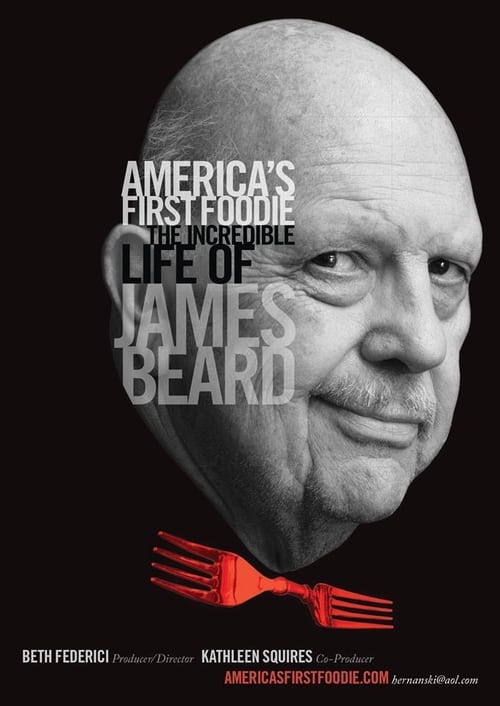
Food in the 21st century has become much more than “meat and potatoes” and canned soup casseroles.” Chefs have gained celebrity status; recipes and exotic ingredients, once impossible to find, are now just a mouse click away; and the country's major cities are better known for their gastronomy than their art galleries. This food movement can be traced back to one man: James Beard. His name graces the highest culinary honor in the American food world today—the James Beard Foundation Awards. And while chefs all around the country aspire to win a James Beard Award, often referred to as the “culinary Oscars,” many of those same chefs know very little about the man behind the medal. Respected restaurateur Drew Nieporent summed it up when he said, “Everybody knows the name James Beard. They may not know who he is, but they know the name.”
First Lieutenant Shun'ichi Maki of the Japan Air Self-Defense Force is a prestigious F-15 Eagle jet pilot (or "driver" as he is called in the film). A lifelong fan of flying since he was a child, being a pilot is his ultimate dream. Unfortunately, his duties distance himself from his wife, Yoko, who always ends up being neglected, and his son, Tsugumu, who has a congenital blood disease and has a high risk of dying at a young age.Maki decides to quit the Air Force to devote more time to his family and to spend whatever is left for his son. He takes a part-time job as a commercial tour guide run by a kindly group of people who allow him time to work and to also take care of his family.
Ezra discovers he has a unique ability to make food appear in his hands. He quickly uses his new super powers to impress his friends and to become popular around school for the first time in his life.
In the last fifty years the culture of Zen has spread far beyond Japan. Zen centers and zen retreats have sprung up throughout America and Europe. When Dogen, the founder of Soto Zen, brought Zen to Japan from China 800 years ago, it quickly took root and became an integral part of Japanese life. Yet what do we know about zen practice in Japan today? The Zen Mind is a fascinating journey across Japan to explore zen in its natural habitat.
A lighthearted take on director Yasujiro Ozu’s perennial theme of the challenges of intergenerational relationships, Good Morning tells the story of two young boys who stop speaking in protest after their parents refuse to buy a television set. Ozu weaves a wealth of subtle gags through a family portrait as rich as those of his dramatic films, mocking the foibles of the adult world through the eyes of his child protagonists. Shot in stunning color and set in a suburb of Tokyo where housewives gossip about the neighbors’ new washing machine and unemployed husbands look for work as door-to-door salesmen, this charming comedy refashions Ozu’s own silent classic I Was Born, But . . . to gently satirize consumerism in postwar Japan.
“Food Relovution: What We Eat Can Make A Difference” is an eye-opening and compelling feature documentary that examines the consequences of the meat culture as concerns grow about health, world hunger, animal welfare and the environmental cost of livestock production. It aims to show how these global issues affect everyone and are interrelated, and how making our food choices with a sense of awareness, knowing what we are buying and what we are eating is the first fundamental step towards a better world.
Raised suckling poison arrows among the sparring Iga ninja factions, Mumon is a carefree 16th-century mercenary. When the ninja council makes a power play to defeat the young Nobukatsu Oda struggling to step into his father’s warlord shoes as they expand rule across the country, Mumon jumps into the fray to satisfy his new bride Okuni’s demand that he make good on his promises of wealth. Yet Mumon soon finds what is worth fighting for beyond money or nation.
Tatsuya Nakadai, the world’s greatest living actor, returns to the screen in a brilliant adaptation of a story by novelist Shuhei Fujisawa. A traveling gambler known as “Funeral Uno” he is now 86 years old and returning to his hometown for the first time in 30 years. Partly told in flashbacks, he is forced to face his lifelong nemesis, Boss Kyuzo, a vile yakuza portrayed by another superstar of samurai cinema, Atsuo Nakamura! Before the two old gamblers can settle a 30-year-old score they must put their lives on the line in a game of dice that can only lead to a bloody sword duel the likes of which has never before been seen! Superb performances all around in a film loaded with surprises and exciting swordplay!
Follow the shocking, yet humorous, journey of an aspiring environmentalist, as he daringly seeks to find the real solution to the most pressing environmental issues and true path to sustainability.
Summoned by his dying father, Miyagi returns to his homeland of Okinawa, with Daniel, after a 40-year exile. There he must confront Yukie, the love of his youth, and Sato, his former best friend turned vengeful rival. Sato is bent on a fight to the death, even if it means the destruction of their village. Daniel finds his own love in Yukia's niece, Kumiko, and his own enemy in Sato's nephew, the vicious Chozen. Now, far away from the tournaments, cheering crowds and safety of home, Daniel will face his greatest challenge ever when the cost of honor is life itself.
On behalf of "oppressed bugs everywhere," an inventive ant named Flik hires a troupe of warrior bugs to defend his bustling colony from a horde of freeloading grasshoppers led by the evil-minded Hopper.
From a vast record of 750 days, 5000 hours, Official Film of the Olympic Games Tokyo 2020 SIDE A and SIDE B are the official documentaries by Naomi Kawase capturing not only the athletes gathered from all over the world, but also their families, people involved in the Games, volunteers, medical personnel, and protesters shouting for the cancellation of the Olympics.
World War II comes to an end. Tokyo is a destroyed place, without law, driven by hunger and greed. From over 100,000 pages of declassified CIA documents and hours of newly discovered footage, recorded by American occupation charges and private individuals, the documentary shows Tokyo during this crucial year, Year Zero. Observed from the point of view of a young man who finds himself transported in time, the NHK documentary uses color images and state-of-the-art video techniques to reveal how a desperate population is published as the foundations of today's megalopolis.
Morgan Spurlock subjects himself to a diet based only on McDonald's fast food three times a day for thirty days without exercising to try to prove why so many Americans are fat or obese. He submits himself to a complete check-up by three doctors, comparing his weight along the way, resulting in a scary conclusion.
The Tale of Genji Museum in Uji City, Kyoto will be airing a short film blending history and fantasy, the story follows a modern high school girl named Hana who is transformed into a cat and transported back in time. She travels 1,000 years ago to the Heian Era as portrayed in The Tale Of Genji, arguably the most famous novel in Japanese literature. Guided by the novel's titular character Hikaru Genji, Hana experiences firsthand the emotions that the author Murasaki Shikibu depicted in her novel. The short features scenes based on The Diary of Lady Murasaki and other historical materials, such as the real-life noble Fujiwara no Michinaga swiping early drafts of The Tale Of Genji because he could not wait to read chapters as Murasaki wrote them.
Rintaro (Sometani Shota) returns home for the first time in a while to prepare for and attend his father's funeral. He and his sister are surprised to find that their mother has canceled the catering order, and instead will be making the food herself in accordance with her late husband's will. The first dish she brings out is simply sunny side up eggs, and the attendees are at a loss. Rintaro recalls that this was the first meal his father had cooked for him and his sister.