Once upon a time, the Venezuelan village of Congo Mirador was prosperous, alive with fisherman and poets. Now it is decaying and disintegrating—a small but prophetic reflection of Venezuela itself.
Protesters diary from Gezi Park - Taksim Square, Istanbul. Occupy Gezi movement started when the government decided to build shopping mall in place of the last green area that remained in the middle of Taksim Square.
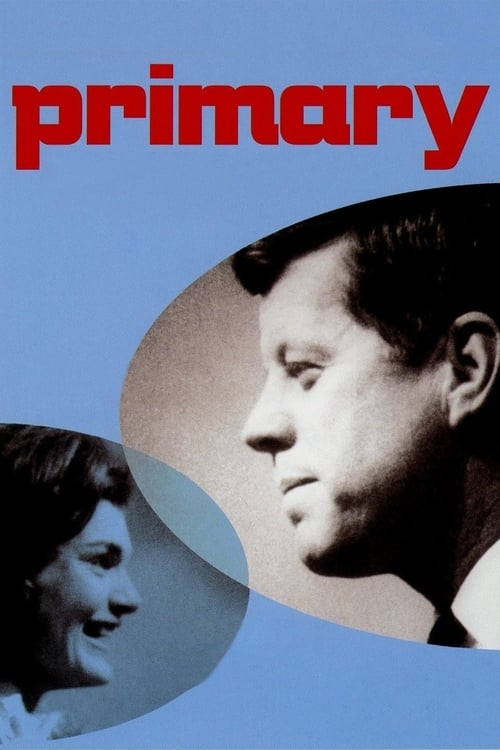
Primary is a documentary film about the primary elections between John F. Kennedy and Hubert Humphrey in 1960. Primary is the first documentary to use light equipment in order to follow their subjects in a more intimate filmmaking style. This unconventional way of filming created a new look for documentary films where the camera’s lens was right in the middle of what ever drama was occurring. Preserved by the Academy Film Archive in partnership with The Film Foundation in 1998.
Desperate, broken men chase their dreams and run from their demons in the North Dakota oil fields. A local Pastor's decision to help them has extraordinary and unexpected consequences.
Scott Mills travels to Uganda where the death penalty could soon be introduced for being gay. The gay Radio 1 DJ finds out what it's like to live in a society which persecutes people like him and meets those who are leading the hate campaign.
'Don't build prisons, they cost too much!' In this era of Great Recession, the conservative and tough-on-crime State of Texas takes an unprecedented path by becoming a social justice leader with programs that rehabilitate offenders. Looks like rape, abuse and death are no longer parts of the solution for modern-day Bonnie and Clyde...
Power Meri follows Papua New Guinea's first national women's rugby league team, the PNG Orchids, on their journey to the 2017 World Cup in Australia. These trailblazers must beat not only the sporting competition, but also intense sexism, a lack of funding, and national prejudice to reach their biggest stage yet.
The powerful and inspiring true story of the controversial human rights campaigner whose provocative acts of civil diso bedience rocked the British establishment, revolutionised attitudes to homosexuality and exposed world tyrants. As social attitudes change and history vindicates Peter's stance on gay rights, his David versus Goliath battles gradually win him status as a national treasure. The film follows Peter as he embarks on his riskiest crusade yet by seeking to disrupt the FIFA World Cup in Moscow to draw attention to the persecution of LGBT+ people in Russia and Chechnya.
Caste Aside is a documentary about the British government's controversial decision on whether or not to introduce legislation against caste discrimination in the UK. Highlighting both sides of this heated debate, the documentary speaks to Dalit rights activists, Hindu community leaders, academics and lawyers, as well as those who say they have been discriminated against on the basis of their caste - here in Britain.
It is a famous saying: "One can come to power with a bayonet, but not sit on it." The organization, which carried out 27 May, came to power with a bayonet. Moreover, these young officers seized power that night by breaking the traditional chain of command. In the morning, a 10-year DP period was over, the support of the public was gained at first hand, and a brand new phase was reached. Now, the days that would mark the future of Turkey were beginning. Now, as those days put it, the "second republic period" was beginning.
How free and independent is the press in Europe? In recent years, multiple crises and the rise of authoritarianism have put pressure on journalists. We take a look at these countries, where aggression towards the media seems to be undermining the very idea of democracy.
Svetlana has lost her son who was found dead while he was in the army. As she tries to shed light on the culture of violence and abuse in the Belarusian military, a group of young friends from the techno underground soon face being drafted themselves. They go to rave parties in undershirts and round sunglasses, but in a moment the party could be over – at least until huge protests break out in the streets following the recent ‘re-election’ of dictator-president and Putin sympathiser, Aleksandr Lukashenko. A glimmer of hope and a promise of change, which only causes the brutality of the authoritarian society to erupt in full force.
The story puts İlhan Çomak at the center, even though he is not physically present in the film. It focuses on the 21 years that İlhan spent in prison and his family’s experience of those years without him. The narrative is constructed through the letters İlhan wrote and aims to describe his life, his emotions and longings. The film constructs İlhan’s history through a chronology in the prison but refrains from restricting it only to a “prisoner’s quest for justice”, and rather tells a story of the situations he finds himself in over the years and his emotions and their equivalents in life.
Oxana is a woman, a fighter, an artist. As a teenager, her passion for iconography almost inspires her to join a convent, but in the end she decides to devote her talents to the Femen movement. With Anna, Inna and Sasha, she founds the famous feminist group which protests against the regime and which will see her leave her homeland, Ukraine, and travel all over Europe. Driven by a creative zeal and a desire to change the world, Oxana allows us a glimpse into her world and her personality, which is as unassuming, mesmerising and vibrant as her passionate artworks.
In the 1990s many people in Kurdistan were taken into custody and interrogated under torture; their killers disposed of the bodies by throwing them out of helicopters, or burying them in acid-filled wells. Thousands were murdered/disappeared by paramilitary forces—such as Jitem and Hizbul-Kontra—that were financed and supported by the state, though they have always stuck to the line: “We didn’t do it.” The documentary looks at the case of seven people, including four children, who were disappeared from the town of Kerboran [Dargeçit] in 1995, and tells the story of their families’ tireless search for their bones
4, April, 2014. Worker's who worked in "SaengTak" are get to the struggle to require adjust of working environment for safely food, and guarantied a Three Right of labors. Then. Worker's tried to record there's own struggle and launch forth to street, However, Law, Capital, unconcern of crowd and avoid of famille are swallow up them.
Societies, like people, have turning points in their histories. These milestones sometimes silently and spontaneously knock on the door, and sometimes they explode like a terrifying thunderclap. The year 1950 was such a turning point for Turkey. A simmering social reaction against 27 years of power erupted in the spring of 1950. Society has cracked its quarter-century shell. Not by shedding blood in the streets, but by voting at the ballot boxes. "Demirkırat" was reared by the general vote. That's why the 14 May 1950 elections were always called the "White Revolution"...
Turkish democracy got over May 27 and March 12 and set off again, but the storm did not subside, and the mutual reckoning was not over. On the contrary, new fronts were opened in the country and blood began to flow like a gutter. Finally, on September 12, there was a knock on the door again. Those who came that day changed everything, everything. Nothing will ever be the same again
In the midst of conservative politics in the city of Goiânia, an anti-prohibitionist collective mobilizes for the legalization of marijuana against government repression.
In 2017, twenty years after the British handed over Hong Kong to China in 1997, young people, more politicized than any previous generation and proud of their land, do not feel Chinese and actively fight against the oligarchs who want to subdue them to China's authoritarian power.