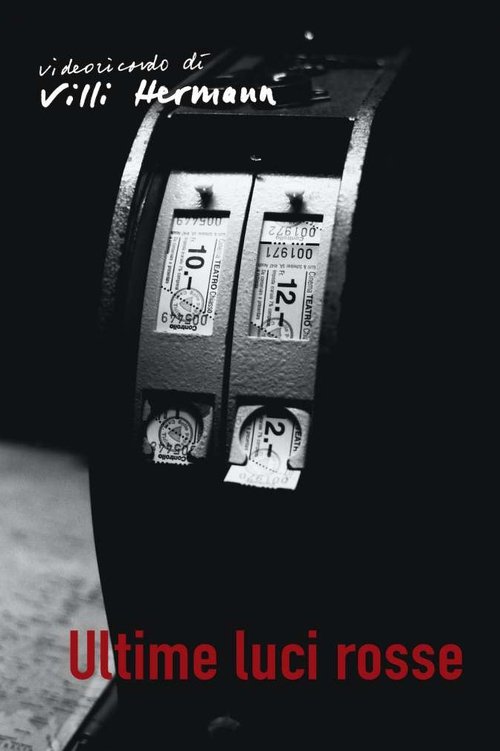
The hills of Lausanne, Switzerland, have become a Mecca for roller-skaters and Ivano has become a prince among them. Ivano rises above the ordinary and often dead-end choices that most young people face today.
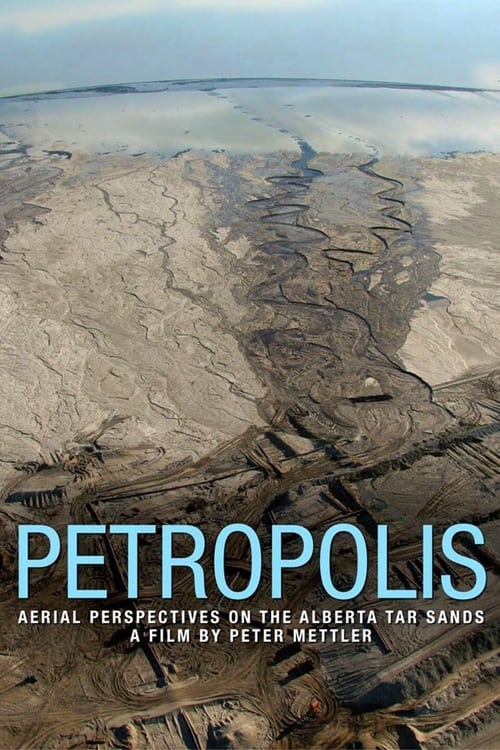
The huge tar sands in Alberta are a potentially profitable resource, but the environmental impact could be heavy and long-term.
The true story of one man's fight for freedom. For more than 60 years Tibetans have been fighting Chinese oppression. But their non-violent struggle appears to be in vain. Now, as a new form of peaceful protest, Tibetans are setting themselves on fire. Loten Namling - an exiled Tibetan and musician living in Switzerland - is deeply disturbed by such self-destructive action. So he sets off from Europe to India, on a one-man mission to meet top politicians, experts and young radicals. He himself becomes increasingly radical and is on the verge of violent protest. Finally he ends up at The Office of the Dalai Lama in India to seek the advice of the exiled Tibetan leader.
Documentary film.
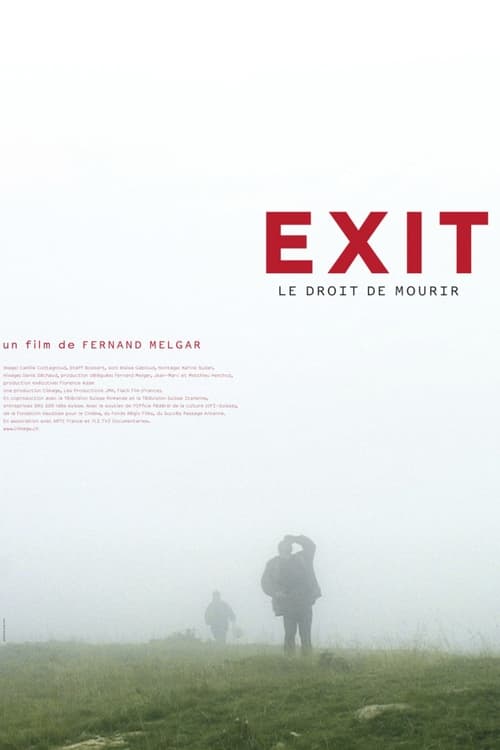
Switzerland is presently the only country in the world where suicide assistance is legal. Exit: The Right to Die profiles that nation's EXIT organization, which for over twenty years has provided volunteers who counsel and accompany the terminally-ill and severely handicapped towards a death of their choice.
In May of 1982 Julio Cortázar, the Argentinean writer and his companion in life, Carol Dunlop set out in their VW bus on a journey along the highway from Paris to Marseille that, for each of them, was to be their final one. Twenty-five years later, Océane Madelaine and Jocelyn Bonnerave set out to undertake the journey again.
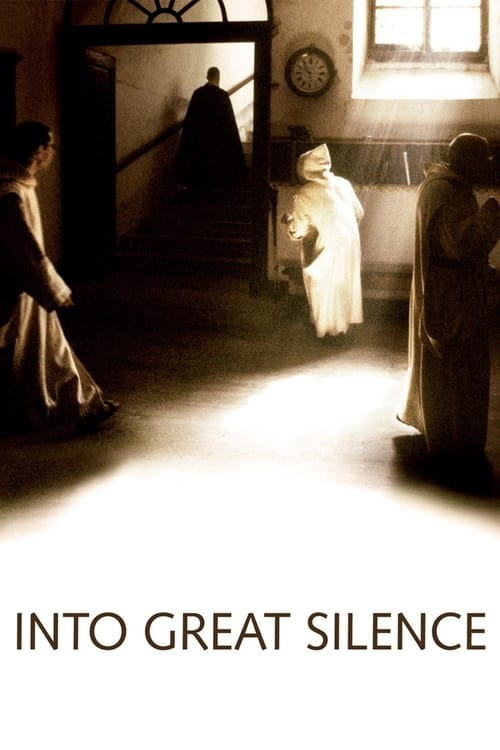
An intimate portrayal of the everyday lives of Carthusian monks of the Grande Chartreuse, high in the French Alps (Chartreuse Mountains). The idea for the film was proposed to the monks in 1984, but the Carthusians said they wanted time to think about it. The Carthusians finally contacted Gröning 16 years later to say they were now willing to permit Gröning to shoot the movie, if he was still interested.
The film reconstructs the memories of a divorced family with empathy yet merciless precision. An intimate family story emerges during the investigation into the reasons for the separation. Hinging on the subtle and touching testimonies of the family members, the film delves into complex interrelationships. Actors bring the family's memories alive as if they were their own. The result is a chronicle of a family drama, which the real protagonists complement and comment on – a reflection on the mechanisms and dynamics shaping and directing their family life over the years.
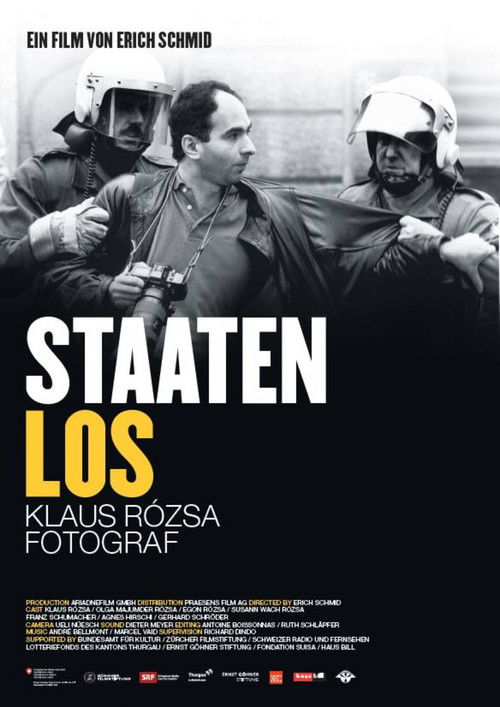
Klaus Rozsa, a well-known and politically active photographer, lived in Zurich for decades as a stateless individual. All of his applications for naturalisation were refused on political grounds. In 1956 he fled Hungary, growing up in Switzerland with a Jewish father who had survived Auschwitz and Dachau. Due to the extreme proximity of such a fate, the camera led him repeatedly to places where injustice was done. It was this particular quality of his camerawork that proved fateful for him.
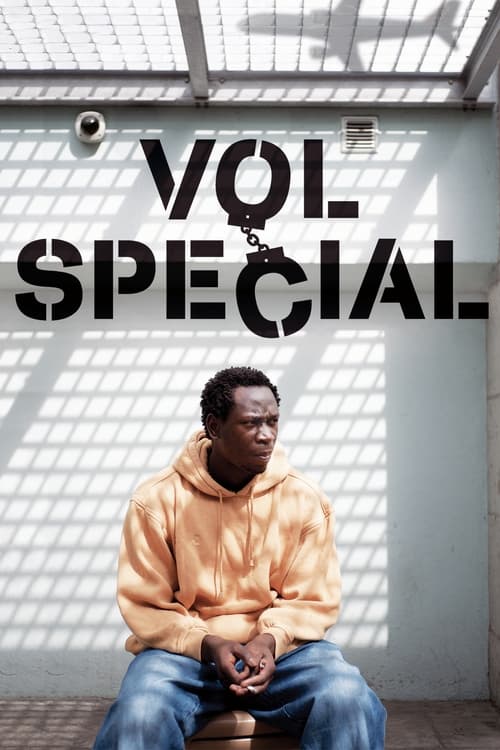
Switzerland still carries out special flights, where passengers, dressed in diapers and helmets, are chained to their seats for 40 hours at worst. They are accompanied by police officers and immigration officials. The passengers are flown to their native countries, where they haven't set foot in in up to twenty years, and where their lives might be in danger. Children, wives and work are left behind in Switzerland. Near Geneva, in Frambois prison, live 25 illegal immigrants waiting for deportation. They are offered an opportunity to say goodbye to their families and return to their native countries on a regular flight, escorted by plain-clothes police officers. If they refuse this offer, the special flight is arranged fast and unexpectedly. The stories behind the locked cells are truly heartbreaking.
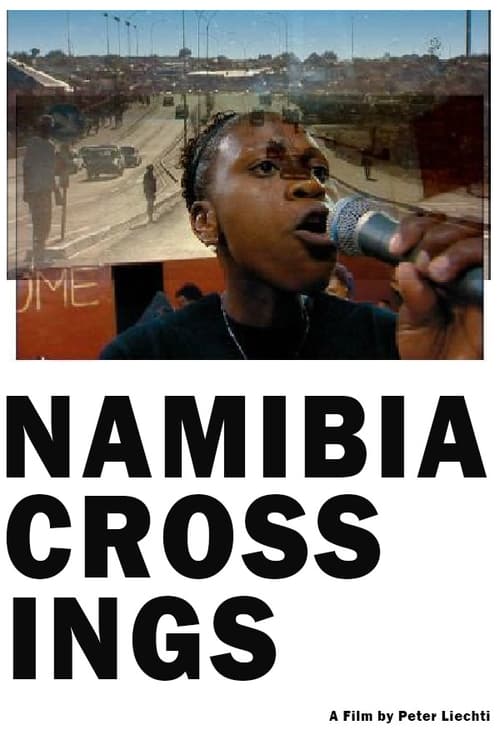
“Namibia Crossings” takes a trip through a country of archaic beauty and bizarre contradictions. The film creates polyphonies of soulful landscapes made up of each individual's highs and lows.
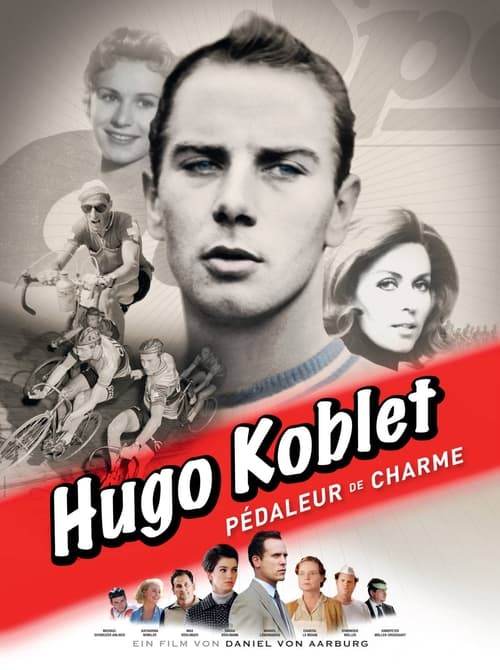
Zurich-born Hugo Koblet was the first international cycling star of the post-war period. He was a stylist on the bicycle and in life, and a huge heartthrob. Koblet had a meteoric rise and won the Giro d'Italia in 1950. Once he had reached the zenith of his career, Koblet was put under pressure by overly ambitious officials and ended up ruining his health with drugs. In 1954, he married a well-known model and they became a celebrity dream couple. After his athletic career ended, Koblet began to lose his footing. Threatened by bankruptcy, he crashed his Alfa into a tree.
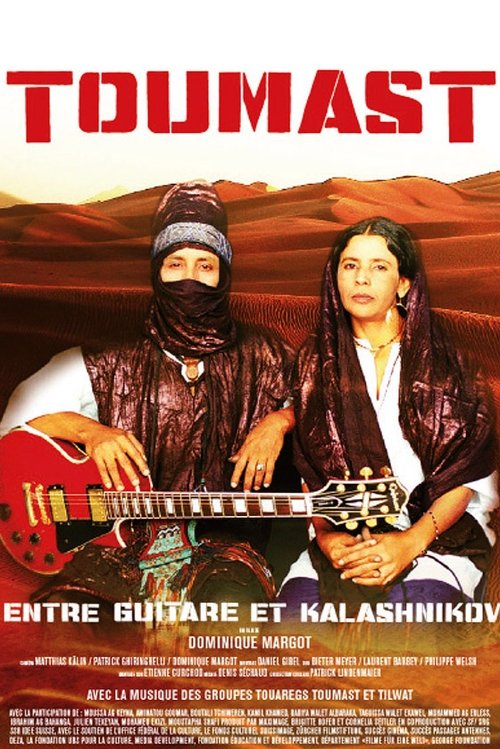
In 1996, Kalashnikovs were publicly burnt in Timbuktu. At the time, the "Flame of Peace" symbolized the end of the Touareg rebellion, which had been suppressed in bloody massacres. That year, the rebels laid down their arms. That year, with the government having made promises, the families who had fled abroad left Mauritania, Algeria and Burkina Faso to return home. In the fight for rights and survival waged by this people, who for centuries had found their freedom in one of the world's most inhospitable regions, the Sahara, culture and arms have been in direct competition ever since.