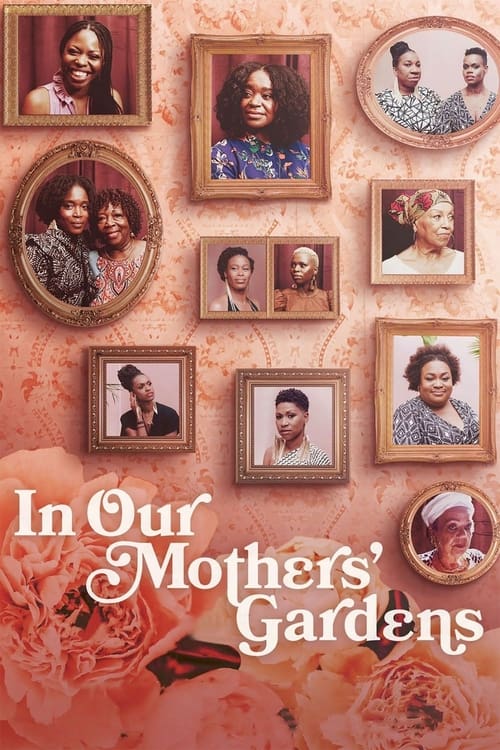
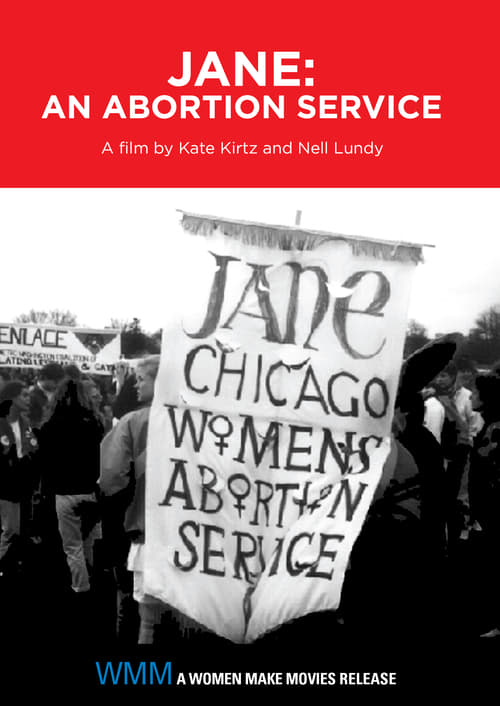
Four people - Brittany, Hannah, Nick, and Ylonda - tell their stories about how access to abortion in their community helped them empower themselves to lead lives they want to live.
Natasha Rothwell
as Narrator
Experimental documentary short starring Batato Barea and Peter Pank, filmed in July 1991
When it comes to 'what Mother Nature intended', it turns out she was pretty open-minded. In this vivid, funny and eye-opening one-off doc we take the audience on a journey to explore the rich diversity of animal sexuality.
Pilgyu Shin has a dream: As a gay activist, he wants to enforce the anti-discrimination law in South Korea. In Seoul, he encounters a parallel society in which many queers hide and pretend to be heterosexual. The reason: Christian churches are gathering thousands of members around them in order to threaten the LGBTQ+ community. With their money and influence, they can steer politics. “Burning Blue“ portrays twelve people who stand up against these authorities. It is a battle against time, as they lose more and more members of their community to suicide. Yet dividing barriers keep growing bigger and bigger within their own circle. In a country that stigmatizes minorities and their mental health, the struggle for visibility pushes queer resistance to its limits. The film shines a spotlight on the abuse of power in the church and the growing transphobia in the LGBTQ+ community in South Korea. And it poses the question: Can there ever be a real safe space?
A 16mm anthology of experimental super 8 films by Derek Jarman, Michael Kostiff, Cerith Wyn Evans and John Maybury, with framing footage by Tim Burke of Brion Gysin using a dream machine. Jarman's contribution is a version of his 1977 Art and the Pose (aka Arty the Pose), refilmed at 3fps, with a musical soundtrack. Jarman planned The Dream Machine as a commemoration of William Burroughs and Gysin's 1982 visit to the UK, and received initial funding from the Arts Council in 1983, then rethought the project as a portmanteau film featuring Gysin alone. The production remained in limbo until 1986, when James Mackay obtained completion funding from the British Film Institute. (Since this film was released on VHS accompanied by Jarman's Broken English: Three Songs by Marianne Faithfull, T.G.: Psychic Rally in Heaven and Pirate Tape under the umbrella title The Dream Machine, synopses of this film have often muddled up its details with those of the earlier films. )
When filmmaker Debra Chasnoff faces stage-4 cancer, she turns her lens on herself and the disease. What emerges is a portrait of her extended LGBTQ family —a story about hanging on while letting go.
A documentary that proposes to create a dialogue between LGTBQ+ of different ages to show and discuss the challenges of aging as part of this community.
In this film, the idea of the iron rabbit is used as a metaphor for bisexuals’ situation. Something that looks like a rabbit is not necessarily a rabbit. When a straight couple appears, people often consider them to be ordinary heterosexuals. And when two gay people get together, people simply think of them as homosexuals. In this instinctive view, which holds that people are either homo or hetero, bisexuals seem to fade out. This film is a real reflection of the lives of bisexual people in Taiwan. We hope that through the film, people can understand more about bisexuals.
“It ain’t easy…being green” is the favorite expression of Stormé DeLarverie, a woman whose life flouted prescriptions of gender and race. During the 1950s and '60s she toured the black theater circuit as a mistress of ceremonies and the sole male impersonator of the legendary Jewel Box Revue, America’s first integrated female impersonation show and forerunner of La Cage aux Folles.
First time filmmaker follows his girlfriend and boss chase their dream as musicians. His insecurities flair while struggling to find a story, and begins challenging their flaws, on camera, jeopardizing the film, relationships and careers.
The Hanna family sit around the Christmas tree and reflect back on scenes from the show Hanna's Ark. Co-starred Jack Hanna and his daughter Kathaleen – with regular appearances by his wife Suzi and younger daughters Suzanne and Julie.
Johanna Dohnal, whose political career spans three decades, was one of the very first explicitly feminist politicians in Europe. As a member of the Austrian socialist government and the first Austrian minister for Women’s Affairs from 1990 to 1994, Dohnal was responsible for founding Austria’s first women’s refuge as well as criminalizing of marital rape. Yet her legacy remains yet to be discovered and re-examined. DIE DOHNAL makes a first step, and it makes Dohnal come alive.
Nelson is a miniature pig—at least, that’s what the Verbeek family were told when they bought him as a cute little piglet. But seven years and 500 kilos later, Nelson has become a big problem. The neighbors and the housing association think it’s unacceptable to have such a large and smelly animal in a residential neighborhood. Son Brandon is being bullied at school because of his pet.
About Stefan Stricker, who calls himself Juwelia and has been running a gallery on Sanderstraße in Berlin Neukölln for many years. Every weekend he invites guests to shamelessly recount from his life and to sing poetic songs written with his friend from Hollywood Jose Promis. Juwelia has been poor and sexy all her life, has always struggled for recognition, but only partially.
Before World War II the 3 sisters Mia, Uschi, and Martha were born in the former German city of Wrocław, which became Polish in 1945. They have been shaped by poverty, National Socialism, war, and escape, but also by peace, reconstruction, and an affluent society of Germany. The detailed stories they tell us in front of the camera, 75 years after World War II has ended, are as individual as the 3 sisters themselves.
An epic journey of courage, hope and generosity, filmed in 15 countries. Child of Nature follows 5 connected stories of young people who, against all odds are transforming their lives and the lives of those around them.
Jo is a 40-year-old transgender man addicted to cocaine. This addiction prevents him from achieving his transition in good conditions, and from maintaining fulfilling relationships. He is trying to quit drugs and to make a fresh start.
Has the time of women finally come? Have their everyday lives truly changed over the past sixty years? Guided by Agnès Jaoui, women—famous and unknown—share their stories across generations. From childhood to retirement, the documentary traces shared experiences shaped by prejudice, but also by hope, strength, and humor. Blending personal archives, historic moments, and social media footage, the film places women at the center of their own story. Welcome to the Time of Women.