To celebrate the 30th anniversary of its launch, this film tells the remarkable story of how Hubble revealed the awe and wonder of our universe and how a team of daring astronauts risked their lives to keep it working
In one single, epic camera move we journey from Earth's surface to the outermost reaches of the universe on a grand tour of the cosmos, to explore newborn stars, distant planets, black holes and beyond.
The first American space station Skylab is found in pieces scattered in Western Australia. Putting these pieces back together and re-tracing the Skylab program back to its very conception reveals the cornerstone of human space exploration.
NASA may have just gotten one step closer to the answering the question: are we alone? The Spitzer Telescope has made a groundbreaking discovery of exoplanets that could be similar to our own. And as Kepler also continues its search, our understanding of the universe continues to be redefined.
There’s something very odd going on in space – something that shouldn’t be possible. It is as though vast swathes of the universe are being hoovered up by a vast and unseen celestial vacuum cleaner. Sasha Kaslinsky, the scientist who discovered the phenomenon, is understandably nervous: ‘It left us quite unsettled and jittery’ he says, ‘because this is not something we planned to find’. The accidental discovery of what is ominously being called ‘dark flow’ not only has implications for the destinies of large numbers of galaxies – it also means that large numbers of scientists might have to find a new way of understanding the universe. Dark flow is the latest in a long line of phenomena that have threatened to re-write the textbooks. Does it herald a new era of understanding, or does it simply mean that everything we know about the universe is wrong? .
An experimental film about the relation of Time and Space.
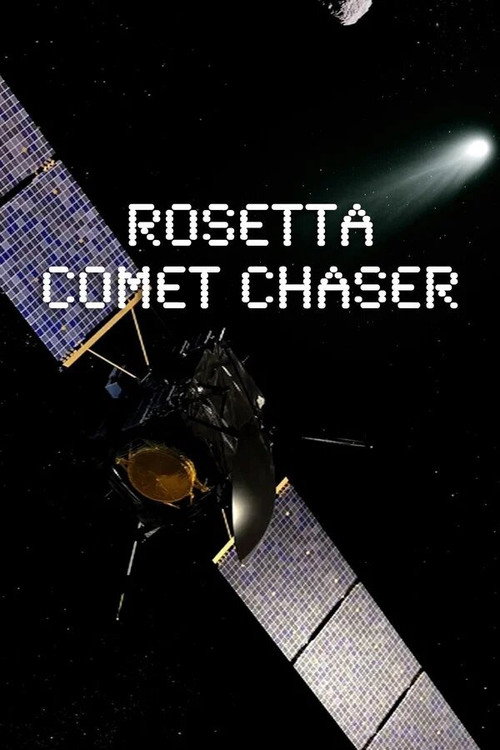
On 12th November 2014 Philae lander achieved the 1st ever landing on a comet and became a Space celebrity overnight! This film takes viewers on this unique space odyssey, into deep space and behind the scene in the control room with scientists.
William Shatner presents a light-hearted look at how the "Star Trek" TV series have influenced and inspired today's technologies, including: cell phones, medical imaging, computers and software, SETI, MP3 players and iPods, virtual reality, and spaceship propulsion.
Top Gear presenter James May presents this informative program that examines the historic moon missions. Traveling to America, May meets three of the men who walked on the surface of the moon, learning how it felt and how the now antiquated technology was used to achieve such an historic feat.
One of humanity’s greatest achievements, the International Space Station is a $150 billion science laboratory hurtling around Earth at 17,000mph, its thin metal walls shielding astronauts from the most hostile environment humans have ever endured. Microgravity, the vacuum of space, extremes of temperature, micrometeorites - life here is perilous. To mark 25 years of continuous habitation onboard, Space Station We Have a Problem reveals how astronauts are only a technical glitch or software error away from disaster. From malfunctioning spacesuits and docking disasters, critical leaks and even the entire space station backflipping out of control, this is life and death played out in low earth orbit, coupled with the bravery and brilliance that each time, saves the day.
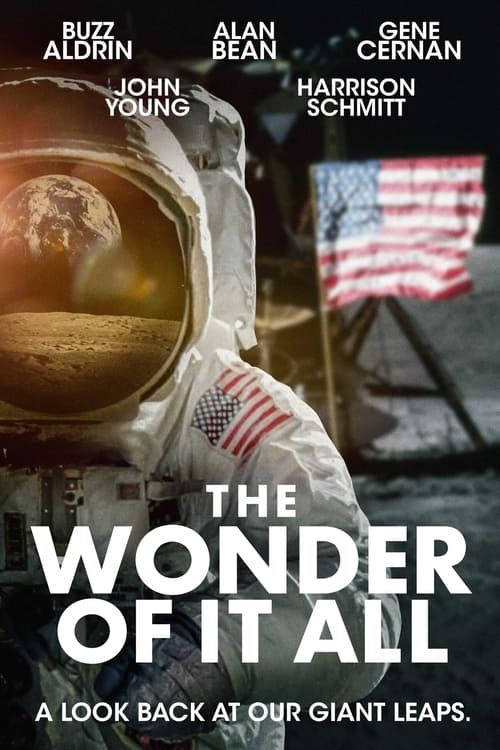
The Wonder of it All focuses on the human side of the men behind the Apollo missions through candid interviews with seven of the Apollo astronauts: Buzz Aldrin, Alan Bean, Edgar Mitchell, John Young, Charles Duke, Eugene Cernan and Harrison Schmitt. They all reflect on the training, the tragedies, the camaraderie, and the effect that their space travel has had on their families.
Did Mars ever have life on it? To answer this question, Europe and Russia have launched a unique and ambitious 2-stage project: ExoMars 2016-2018. This documentary is a thrilling look behind the scenes of a magnificent human and scientific adventure. We will uncover the most fascinating aspects of this mission and the search for signs of life on Mars.
It has been said that 10,000 years from now only one name will still be remembered, that of Neil Armstrong. But in the four decades since he first set foot on the moon, Armstrong has become increasingly reclusive. Andrew Smith, author of the best-selling book Moondust, journeys across America to try and discover the real Neil Armstrong. He tracks down the people who knew Armstrong, from his closest childhood friend to fellow astronauts and Houston technicians, and even the barber who sold his hair, in a wry and sideways look at the reluctant hero of the greatest event of the 20th century.
CERN and the University of California-Santa Barbara are collaborating in the search for the elusive substance that physicists and astronomers believe holds the universe together -- dark matter. Where is this search now in the realm of particle physics and what comes next?
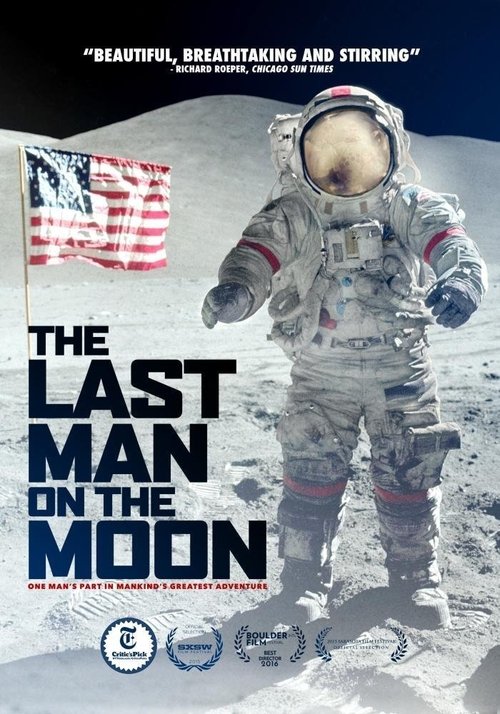
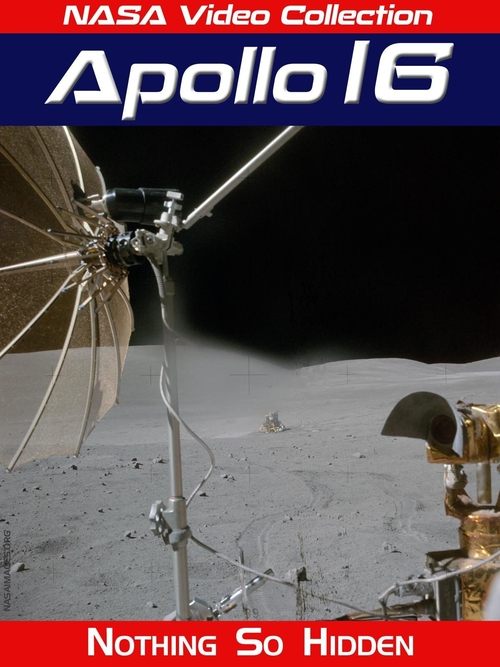
Apollo 16 mission from NASA footage.
214 million years ago a gigantic meteorite broke up and impacted Earth. 65 million years ago, the impact that killed the dinosaurs occurred where the country of Belize stands today. 200 thousand years ago early humans were walking and died when they were hit by a 40 meter wide meteorite hit South Africa creating a 1.4 km wide crater. This meteorite fragment, the largest ever found hit Namibia 80 000 years ago and more recently a major impact occurred in Toungouska, Russia in 1908. Every year 10 000 tons of meteoritic matter fall onto Earth in much smaller but not necessarily less influential pieces. This film will explore how the impact of these meteorites big and small through the ages have changed our world and what they brought from outer space with them that may have been the seed of life itself on Earth.
In a studio setting, Stephen Hawking, Arthur C. Clarke and Carl Sagan (who joins them via satellite) discuss the Big Bang theory, God, our existence as well as the possibility of extraterrestrial life.
The film features amazing scenes of places never before seen gathered by key space missions that culminated with groundbreaking discoveries in 2015. It features a spectacular flight though the great cliffs on comet 67P, a close look at the fascinating bright "lights" on Ceres, and the first ever close ups of dwarf binary planet Pluto/Charon and its moons.