The Odd Monk is a personal journey through modern day Buddhism. German first time Filmmaker Jesco Puluj travels around the world, meeting a variety of monks and nuns to discover the essence of Buddhism.
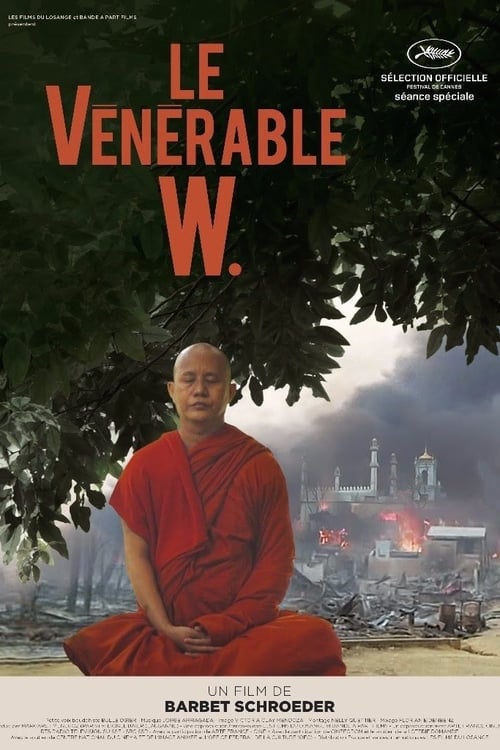
A view of the religious tensions between Muslims and Buddhist through the portrait of the Buddhist monk Ashin Wirathu, leader of anti-Muslim movement in Myanmar.
A Zen priest in San Francisco and cookbook author use Zen Buddhism and cooking to relate to everyday life.
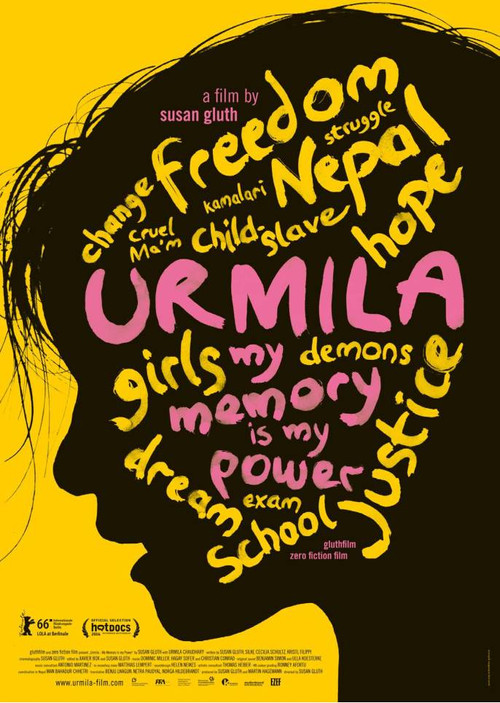
The film tells the story of 25-year-old Urmila Chaudary from Nepal. At the age of six she was sold by her family and was forced to work as a slave under appalling conditions for 12 years. Her dream is to end child slavery in Nepal. To this end she fights today as a freedom activist. A film about the quest for justice with a strength that gives courage and hope.
High up on the Tibetan plateau. Amongst unexplored and inaccessible valleys lies one of the last sanctuaries of the wild world, where rare and undiscovered fauna lives. Vincent Munier, one of the world’s most renowned wildlife photographers takes the adventurer and novelist Sylvain Tesson (In the Forest of Siberia) with him on his latest mission. For several weeks, they’ll explore these valleys searching for unique animals and try to spot the snow leopard, one of the rarest and most difficult big cats to approach.
Three years after the 1959 expedition, abandoned 350m from the summit, Lionel Terray leads a new assault on Jannu, one of the most demanding peaks in the Himalayas. At the base camp, equipment and food rations are prepared. The conditions are optimal and the ascent can begin. The camera follows the progress of the mountaineers and Sherpas as closely as possible, from one high-altitude camp to another: installing fixed ropes, progressing over crevasses, in the middle of frozen towers, vertically down immense ice falls or along the edge of sharp ridges. From 7000m, oxygen bottles become essential, as the difficulty of the climb prevents acclimatization. The expedition is a total success: the majority of its members reach the 7710m summit.
In the last fifty years the culture of Zen has spread far beyond Japan. Zen centers and zen retreats have sprung up throughout America and Europe. When Dogen, the founder of Soto Zen, brought Zen to Japan from China 800 years ago, it quickly took root and became an integral part of Japanese life. Yet what do we know about zen practice in Japan today? The Zen Mind is a fascinating journey across Japan to explore zen in its natural habitat.
In 1981, a Buddhist monk teaching at the University of Madison, Wisconsin, made the bold request of the Dalai Lama to come and perform a rare ritual, never before done outside of India or Tibet: the Kalachakra, among the highest of the Buddhist tantric teachings. In just a few months, with a team of dedicated students, and cameras rolling, they constructed a temple and organized an event for over a thousand spiritual seekers, in a cornfield outside Madison. The incredible footage was tucked away in the Smithsonian vaults, until now. What unfolds is the story of a powerful ritual, its impact on the people that made it happen, and the meaning behind this ancient initiation.
Vajra Sky is a cinematic pilgrimage to central Tibet, bearing witness to the indomitable faith of its Buddhist community and the imminent threat to its very survival. This poignant journey bears witness to the indomitable faith of its endangered Buddhist community and the imminent threat to its very survival. The vastness of the Tibetan sky, reflecting snowy mountains, rushing rivers, and turquoise lakes, leads the journey west. Tibetans respond to the denial of the human right to practice one's religion without interference with a defiant devotion.
Moving to Mars charts the epic journey made by two Burmese families from a vast refugee camp on the Thai/Burma border to their new homes in the UK. At times hilarious, at times emotional, their travels provide a fascinating and unique insight not only into the effects of migration, but also into one of the most important current political crises - Burma.
This documentary is the third part of The Yatra Trilogy created by John Bush. Vajra is the Sanskrit word signifying the thunderbolt of illumination, and yatra is the word for pilgrimage or spiritual journey. This film offers a cinematic pilgrimage to central Tibet, bearing witness to the indomitable faith of its endangered Buddhist community and the imminent threat to its very survival.
On a summer day, from his balcony, the filmmaker observes two women diligently cutting grass for their cows on one of the last remaining vacant plots of Kathmandu.
This Oscar-winning documentary tells the story behind Japanese daredevil Yuichiro Miura's 1970 effort to ski down the world's tallest mountain. Preserved by the Academy Film Archive in 2010.
Wang Shin-hong is suffering from insomnia. A fortune teller advises the Mandalay businessman, whose car and bulging wallet suggest that business is going pretty well, to spend 14 days in a monastery, living life as a monk and eating an apple a day. Such a thing is possible in Burma today. Wang Shin-hong arrives at the rural monastery, has his head shaved and dons a red robe, in which he instantly becomes an authority. During the welcome procession, the village women, their poverty clear from their clothing and the huts in the background, put more than they have in his alms bowl. During his fleeting role as their advisor, Wang Shin-hong soon learns of the villagers’ attempts to survive and make a living as legal or illegal migrants in China, Thailand or Malaysia. He also finds out how the other monks try to generate profit and additional income.
American high school students from the privileged Silicon Valley travel to Manang, Nepal in this documentary about how travel and life experiences can change personal perceptions. Together with a group of Manangi high schoolers, the students expand their cultural knowledge and experience a slice of life as a citizen of the globe.