A double-edged letter in the midst of confinement. Javier starts sending videos to his son to catch him up on his new life. Through these videos, Nico will try to respond to his father.
Javier Martin Marcos
as Padre
Nicolás Martín Ruiz
as Hijo
From 18-year-olds to pre-teens, ten boys are living together at the 'Family' group home. From 2002 to 2013, the boys, who were around ten years old, escaped North Korea and were separated from their families. They are living with the caretaker, Tae-hoon, who dedicates his life to the boys. The film documents an average and special one year of their lives. It doesn't overstress their situation as the defectors from NK, while cheers their new challenges as teens in South Korea. Also, it shows Tae-hoon being estranged from and reconciled with his own family, who is now supporting him and boys.
This one-of-a-kind comedy special showcases the comedian's riotous stand-up performance, exploring everything from the Disability experience to her Italian-Catholic upbringing to body image issues and more.
A Dad's excessive use of Facebook/Memes is put into question by his family.
In the table that symbolizes the value of traditional women, a woman who wants to break free from her family must face her daughter.
Filmmaker Evie Wray travels to rural Kansas in an attempt to reconnect with her mentally unstable mother, Evie, for the first time since Evie’s psychotic breakdown five years earlier. She finds a parent still chasing her demons, both real and imagined, struggling to make a career for herself as an abstract artist and searching for the Geodetic Center of the United States, the finding of which, Evie says, will bring about world peace.
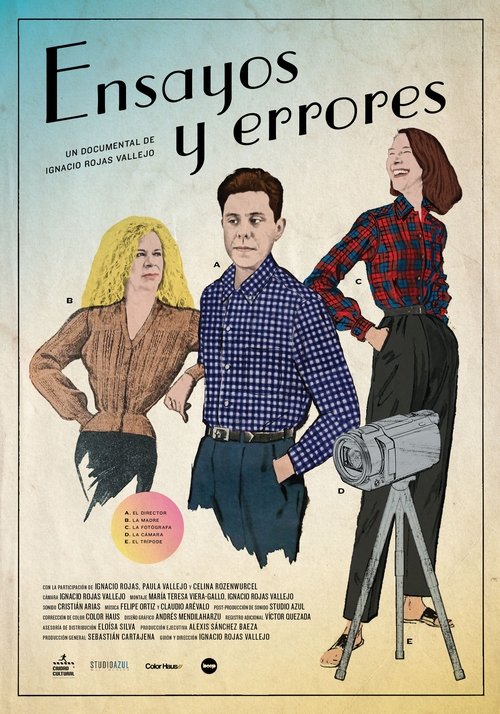
By means of objects, photos, tapes and films, director Angelika Levi, half-German, half-Jewish, examines the story of her family. The film deals with trauma and the way history is produced, filed away, turned into discourse and ordered on macro and micro levels.
As a career-defining chapter propels him into global stardom, musician Noah Kahan stands at a crossroads. In the wake of the breakout success of Stick Season—an album born from the quiet of rural Vermont and embraced around the world—Noah begins work on his follow-up album while facing the mounting pressure of what comes next. Over a whirlwind year of sold-out tours and unprecedented acclaim, he returns to his Vermont roots and family. Buoyed by his uncanny wit, he searches for a sense of home and creative inspiration as he confronts the deeply personal struggles that have left him out of sync with himself.
When a Mongolian nomadic family's newest camel colt is rejected by its mother, a musician is needed for a ritual to change her mind.
What would your family reminiscences about dad sound like if he had been an early supporter of Hitler’s, a leader of the notorious SA and the Third Reich’s minister in charge of Slovakia, including its Final Solution? Executed as a war criminal in 1947, Hanns Ludin left behind a grieving widow and six young children, the youngest of whom became a filmmaker. It's a fascinating, maddening, sometimes even humorous look at what the director calls "a typical German story." (Film Forum)
An Austrian director followed five successful African music and dance artists with his camera and followed their lives for a year. The artists, from villages in Ghana, Gambia and Congo, were the subjects of Africa! Africa! touring across Europe, but they have unbreakable roots to their homeland and their families. Schmiderer lovingly portrays his heroes, who tell their stories about themselves, their art and what it means to them to be African with captivating honesty. The interviews are interwoven with dance scenes and colourful vignettes set to authentic music.
Documentary about brother and sister duo The Carpenters, one of the biggest-selling pop acts of the 1970s, but one with a destructive and complex secret that ended in tragedy.
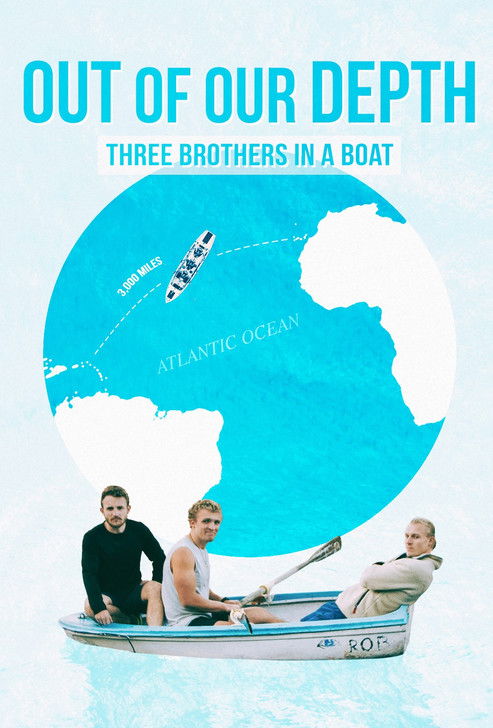
Follow along as “budding YouTuber” Jack Carlin makes the hilariously unnecessary trip to the UK (over 3,000 miles) for a single day in order to compete in an animation quiz.
Through archival footage of his parents' wedding, the filmmaker reflects on love and marriage in contemporary Serbia. Observing traditional Balkan rituals, he questions his own place as an LGBT individual in a society resistant to equality. The film explores the tension between tradition and modern love, and the hope for a future where everyone can experience love freely. Through his personal journey, he confronts family expectations and dreams of acceptance.
The mother of animation director Rebecca Blöcher didn’t want to live an ordinary life. She wanted “something more,” she explains in this stop-motion film. The people around her didn’t understand—in a letter written in 1968, a girlfriend criticizes her for going out on her own and making men jealous, while advising her to dress in a more “feminine” way and to join a cooking course. Blöcher’s mother brushed aside the advice. Years later still, she divorced her husband and stepped into the big wide world.
Between 1968 and 1970, J M Goodger, a lecturer at the University of Salford, made a film record of the living conditions in the slums of Ordsall, Salford, which were then in the process of being demolished. Under the title 'The Changing face of Salford', the film was in two parts: 'Life in the slums' and 'Bloody slums'.
IDFA and Canadian filmmaker Peter Wintonick had a close relationship for decades. He was a hard worker and often far from home, visiting festivals around the world. In 2013, he died after a short illness. His daughter Mira was left behind with a whole lot of questions, and a box full of videotapes that Wintonick shot for his Utopia project. She resolved to investigate what sort of film he envisaged, and to complete it for him.