Five fishermen from Manresa, a poor neighborhood to the West of Santo Domingo in the Dominican Republic, learn from marine biologist Omar Shamir Reynoso's one-of-a-kind plan to protect nesting sea turtles.
On August 3rd, 1979, a Vietnamese refugee shoots and kills a white crab fisherman at the town docks in Seadrift, TX. What began as a fishing dispute erupts in violence and ignites a resurgence of the KKK and open hostilities against the Vietnamese along the Gulf Coast. Set during the early days of Vietnamese refugee arrival, “Seadrift” examines the circumstances that led up to the shooting, its tumultuous aftermath, and the unexpected consequences that continue to reverberate today.
After one of the hottest years on record, Sir David Attenborough looks at the science of climate change and potential solutions to this global threat. Interviews with some of the world’s leading climate scientists explore recent extreme weather conditions such as unprecedented storms and catastrophic wildfires. They also reveal what dangerous levels of climate change could mean for both human populations and the natural world in the future.
In 2009, the underwater world around the Central Polynesian Sporades in the eastern Pacific was intact. But a few years later, the corals died massively. Now they have recovered.
A documentary of insect life in meadows and ponds, using incredible close-ups, slow motion, and time-lapse photography. It includes bees collecting nectar, ladybugs eating mites, snails mating, spiders wrapping their catch, a scarab beetle relentlessly pushing its ball of dung uphill, endless lines of caterpillars, an underwater spider creating an air bubble to live in, and a mosquito hatching.
Travel to the ice mountains of Chile to discover the secrets of the puma (aka panther, mountain lion and cougar) the area's largest predator. Discover how this elusive cat survives and follow the dramatic fate of a puma and her cubs.
ITV Naturalist Nigel Marven stars in this drama-documentary in which he explores his own back garden, in all its intricate detail. Shrunk to the size of an ant, he and his two companions - technical assistant Laura Green (Sarah Matravers) and driver Doug Kruger (Robin Lawrence) - embark on a mission to cross Nigel's back garden in just 24 hours. Along the way they meet some of the many thousands of creatures that fight for survival every day in these urban jungles .
In Africa there is a fable that explains the creation of the tides. When a hyaena challenged a mudskipper to a drinking contest to decide who should own the shore, the god Mungu tilted the earth so the sea flowed inland, and neither could win.
Our complex food system rests on the wings of the honey bee and the commercial beekeepers that move them from farm to orchard, pollinating the crops that we eat.
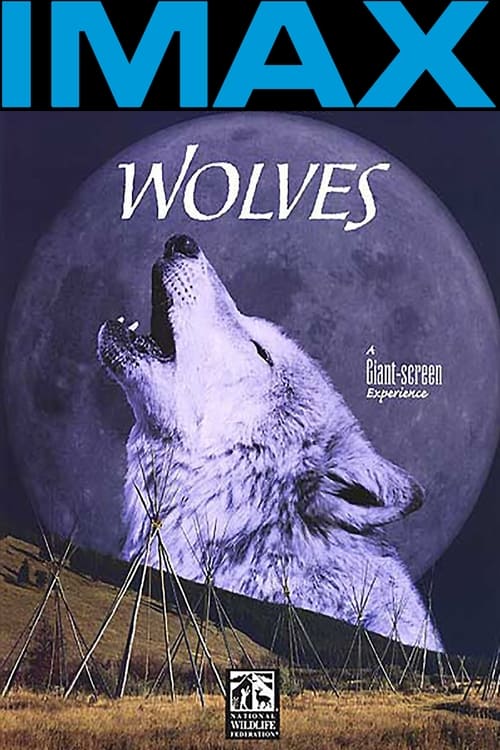
Secret territories still exist in France today. This film is a personal quest, the story of a crazy gamble taken by a passionate dreamer, an anti-hero capable of breaking all barriers to achieve his goal: to meet wild wolves in their natural habitat. After three years in the field, bivouacking in the wilderness in all weathers, the director managed to track down the wolves. Little by little, he observes, gets closer and ends up being accepted by the pack. Against all odds, the magnificent predators offer a little of their intimacy to this strange character. But the film also raises the question of the limits of this intimacy.
Explores the consequences of uranium mining in Canada. Toxic and radioactive waste pose profound, long-term environmental hazards. Miners suffer a substantially increased risk of getting cancer. Most mining occurs on Indigenous People's land, violating their traditional economic and spiritual lives. Given our limited knowledge of the risks associated with uranium mining, why continue?
This short documentary films some of the wild animal species that have adapted to the city of Vancouver, from the familiar pigeons and starlings to the less familiar herons nesting in Stanley Park and a coyote in a farmer's field.
Val Plumwood, environmental philosopher returns to Kakadu, where she was the victim of a crocodile attack. Against the backdrop of the steamy, intensely beautiful Kakadu National Park, she shares her thoughts on wilderness and wildlife.
In a contemporary reimagining of the American West, three young women - a snake hunter, a New York artist, and a rodeo queen - challenge the idea of who is permitted to be a cowgirl.
A non-verbal visual journey to the polar regions of our planet portrayed through a triptych montage of photography and video. Landscapes at the World's Ends is a multi-dimensional canvas of imagery recorded above the Arctic Circle and below the Antarctic Convergence, viewed through the lens of whom is realistically an alien in this environment, the polar tourist. Filmed during several artist residencies on-board three expedition vessels, New Zealand nature photographer and filmmaker Richard Sidey documents light and time in an effort to share his experiences and the beauty that exists over the frozen seas. Set to an ambient score by Norwegian Arctic based musician, Boreal Taiga, this experimental documentary transports us to the islands of South Georgia, the Antarctic Peninsula, Greenland and Svalbard. Landscapes at the World's Ends is the first film in Sidey's Speechless trilogy, and is followed by Speechless: The Polar Realm (2015) and Elementa (2020).
It is a daring idea: to grow food from old mattresses in a desolate camp at the edge of a war zone. When a refugee scientist meets two quirky professors, they must confront their own catastrophes - and make a garden grow. Short film now streaming on Waterbear.com.