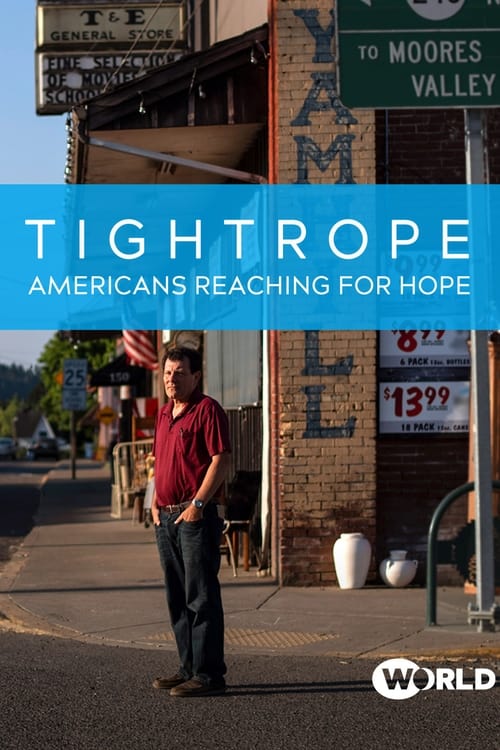
Six students from 3 Countries, USA, India and China are moving to College. They soon find themselves in a global competition and it narrows down to: Engineering and Science.
Apoorva Uppala
as
Neil Ahrendt
One year in the life of a Turkish teacher, teaching the Turkish language to Kurdish children in a remote village in Turkey. The children can't speak Turkish, the teacher can't speak Kurdish and is forced to become an exile in his own country. On the Way to School is a film about a Turkish teacher who is alone in a village as an authority of the state, and about his interaction with the Kurdish children who have to learn Turkish. The film witnesses the communication problem emphasizing the loneliness of a teacher in a different community and culture; and the changes brought up by his presence into this different community during one year. The film chronicles one school year, starting from September 2007 until the departure of the teacher for summer holiday in June 2008. During this period, they begin to know and understand each other mutually and slowly.
At Evergreen Primary School in Wuhan, China, a Grade 3 class learns what democracy is when an election for class monitor is being held. Three children are chosen by the teacher as candidates and they have a few days to campaign and convince their classmates to vote for them. The little candidates are seen at school and at home, where their parents do their best to make sure their child will win the election.
On the banks of the Cauvery River in southern India, wildlife filmmaker Sugandhi Gadadhar studies the behavior of Asian otters. On one of the subcontinent's most dynamic waterways, a conflict has arisen between these small carnivorous mammals and fishermen, whose livelihoods also depend on the river's resources.
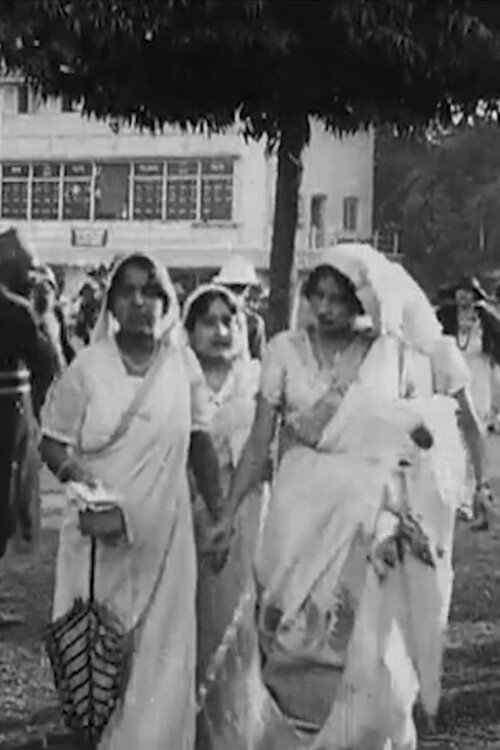
Divided into three parts — The Awakening, The Struggle, and Freedom — this is a biographical film on Pandit Jawaharlal Nehru, the first Prime Minister of independent India. Relying on Nehru's writings and speeches, the film traces the evolution of Nehru from his birth through his life. It also deals with the effect of history on Nehru and in turn his impact on the world.
Yagorihwanirats, a Mohawk child from Kahnawake Mohawk Territory in Quebec, attends a unique and special school: Karihwanoron. It is a Mohawk immersion program that teaches Mohawk language, culture and philosophy. Yagorihwanirats is so excited to go to school that she never wants to miss a day – even if she is sick.
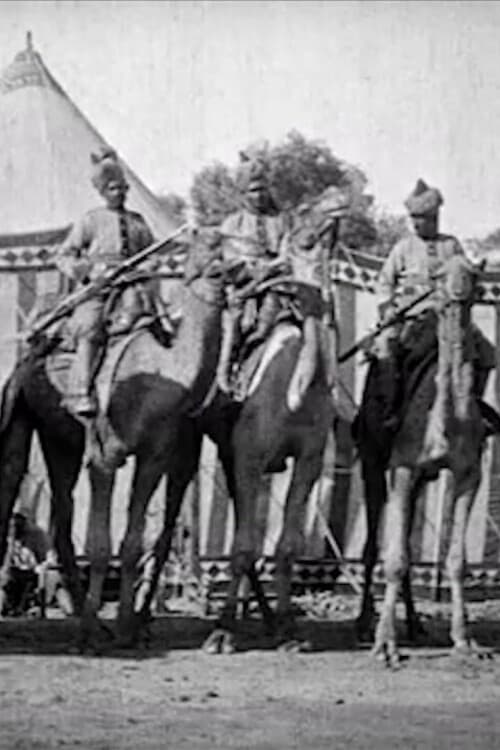
This documentary highlights the achievements of India in the political, economic, and international fields since she attained Independence. The framing of her Constitution, the integration of the States and the general elections, the rehabilitation of displaced persons, the river valley projects, and the setting up of a chain of National Laboratories are some of the achievements shown here.
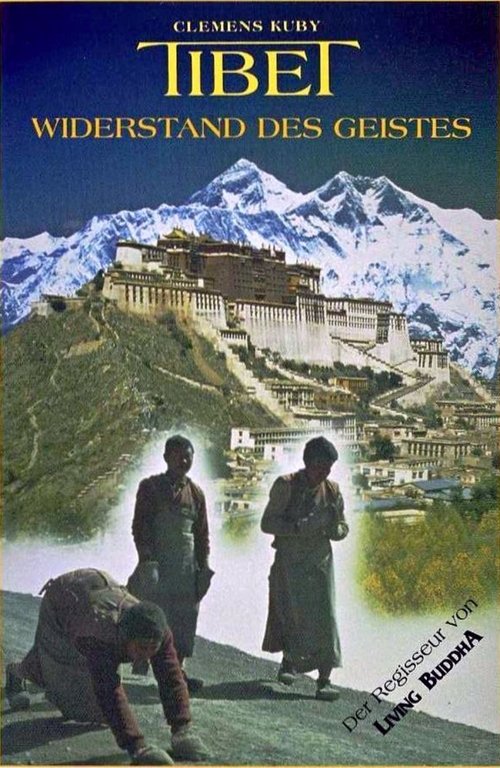
Undercover in Tibet reveals the regime of terror which dominates daily life and makes freedom of expression an impossibility. Tash meets victims of arbitrary arrests, detention, torture and ‘disappearances’ and uncovers evidence of enforced sterilizations on ethnic Tibetan women. He sees for himself the impact of the enormous military and police presence in the region, the hunger and hardship being endured by many Tibetans and hears warnings of the uprising taking place across the provinces now.
Examines the early 1980s Hong Kong filmmaking community. Tony Rayns interviews some of the new generation of filmmakers and figures from the wider film culture.
Morgan Spurlock tours the Middle East to discuss the war on terror with Arabic people.
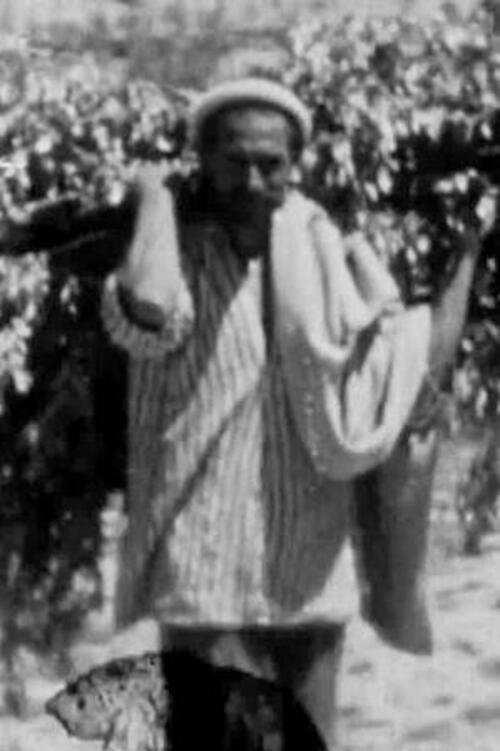
Famous worldwide for its great wines, the Bordeaux region represents French excellence. But this idyllic postcard also has its dark side. The workers in the vineyards are working in increasingly precarious conditions, to the point of putting their health at risk. A handful of them are resisting this fate.
A group of uniformed Japanese schoolchildren make their way to class. But what they will be taught when they get there is a subject increasingly under government scrutiny. EDUCATION AND NATIONALISM traces growing government intervention in Japanese history and social science education over the last decade — a process embraced by the late Japanese Prime Minister Shinzo Abe.
A short film on throw-away culture and TV
Revised 1998 version. When you're ready to tackle advanced calculus, The Standard Deviants are ready to help! Part 2 covers applications of the derivative, antiderivatives and the definite integral. By combining a relaxed and enjoyable format with computer graphics and animation, the Standard Deviants enhance understanding and increase retention of difficult subjects. The key to a better grade in calculus is only a play button away.
Revised 1998 version. Beginning with a review of functions and graphing, Part 1 jumps into the world of calculus by covering limits, vertical and horizontal asymptote, slopes and derivatives. The Standard Deviants take students by the hand and walk them through the most difficult topics with a relaxed and approachable format, step-by-step illustrations and plenty of examples.
This portrayal of the rhythm of life and work in a gigantic textile factory in Gujarat, India, moves through the corridors and bowels of the enormously disorienting structure—taking the viewer on a journey of dehumanizing physical labor and intense hardship.
A look at the issue of high-quality early care and education in America, from home to childcare to preschool; the tragic cost of getting it wrong; and the huge payoff - for our kids, our families and our country - of getting it right.
How did Nazi Germany, from limited natural resources, mass unemployment, little money and a damaged industry, manage to unfurl the cataclysm of World War Two and come to occupy a large part of the European continent? Based on recent historical works of and interviews with Adam Tooze, Richard Overy, Frank Bajohr and Marie-Bénédicte Vincent, and drawing on rare archival material.