An account of the devastating 1906 San Francisco earthquake and the subsequent effort to rebuild.
F. Murray Abraham
as Self - Narrator (voice)
In 1910, the Pennsylvania Railroad successfully accomplished the enormous engineering feat of building tunnels under New York City's Hudson and East Rivers, connecting the railroad to New York and New England, knitting together the entire eastern half of the United States. The tunnels terminated in what was one of the greatest architectural achievements of its time, Pennsylvania Station. Penn Station covered nearly eight acres, extended two city blocks, and housed one of the largest public spaces in the world. But just 53 years after the station’s opening, the monumental building that was supposed to last forever, to herald and represent the American Empire, was slated to be destroyed.
As Cyclone Remal approached, we arrived in Debpur village of Dhankhali Upazila, Bangladesh. What struck us immediately was the stark contrast between the official warnings of impending devastation and the villagers' apparent lack of preparedness. Over the following days, amidst the unfolding chaos, we documented the lives of individuals as they grappled with the imminent threat of destruction. The film captures the overbearing anxiety that grips entire communities in the face of an approaching cyclone. Through intimate encounters, and candid interviews, we witness firsthand the resilience and fear of those directly in Remal's path. Their voices echo the overwhelming power of nature and the human spirit in adversity.
The bombing of the Alfred P. Murrah Federal Building in Oklahoma City in April 1995 is the worst act of domestic terrorism in American history. This documentary explores how a series of deadly encounters between American citizens and federal law enforcement—including the standoffs at Ruby Ridge and Waco—led to it.
Takes viewers inside the homes of people seriously affected by increasingly ferocious floods hitting the UK. With one in six British homes now at risk of flooding, residents across the country count the cost, both financial and mental, to their communities affected by flooding over the last decade.
This video presents a look at the forces of nature in their most devastating mode: lightning storms, tornadoes, flash floods, tidal waves, and hurricanes. The film, made for The Discovery Channel, accompanies professional storm chasers as they ride into the eye of a category five hurricane to gather data and get a close-up view. There is footage of a tornado with 300-mile-per-hour winds, as well as 100-foot tidal waves hurtling towards shore at 500 miles per hour. The viewer witnesses a flash flood and hears an interview with a lightning strike survivor.
As a general, he had fought to preserve the Union. As president, he helped to oversee the transformation from union to nation. As a former president, he was the embodiment of the very idea of national union, and of America's entry onto the world stage. As a dying general, he was the symbol of the nation's greatest and most traumatic war. The story of Ulysses S. Grant's life, from his first days on the Ohio frontier to his last days out-writing death in the Adirondacks, is an endlessly fascinating one. Few public figures have ever held a such a firm grip on the American popular imagination. Grant was a man whose rise from obscurity made him a hero to millions who could see themselves in him. An ordinary man who faced and met extraordinary challenges, his successes and failures seemed to encapsulate the national character. He was so popular with the American public that, despite his two scandal-ridden terms as president, he was nearly nominated to run for a third term.
On August 8, 1908, at a racetrack outside Paris, Wilbur Wright executed what was, for him, a routine flight: a smooth take-off banking into a couple of tight circles, ending in a perfect landing. The flight took less than two minutes, but it left spectators awestruck. While the combined talents of Wilbur and Orville Wright had produced the first plane capable of controlled flight , their distrust of others had almost cost them the credit for their invention. Now, having proved to the public that they had mastered the sky, the reserved brothers from the small town of Dayton, Ohio, became world celebrities.
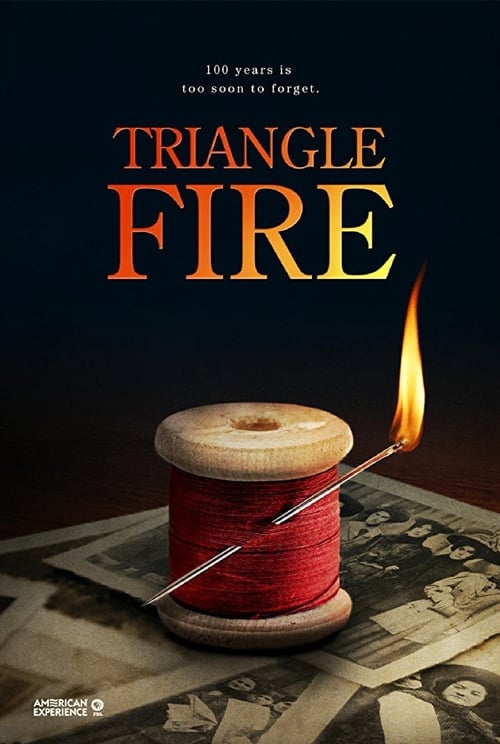
The Triangle Fire chronicles the 1911 fire at the Triangle Shirtwaist Factory in New York City killing one hundred and forty-eight young women and forever changed the relationship between labor and industry in the United States.
Leading Australian documentarian Eddie Martin puts viewers on the frontlines of the deadly 2019–2020 bushfires, capturing the catastrophe with a perspective and scale never before seen. 24 million hectares were burnt, 3000 homes were destroyed, 33 people died, and nearly three billion animals perished or were displaced. Fire Front is a powerful account of that calamitous antipodean summer, told from the ground where climate change took on the face of hell.
"Trouble the Water" takes you inside Hurricane Katrina in a way never before seen on screen. The film opens the day before the storm makes landfall--just blocks away from the French Quarter but far from the New Orleans that most tourists knew. Kimberly Rivers Roberts, an aspiring rap artist, is turning her new video camera on herself and her Ninth Ward neighbors trapped in the city. Weaving an insider's view of Katrina with a mix of verité and in-your-face filmmaking, it is a redemptive tale of self-described street hustlers who become heroes--two unforgettable people who survive the storm and then seize a chance for a new beginning.
Jim Geiger, a retired forest ranger and amateur mountaineer, attempts to become the oldest American and first great grandfather to summit Mt. Everest, aged 68. His transformation from a weekend hiker to attempting one of the most extreme and physically demanding feats known to man is driven by a desire to prove that age is just a number. What ensued, however, forever changed Jim's life.
The film interweaves the personal accounts of polio survivors with the story of an ardent crusader who tirelessly fought on their behalf while scientists raced to eradicate this dreaded disease. Based in part on the Pulitzer Prize-winning book Polio: An American Story by David Oshinsky, Features interviews with historians, scientists, polio survivors, and the only surviving scientist from the core research team that developed the Salk vaccine, Julius Youngner.
On December 9, 2019, New Zealand's most active volcano erupted, engulfing 47 day trippers in a toxic ash cloud. 21 lost their lives that day and in the following weeks. Whakaari: A Heroes' Story paints a picture of the chaos and the bravery, and the complex rescue mission to save those stranded on the island.
Discover the fascinating story of Elizebeth Smith Friedman, the groundbreaking cryptanalyst who helped bring down gangsters and break up a Nazi spy ring in South America. Her work helped lay the foundation for modern codebreaking today.
An investigation into our landscape's hidden fire stories and on-the-ground experiences of firefighters and residents struggling through deadly fires.
A compilation of various accidents, disasters, executions, and other acts of mayhem and human feats caught on film.