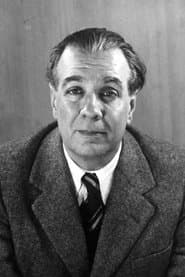
Documentary about the life and work of Jorge Luis Borges, from his own memories and reflections.
Jorge Luis Borges
as Self (Archive Footage)

María Kodama
as Self

In '90s Argentina, the murder of a high school student sparks widespread protests. Retold by her loved ones, this documentary shows their fight for justice.
A chronicle on the days without Jorge Julio López, key witness and complainant on the first trial on genocide in Argentina, dated in 2006. López, who had survived through concentration camps on the late seventies argentinian dictatorship, disappeared for the second time the day the court decision meant to condemn his kidnappers was about to be read.
Elmore Leonard, author of more than 40 novels, is renowned in the literary community. From his westerns and early novels of crime based in Detroit and South Florida, right through his complex and virtually plotless later work, Elmore Leonard dissected an America whose founding sins have continued to haunt it all the days. Leonard’s depiction of America is as real as Twain’s Hannibal, Faulkner’s Mississippi and Steinbeck’s Monterey. The new documentary ELMORE LEONARD: “But don’t try to write” explores the prolific author’s legacy and his influence on generations of writers. The documentary features exclusive images and previously unseen home movie footage, family photographs, and in-depth interviews with both literary experts and those who knew him well, including colleagues, family, and childhood friends.
The bombings recently carried out by the Revolutionary Breton Army (ARB) have drawn attention to the political and cultural history of the Breton movement. The writer Roparz Hemon is one of its emblematic figures. He was born in Brest in 1900, and died in Dublin in 1978 after thirty years of voluntary exile in Ireland following his trial for collaboration at the end of the war. He had indeed organised the first Breton-language radio programmes under German control. The work of this poet, novelist, and translator of Shakespeare and Cervantes is dominated by the theme of the dream.
Once upon a time there was a garden, a refuge, a safe haven - 'The Garden of the Finzi Continis'. It came to life in Giorgio Bassani's 1962 semi-autobiographical novel recounting an unfulfilled love story between two young Jews in Ferrara, while fascism was raging in Italy in the late 1930's. In 1972, Vittorio De Sica's film adaptation of the book won the Oscar for Best Foreign Language Film. Since then, the fictional space of the garden became so tangible that people from all over the world come to Ferrara to look for it. Fifty years after winning the Oscar, reality and fiction come together once more, as we walk through an imaginary garden and bring to life the book, its author, its main protagonists, history, love, friendships and betrayals.
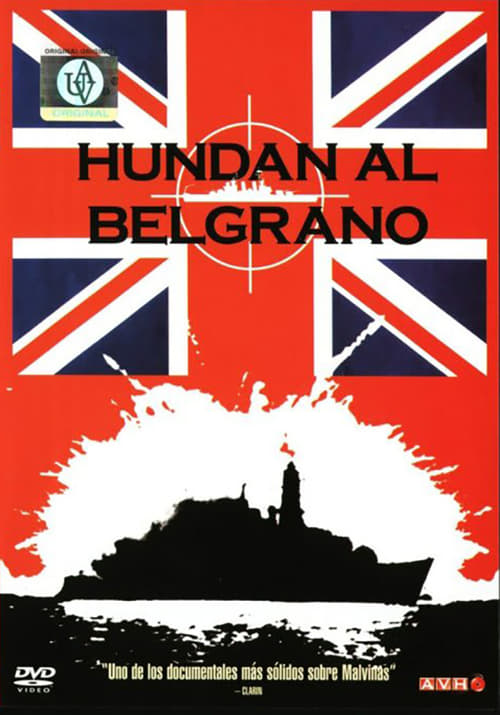
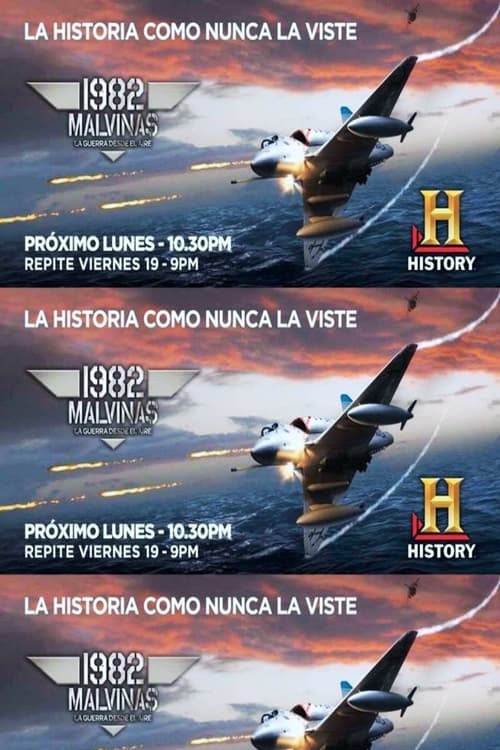
Documentary film about the then longest range bombing mission in history, which changed the outcome of the Falklands War.
A young man decides to join the army. He becomes the drummer in the military band, and his everyday life is now a combination of military training and music. What does the Argentine Army do these days, more than thirty years after the dictatorship? What does it mean to be a soldier in a country without wars?
The third installment in Dan Přibáň's series of travel documentaries describes the author's journey with his friends across South America in vehicles that are often notorious but cult in their own way. The charming dynamics of the group on screen are further enhanced by the high-quality craftsmanship.
It is a fictionalized documentary, filmed in different locations (San Julián; Estancia La Colmena; Morón, Province of Buenos Aires; Capital Federal and Islas Malvinas). The original idea of the project is to reflect the historical and paradoxical connection that unites continental Patagonia with the Islas Malvinas. It is a story that recreates several moments, both the arrival of Islas Malvinas settlers and the departure of Argentine pilots on combat missions during the 1982 war. The documentary is filmed in a cinematic style, but also incorporates the most rigorous documentary logic: interviews, narration, and careful historical research into the events.
His teachers, coaches, childhood friends and Barça teammates, together with journalists, writers and prominent figures from the history of football, come together in a restaurant to analyze and pick apart Messi's personality both on and off the field, and to look back at some of the most significant moments in his life. Viewed from Álex de la Iglesia's unique perspective, Messi recreates the player's childhood and teenage years, from his very first steps, with a football always at his feet, through to the decision to leave Rosario for Barcelona, the separation from his family, and the role played in his career by individuals such as Ronaldinho, Rijkaard, Rexach and Guardiola.
Part documentary, part drama, this film presents the life and work of Jack Kerouac, an American writer with Québec roots who became one of the most important spokesmen for his generation. Intercut with archival footage, photographs and interviews, this film takes apart the heroic myth and even returns to the childhood of the author whose life and work contributed greatly to the cultural, sexual and social revolution of the 1960s.
After the fall of the military dictatorship in 1983, successive democratic governments launched a series of reforms purporting to turn Argentina into the world's most liberal and prosperous economy. Less than twenty years later, the Argentinians have lost literally everything: major national companies have been sold well below value to foreign corporations; the proceeds of privatizations have been diverted into the pockets of corrupt officials; revised labour laws have taken away all rights from employees; in a country that is traditionally an important exporter of foodstuffs, malnutrition is widespread; millions of people are unemployed and sinking into poverty; and their savings have disappeared in a final banking collapse. The film highlights numerous political, financial, social and judicial aspects that mark out Argentina's road to ruin.
Drama documentary from 1978 exploring the private feelings of novelist Thomas Hardy through the poems of love and remorse that he wrote after the death of his first wife, Emma.
One of the greatest playwrights of the 20th century, Arthur Miller created such celebrated works as Death of a Salesman and The Crucible, which continue to move audiences around the world today. He also made headlines for being targeted by the House Un-American Activities Committee at the height of the McCarthy Era and entering into a tumultuous marriage with Hollywood icon Marilyn Monroe. Told from the unique perspective of his daughter, filmmaker Rebecca Miller, Arthur Miller: Writer is an illuminating portrait that combines interviews spanning decades and a wealth of personal archival material, and provides new insights into Miller’s life as an artist and exploring his character in all its complexity.
Literary icon Joan Didion reflects on her remarkable career and personal struggles in this intimate documentary directed by her nephew, Griffin Dunne.
Documentary about the Football World Cup held in Argentina in 1978, focusing on the competition and behind the scenes of the most important soccer competition in the world. Two versions of the 1978 official film exist, the first "Copa 78 - O Poder do Futebol" was made by Brazilian directors Maurício Sherman and Victor di Mello in 1979 but was later withdrawn by FIFA because of its controversial content. The film includes an interview with Rodolfo Galimberti, one of the leaders of the Montoneros guerrilla group and also made accusations that the Argentinian competition organisation committee had deliberately hindered Brazilian chances of success by tampering with the pitch at Mar del Plata.
An analysis of the sources of inspiration that fed the imagination of the British writer, poet and philologist J. R. R. Tolkien (1892-1973), great master of epic fantasy.
A documentary following the day life of fans in Brazil on July 13, 2014: the day when Germany and Argentina met up in the finals of FIFA World Cup.