Other than the ocean, the rest of the planet was bathed in purple, which was due to the colour of the vegetation. The change in the sun’s radiation had probably caused the plants to evolve as they adapted to the new light.

Jean-Claude Rousseau's Jeune femme à sa fenêtre lisant une lettre is not only his first medium-length film, but a chance to discover this filmmaker whom Jean-Marie Straub has called, along with Frans Van de Staak and Peter Nestler, the greatest working in Europe. With this newly restored print there is also a possibility to discover the relationship between Rousseau's art of filming and Jan Vermeer's famous painting. As Prosper Hillairet wrote in 1988, four years after Rousseau had finished Jeune femme ... (for the first time as we know today): «Without adopting the usual systematic spirit and form of cinéma structurel, Rousseau presents us with simple images and leaves it at that. Keeps the image in hand. A minimalist and ascetic expression of cinema: a shot that lasts.»
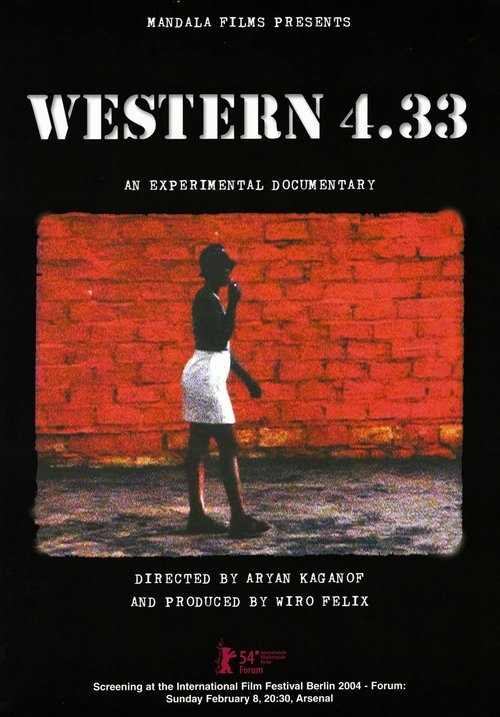
Documentary on the interdependence of the world of the living and the dead, and 'the infernal influence on the thoughts and actions of living people.
Butterfly as verb. The monarch migration and an unearthed cassette tape correspondence form a storm speaking towards motherhood, loss, expectation, care and legacy. An elegy. An ode to uncertainty. A cry for radical optimism and a reordering of splendor.
In an abandoned shopping center outside of Cleveland, the story of the last remaining grocery store is told through recent google reviews.
Set in Charlottesville during the early 1990s, "Pride" follows an aspiring writer as she finalises stories for the latest issue of "Pride", a student run newspaper at the University of Virginia. Over a hectic two-day period, she puts the finishing touches on the upcoming issue. Despite the looming deadline, she moves with a calm confidence.
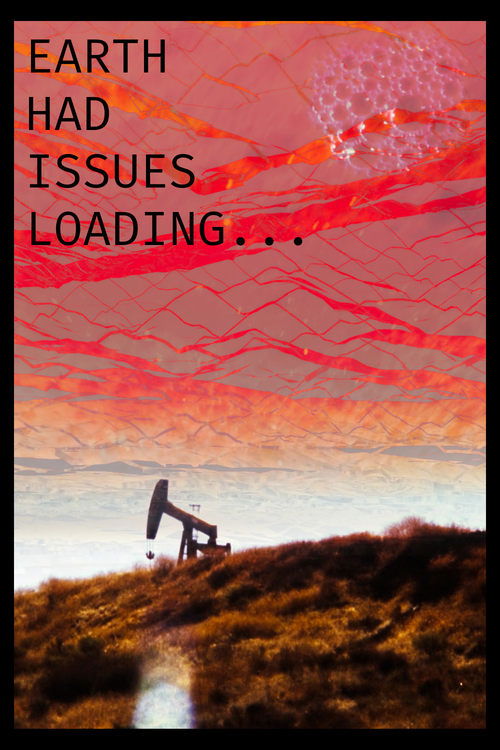
An experimental film about life on earth as a cosmic experiment and the curiosity and naivete of reaching out to alien life.
A watchman at an apartment complex in Assam, India, spends an ordinary evening. A surreal, expressionistic landscape unfolds.
As technology accelerates, our species' collective imagination of the future grows ever more kaleidoscopic. We are all haunted by temporal distortion, perhaps no more than when we attempt to remember what the future looked like to our younger selves. As the mist of time devours our memories, the future recedes; each of us burdened by the gaping mouth of entropy. Yet, emerging technology provides a glimmer of hope; transhumanism promises a future free from mortality, disease and pain. Does our salvation lie in digital simulacra? We're here to sell you the answer to that question, for the low, low price of four hundred and seventy seconds.
It started with filming the tree. Something was released in that manner of filming seemingly farthest removed from the procedure of the early films. I first thought a simple ordering of this rich material might be enough, something related to BARN RUSHES [...] But the film only came into its form-life with the idea of linking this deep-rooted and far-outreaching tree material with that film on paranoia that had fascinated me for many years. –L. G.
"With characteristic wit and rigor, experimental filmmaker Larry Gottheim here applies his impressionistic editing style to footage collected during his travels in the Dominican Republic. Gottheim’s formal emphasis on repetition and fissures between sound and image resonates here as a mode of sociological reflection (with the fragmentary montage mirroring elements of ritual while also destabilizing the ethnographic gaze). A largely overlooked antecedent to the contemporary blending of avant-garde and ethnographic filmmaking, MACHETTE GILLETTE… MAMA still poses a potent challenge to documentary convention." - Max Goldberg
Ostensibly searching for an emotional connection with her aging father, the woman contemplates her own inherited culture and familial touchstones. Her North American pop culture sensibility fuses with a distorted Japanese perspective to create a surreal interpretation of a “Japan of the imagination.” This fictional landscape is peppered with invented Japanese myths, ruminations on memory loss, the temporal space of digital photography and the ghosts of inherited imagination.
One of the major works by South Korean feminist film collective Kaidu Club, this short is a dynamic, idiosyncratic, and mosaic-like portrait of Korean life, culture, and people who dream of a unified North and South.
If Not is a meditation on love, inspired by If Not, Winter by Sappho, translated by Anne Carson. Filmed in Ephesus and Brooklyn.
Bubble is a short film performed by Zeena Parkins and the Plastic Girls, Eleanor Hullihan and Erin Cornell in a public park in Brooklyn, NY.
The town Minot is home to a U.S. Air Force base that guards 150 nuclear missiles buried in northern North Dakota. The weapons of mass destruction placed there 50 years ago are still targeted at Russia. Minot, North Dakota portrays an American landscape where people live with nuclear bombs in their backyard.
Alex and José, is a 16mm single channel projection that explores gender, movement and form.
A silent film portraying winter across three continents.
The PSA Project is a series of 15 videos that speak out against the U.S. occupation of Iraq and the act of war.