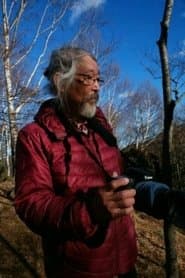
Film by Kenji Onishi. With friends. Mr. Yamase as main character, Sasakubo and Shinojima. And the girls having a good time. The camera is all you need. Looking still at the Mt. Buko which is disappearing.
Mr. Yamase
as
Shin Sasakubo
Minoru Shinojima
The film is a reportage showing the help of workers from the GDR in the industrial reconstruction of Syria. We witness the friendly relationship between workers from both countries, who are jointly involved in the construction of the cotton spinning mill in Homs. In impressive pictures the exoticism of the environment and the mentality of the Syrian hosts is shown. At the same time it becomes clear that the workers from the GDR become 'ambassadors of the GDR' through their collegial behaviour and good work.
SONG 5: A childbirth song (the Songs are a cycle of silent color 8mm films by the American experimental filmmaker Stan Brakhage produced from 1964 to 1969).
The collective life of the generation born as Jurij Gagarin became the first man in space. Vitaly Mansky has woven together a fictional biography – taken from over 5.000 hours of film material, and 20.000 still pictures made for home use. A moving document of the fictional, but nonetheless true life of the generation who grew up in this time of huge change and upheaval.
Filmmakers use archival footage and animation to explore the culture surrounding nuclear weapons, the fascination they inspire and the perverse appeal they still exert.
An experimental ethnographic documentary that criticizes the colonizer view of anthropology.
A cameraman wanders around with a camera slung over his shoulder, documenting urban life with dazzling inventiveness.
Filmed during the production of the Columbia Pictures western "Mackenna’s Gold," this short work presents a non-narrative visual study of the Arizona desert. Rather than documenting the film set itself, "6-18-67" assembles landscape images, time-lapse photography, and ambient sound into an abstract record of place and duration.
In 1967, experimental filmmaker Jorgen Leth created a striking short film, The Perfect Human, starring a man and women sitting in a box while a narrator poses questions about their relationship and humanity. Years later, Danish director Lars von Trier made a deal with Leth to remake his film five times, each under a different set of circumstances and with von Trier's strictly prescribed rules. As Leth completes each challenge, von Trier creates increasingly further elaborate stipulations.
Experimental film fragment made with the Edison-Dickson-Heise experimental horizontal-feed kinetograph camera and viewer, using 3/4-inch wide film.
This film describes a psychological state "kin to moonstruck, its images emblems (not quite symbols) of suspension-of-self within consciousness and then that feeling of falling away from conscious thought. The film can only be said to describe or be emblematic of this state because I cannot imagine symbolizing or otherwise representing an equivalent of thoughtlessness itself. Thus the actors in the film, Jane Brakhage, Tom and Gloria Bartek, Williams Burroughs, Allen Ginsberg, Peter Olovsky and Phillip Whalen are figments of this 'Thought-Fallen Process', as are their images in the film to find themselves being photographed."
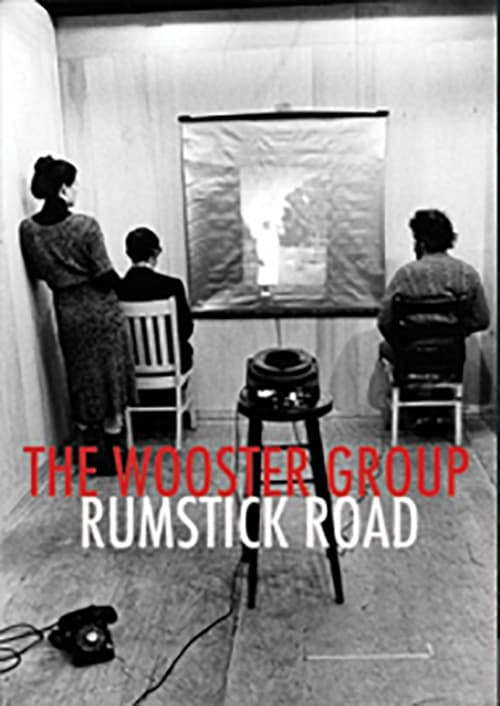
A video reconstruction of the 1977 Wooster Group production Rumstick Road, an experimental theater performance created by Spalding Gray and Elizabeth LeCompte after the suicide of Gray's mother. Archival recordings are combined with photographs, slides, and other materials to recreate the original production.
An experimental sports film made partly during the Scandinavian Open Championships in Halmstad in 1970, partly during the Chinese players' exhibition tour in Denmark immediately after the SOC. First of all, it is a film about their style, about the artistic culmination that is ping-pong at its best, it records China's comeback into the international sports world.
In 200,000 years of existence, man has upset the balance on which the Earth had lived for 4 billion years. Global warming, resource depletion, species extinction: man has endangered his own home. But it is too late to be pessimistic: humanity has barely ten years left to reverse the trend, become aware of its excessive exploitation of the Earth's riches, and change its consumption pattern.
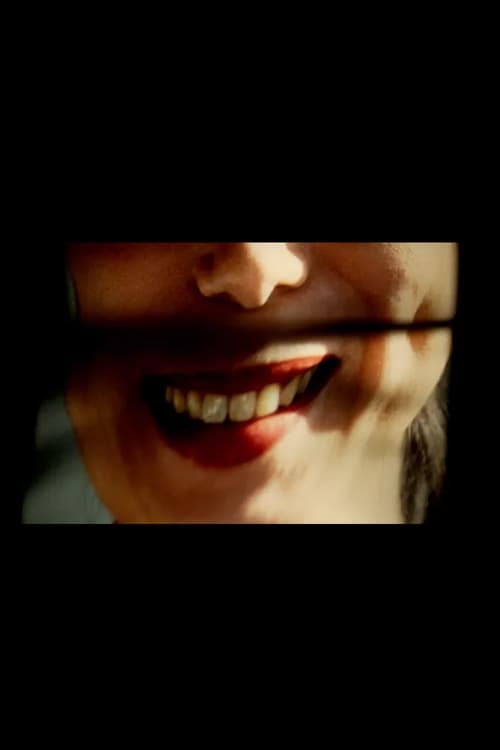
An experimental and poetic portrait of a woman.
An experimental documentary about the spectacle of substance abuse on social media. More than 45 hours of footage, hundreds of pages of blog posts and interviews were distilled and remixed using glitch and cut-up techniques to insure anonymity, transcend the shock factor and unfold this complex, singular and stratified use of social media.
A 6-year-old Tibetan boy leaves his family and flees to a refugee camp in northern India.
This is a 1991 documentary film about the legendary artist and filmmaker, Joseph Cornell, who made those magnificent and strange collage boxes. He was also one of our great experimental filmmakers and once apparently made Salvador Dali extremely jealous at a screening of his masterpiece, Rose Hobart. In this film we get to hear people like Susan Sontag, Stan Brakhage, and Tony Curtis talk about their friendships with the artist. It turns out that Curtis was quite a collector and he seemed to have a very deep understanding of what Cornell was doing in his work.
Rather than writing a simple letter to explain his absence from the press conference for his latest Cannes entry, "Goodbye to Language," at the Cannes Film Festival, instead, legendary filmmaker Jean-Luc Godard created a video "Letter in motion to (Cannes president) Gilles Jacob and (artistic director) Thierry Fremaux." The video intercuts from Godard speaking cryptically about his "path" to key scenes from Godard classics such as "Alphaville" and "King Lear" with Burgess Meredith and Molly Ringwald, and quotes poet Jacques Prevert and philosopher Hannah Arendt.