Frédéric Diefenthal
as François-René de Chateaubriand

Armelle Deutsch
as Lucile de Chateaubriand

Annelise Hesme
as Juliette Récamier

Aurélia Petit
as Celeste
The Story of the three Japanese castaways Otokichi, Kyukichi and Iwakichi. After their ship the Hojunmaru was damaged, they drifted to America and landed on the US-Westcoast in 1834. They had the wish to return to Japan, a long journey was awaiting them.
An average family is thrust into the spotlight after the father commits a seemingly self-defense murder at his diner.
Slevin is mistakenly put in the middle of a personal war between the city’s biggest criminal bosses. Under constant watch, Slevin must try not to get killed by an infamous assassin and come up with an idea of how to get out of his current dilemma.
A group of people are standing along the platform of a railway station in La Ciotat, waiting for a train. One is seen coming, at some distance, and eventually stops at the platform. Doors of the railway-cars open and attendants help passengers off and on. Popular legend has it that, when this film was shown, the first-night audience fled the café in terror, fearing being run over by the "approaching" train. This legend has since been identified as promotional embellishment, though there is evidence to suggest that people were astounded at the capabilities of the Lumières' cinématographe.
When an old friend brings filmmaker Enrique Goded a semi-autobiographical script chronicling their adolescence, Enrique is forced to relive his youth spent at a Catholic boarding school. Weaving through past and present, the script follows a transvestite performer who reconnects with a grade school sweetheart. Spurred on by this chance encounter, the character reflects on her childhood sexual victimization and the trauma of closeting her sexual orientation.
A young transgender man explores his gender identity and searches for love in rural Nebraska.
The wife of a famous composer survives a car accident that kills her husband and daughter. Now alone, she shakes off her old identity and explores her newfound freedom but finds that she is unbreakably bound to other humans, including her husband’s mistress, whose existence she never suspected.
Polish immigrant Karol Karol finds himself out of a marriage, a job and a country when his French wife, Dominique, divorces him after six months due to his impotence. Forced to leave France after losing the business they jointly owned, Karol enlists fellow Polish expatriate Mikołaj to smuggle him back to their homeland.
A fictionalised exploration of Beethoven's life in his final days working on his Ninth Symphony. It is 1824. Beethoven is racing to finish his new symphony. However, it has been years since his last success and he is plagued by deafness, loneliness and personal trauma. A copyist is urgently needed to help the composer. A fictional character is introduced in the form of a young conservatory student and aspiring composer named Anna Holtz. The mercurial Beethoven is skeptical that a woman might become involved in his masterpiece but slowly comes to trust in Anna's assistance and in the end becomes quite fond of her. By the time the piece is performed, her presence in his life is an absolute necessity. Her deep understanding of his work is such that she even corrects mistakes he has made, while her passionate personality opens a door into his private world.
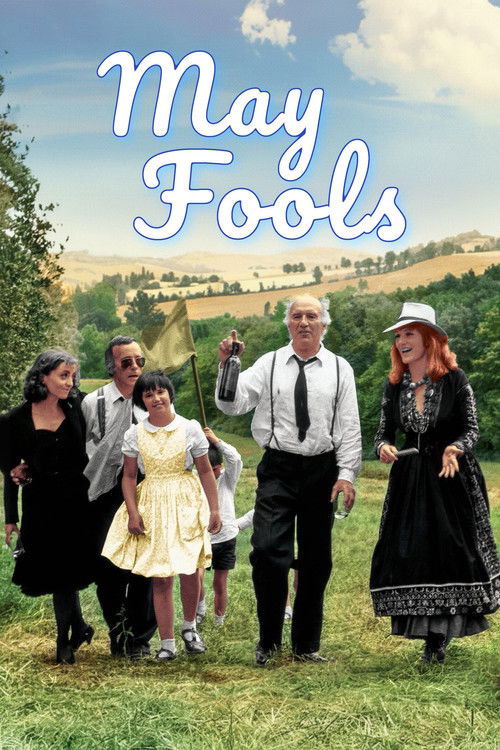
During the events of May 1968 in France, different worldviews of conflicting relatives collide in their family estate.
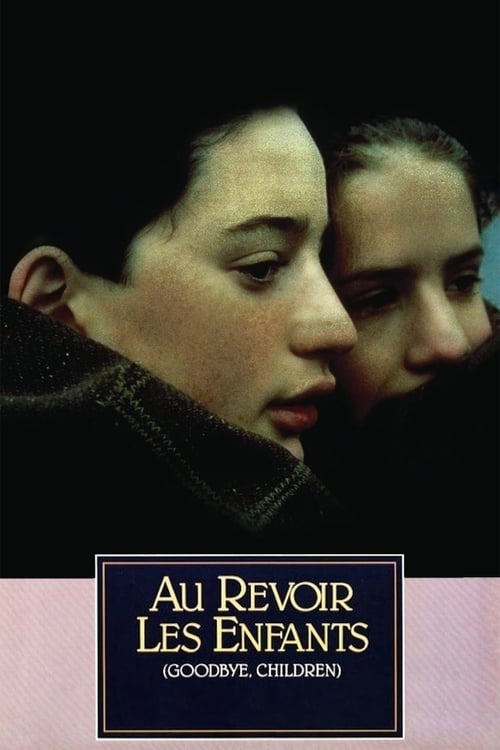
Au revoir les enfants tells a heartbreaking story of friendship and devastating loss concerning two boys living in Nazi-occupied France. At a provincial Catholic boarding school, the precocious youths enjoy true camaraderie—until a secret is revealed. Based on events from writer-director Malle’s own childhood, the film is a subtle, precisely observed tale of courage, cowardice, and tragic awakening.
Sophie, a quiet and shy maid working for an upper-class French family, finds a friend in the energetic and uncompromising postmaster Jeanne, who encourages her to stand up against her bourgeois employers.
Almost a decade since larger-than-life glam-rock enigma Brian Slade disappeared from public eye, an investigative journalist is on assignment to uncover the truth behind his former idol.
Iranian Iradj Azimi directed this French historical drama re-creating events depicted in the famous 1819 painting The Raft of the Medusa by Jean Louis Andre Theodore Gericault (1791-1824). The ill-fated voyage of the frigate Medusa begins when it departs Rochefort for Senegal in 1816. After striking a sandbar off the African coast, 150 civilians row safely to shore, but Captain Chaumareys (Jean Yanne) orders 140 soldiers and sailors onto a raft (minus supplies) and has it cut loose. Only 14 survive from the 140, creating a scandal back in France. Gericault (Laurent Terzieff) later talks to three of the survivors while researching his painting. Work on this film began in 1987, but sets destroyed by Hurricane Hugo caused delays, so the film was not completed until 1990. However, it then remained undistributed until an incident in which writer-director Azimi slashed his wrists in front of French Ministry of Culture officials.
In 19th-century France, doctor's wife Emma Bovary seeks to escape her dull provincial life through various extramarital affairs and extravagant spending, leading to tragic consequences.
Edmond Dantès, who was active in the resistance against the Nazis, is accused for being a Nazi collaborator and is imprisoned in the fortress of Sisteron.
An ex-military recluse, living in the mountains of France to escape a traumatic past, is hunted down by those whose lives he has destroyed.
Young orphan Heathcliff is adopted by the wealthy Earnshaw family and moves into their estate, Wuthering Heights. Soon, the new resident falls for his compassionate foster sister, Cathy. The two share a remarkable bond that seems unbreakable until Cathy, feeling the pressure of social convention, suppresses her feelings and marries Edgar Linton, a man of means who befits her stature. Heathcliff vows to win her back.
Three brothers stop off for a night in the town of Tombstone. The next morning they find one of their brothers dead and their cattle stolen. They decide to take revenge on the culprits.
In early 1860s New York, Irish immigrant Amsterdam Vallon is released from prison and returns to the Five Points, seeking revenge against his father's killer, William Cutting, a powerful anti-immigrant gang leader. He knows that revenge can only be attained by infiltrating Cutting's inner circle. Vallon's journey becomes a fight for personal survival and to find a place for the Irish people.