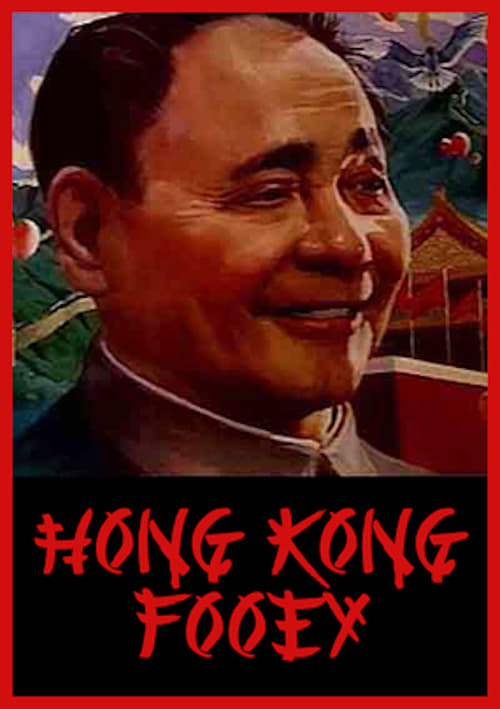
This documentary / fund raiser film was produced in 1984 by the Hong Kong Salvation Army to raise sponsorship for their educational activities in the infamous Kowloon Walled City. The project was filmed in 16mm film.
Peter Hawkins
as Narrator
HongAFI nominated director, Charlie Hill-Smith’s first documentary, is a telling insight into the complexities that face modern China. In 1997 the most free market city of earth was consumed by the last great communist state, but who is China? What is China? Travel from Hong Kong to Beijing to Tibet to grab a warts and all snap shot of the Middle Kingdom as it rises to become the great power of the twenty first century.
The first feature-length documentary to explore the career of Stephen Chow; featuring collaborators, critics, and academics. Produced for the Shout Factory release of his classic work on Blu-ray, "The Stephen Chow Collection" released in 2024. Fans will learn how Chow went from Hong Kong's TVB to feature film riches, with his peculiar brand of localized comedy, to becoming one of the most successful brand names in Mainland China, including the blockbuster reception for his comedy "The Mermaid" in 2016.
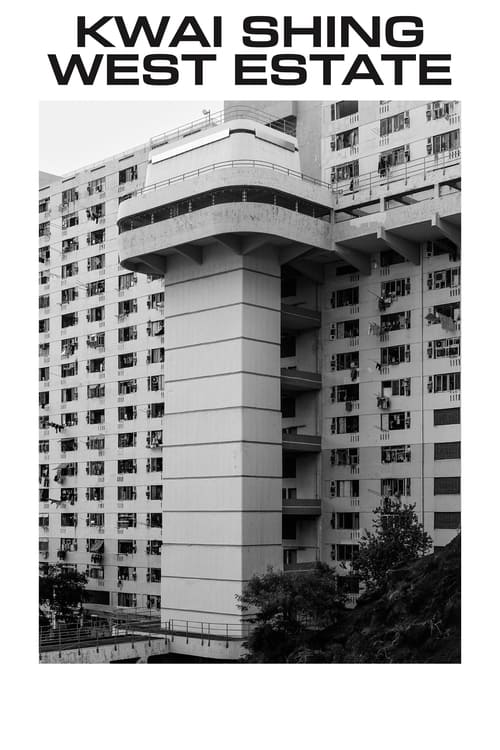
A homage to the social housing architecture that is so atypical of Hong Kong - especially the Kwai Shing West Estate. About half of the population lives in such building complexes, where one experiences a strong sense of loneliness. The neighborhoods are the scene of modern living conditions, but also of social protests, which have been punishable by life imprisonment in Hong Kong since 2020 due to a new law.
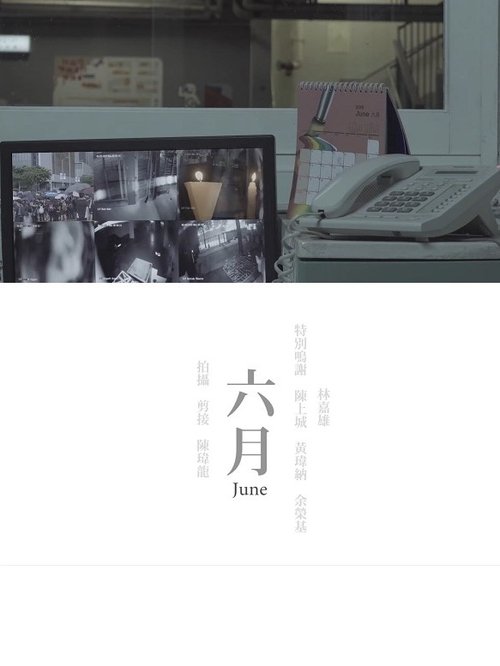
I made June when I didn’t have any inspiration to create a feature film. The documentary is about the rarely known stories in the social movement in June. At first the clips of videos were kept for sorting out my feelings, but after being edited, they were made into a documentary and became a record of history. Six scenes and voices were used to tell what happened during that month.
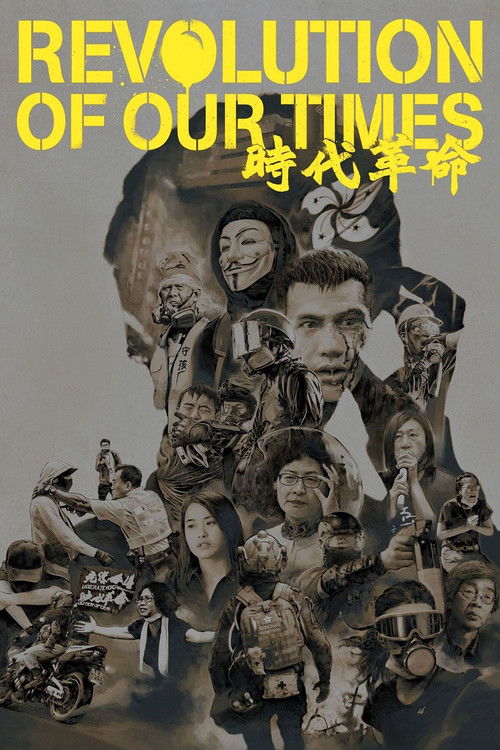
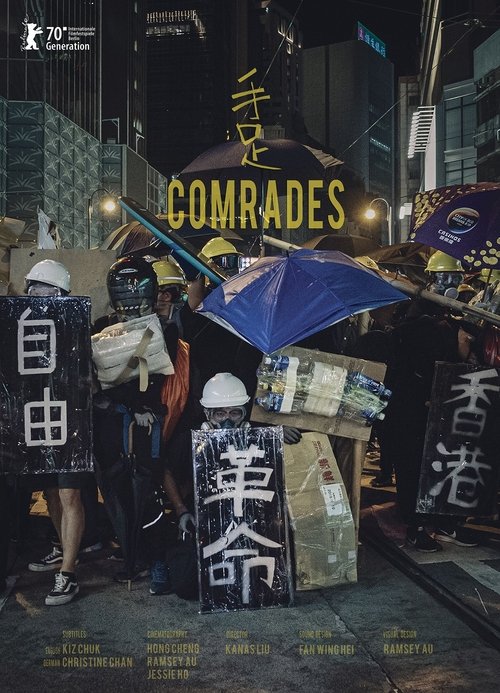
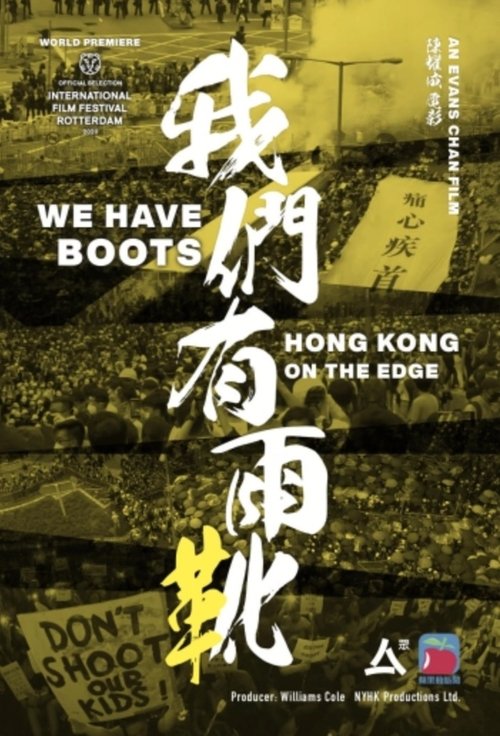
Throughout Hong Kong’s history, Hongkongers have fought for freedom and democracy but have yet to succeed. In 2019, a controversial extradition bill was introduced that would allow Hongkongers to be tried in mainland China. This decision spurred massive protests, riots, and resistance against heavy-handed Chinese rule over the City-State. Award-winning director Kiwi Chow documents the events to tell the story of the movement, with both a macro view of its historical context and footage and interviews from protestors on the front lines.
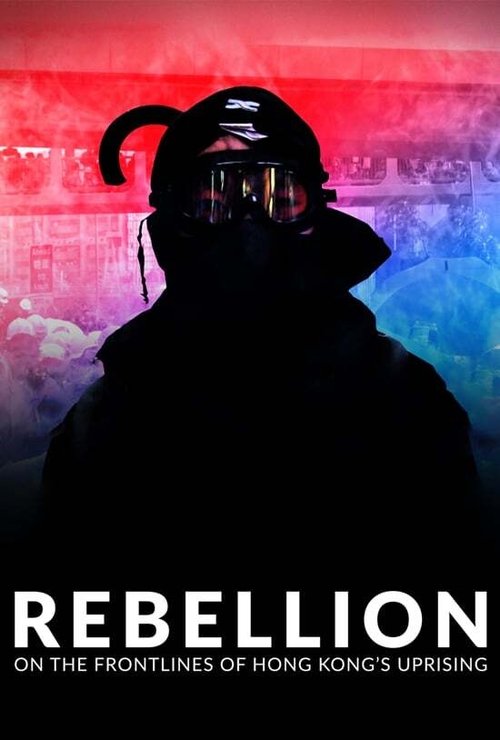
As the 'one country two systems' policy in Hong Kong has slowly eroded, resentment among the territory's citizens has steadily grown. What began as a series of spontaneous protests against an extradition law in March 2019 has now escalated in to a full-blown popular uprising that shows no signs of abating. ABC Four Corners reports from the frontline of the action, capturing extraordinary footage of the growing tension and violence.
This anthology film, whose Chinese title begins with a romantic name for human excrement, premiered internationally at Rotterdam and won Best Screenplay from the Hong Kong Film Critics Society. A variety of Hong Kong people wrestle with nostalgia when facing an uncertain future. Their stories give way to a documentary featuring a young barista turned political candidate.
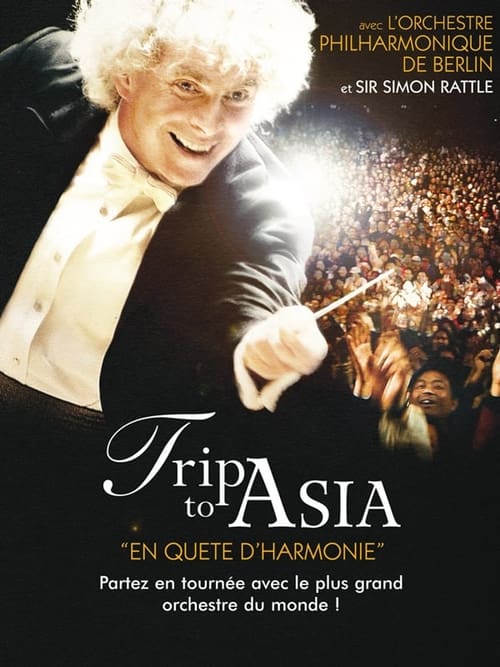
Journey with the musicians of the Berlin Philharmonic and their conductor Sir Simon Rattle on a breakneck concert tour of six metropolises across Asia: Beijing, Seoul, Shanghai, Hong Kong, Taipei and Tokyo. Their artistic triumph onstage belies a dynamic and dramatic life backstage. The orchestra is a closed society that observes its own laws and traditions, and in the words of one of its musicians is, “an island, a democratic microcosm – almost without precedent in the music world - whose social structure and cohesion is not only founded on a common love for music but also informed by competition, compulsion and the pressure to perform to a high pitch of excellence... .” Never before has the Berlin Philharmonic allowed such intimate and exclusive access into its private world.
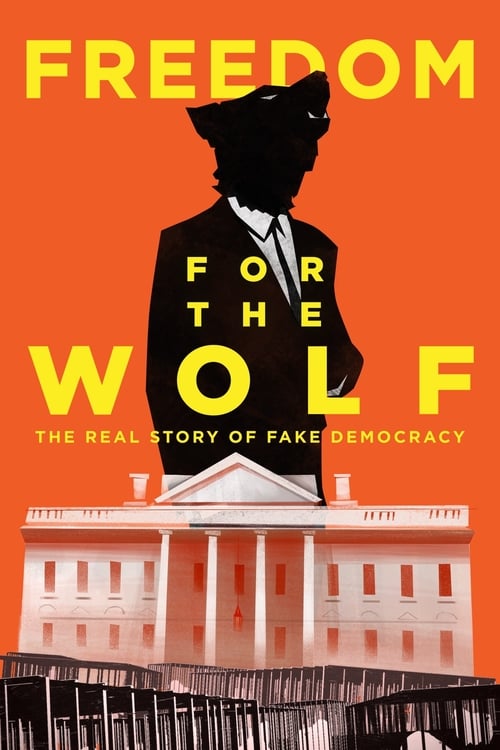
The Real Story of Fake Democracy. Filmed over three years in five countries, FREEDOM FOR THE WOLF is an epic investigation into the new regime of illiberal democracy. From the young students of Hong Kong, to a rapper in post-Arab Spring Tunisia and the viral comedians of Bollywood, we discover how people from every corner of the globe are fighting the same struggle. They are fighting against elected leaders who trample on human rights, minorities, and their political opponents.
A loose collection of scenes in Hong Kong shot over a five-year period, this film begins with the Umbrella Movement in 2014 and ends right before the summer of 2019, when large-scale social unrest and violent resistance erupted. The everyday scenes capture the ambience and the landscape of change in the city, standing as a quiet prelude to the ensuing conflicts.
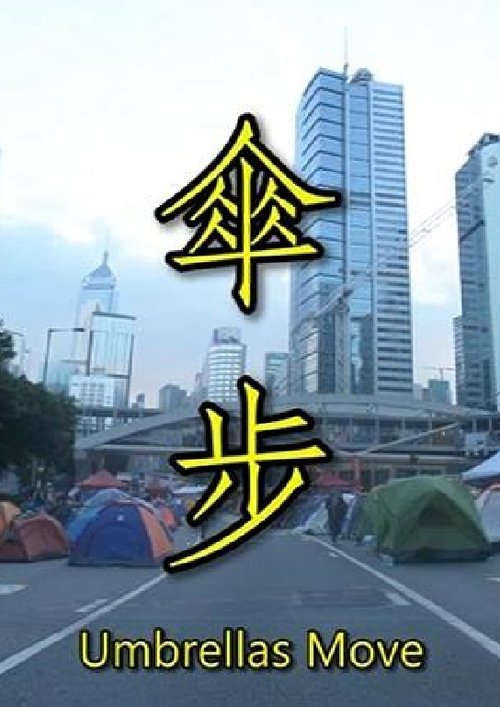
“Umbrellas Move” is a long feature documentary capturing scenes from Hong Kong’s city-wide protest, the occupy movement in 2014. This documentary witnessed a critical page of Hong Kong after transfer of sovereignty over Hong Kong from Britain to China. Around 1200 thousand people have involved in this longest occupation in the history of Hong Kong in 2014. 79 days of occupation, Hong Kong people are fighting for their rights to vote under a fair election in order to be against the political controls from China.
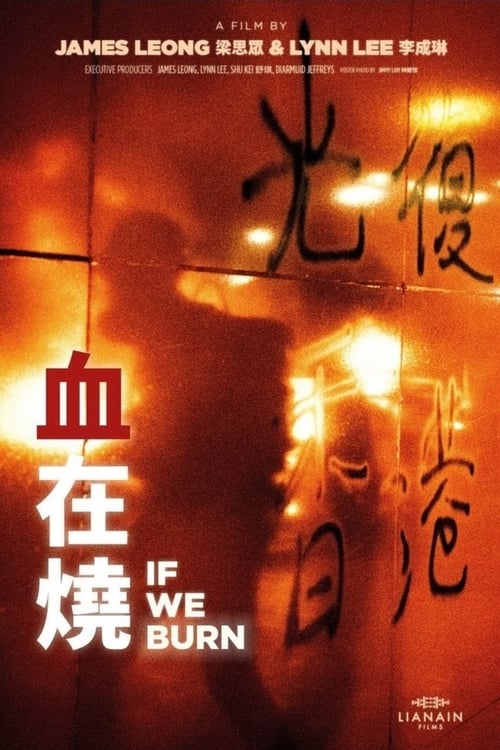
Hundreds of thousands − perhaps even millions − of protestors have taken to the streets of Hong Kong since early June. Sparked initially by the government's plans for a controversial extradition bill, the movement has now transformed into a broader push for greater freedoms and democracy, with anger over police brutality fuelling a cycle of violence. The protests are Hong Kong's biggest challenge to Beijing since its return to China in 1997. If We Burn looks at the movement through the eyes of Hong Kongers whose fates, like their city's future, now hang in the balance.
Young people are protesting on the streets of Hong Kong in order to bring about change. Air soaked with tear gas, the dark uniforms and loud commands of the police officers in the colourful umbrella sea of the protesters. In the midst of the action, the film documents a brand new protest movement.
The Umbrella Movement of 2014, also known as the Occupy Movement, paved the way for Hong Kong’s current upheavals, but unfolded in significantly different ways. This creative documentary focuses on the intellectual, political, and discursive underpinnings of the social and political actions of 2014, before fast-forwarding to 2019. A range of thoughtful and engaged intellectuals, students, scholars, activists, and artists including Benny Tai, Chan Kin-man, Ray Wong, and Agnes Chow (many of whom are facing imprisonment for their democratic activism) articulate a range of philosophies, viewpoints and emotions, set against Hong Kong’s spectacular urban background of skyscrapers, night lights, and street-occupying mass movements.
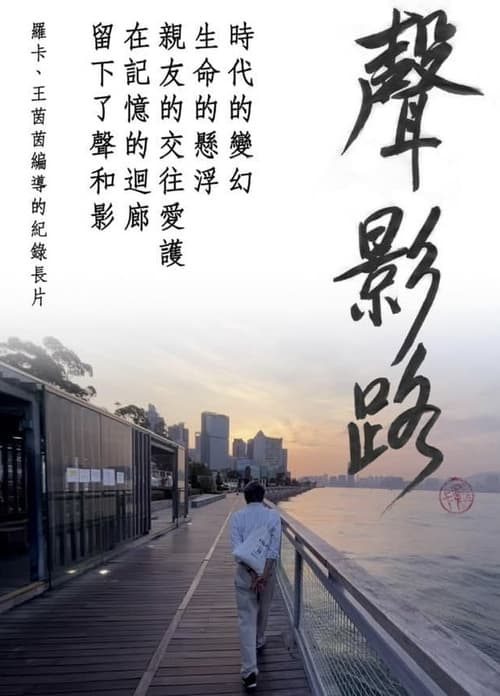
Having devoted much of his career to programming and film history research, Law Kar, a.k.a. Uncle Kar, places himself before the camera for the first time. This nostalgic trip down memory lane, as he recounts his personal and cinematic experiences, from film criticism, experimental filmmaking to auditioning for Federico Fellini, cumulates in a brief history of Hong Kong cinema itself. Reflecting on the past 80 years, Law Kar's affectionate documentary sheds light on local movies and Chinese cinema, brooding over the socio-political transformation of our perplexed city, as the restless cinephile ponders the role cinema and art play in times of crisis.
In Hong Kong, echoes of resistance and turmoil are sensitively captured on 16mm in this poetic rumination of public spaces and everyday life in a metropolis in upheaval.
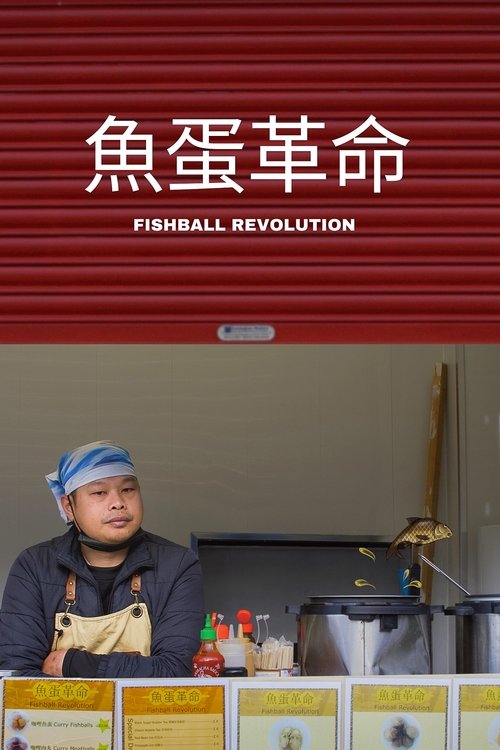
An asylum seeker from Hong Kong builds a new life for himself in Glasgow, using his passion for street food to maintain his cultural identity.
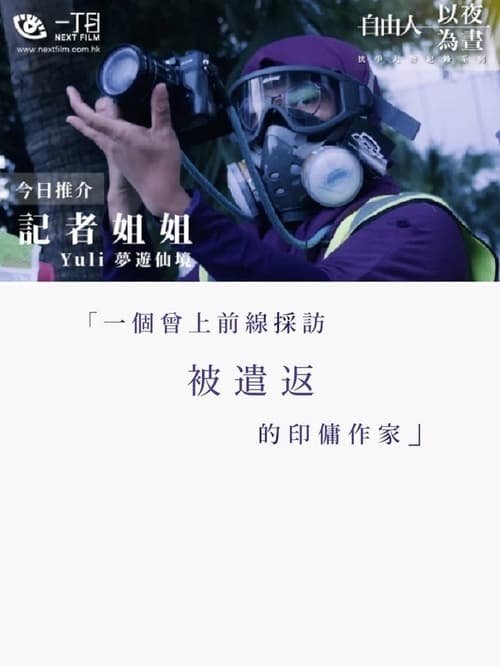
The work documented the story of Yuli, a Hong Kong domestic worker from Indonesia. She is a novelist who won a literature award and also a journalist dedicated to writing. Between the social event that happened in June in Hong Kong, her thoughts and caring about the city are far more from what people used to imagine a narrative of a domestic worker. They are not only domestic workers but they also have other social roles, e.g. a citizen who lived in Hong Kong.
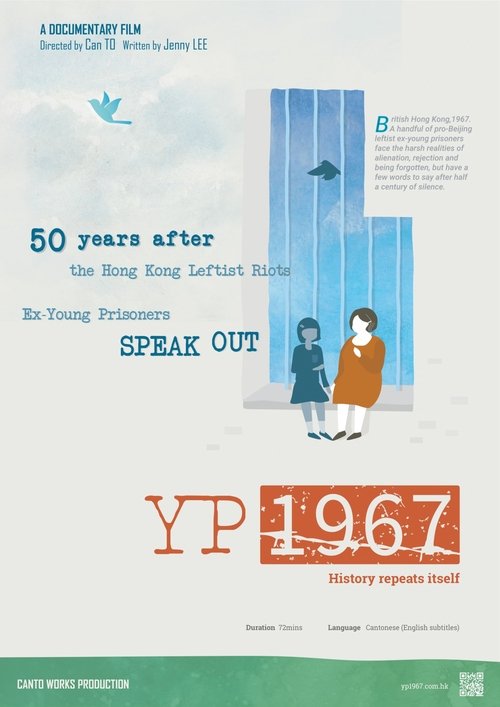
Everyone has their secrets. Everyone has the past no one’s heard about. But what makes an entire generation sit in stunned silence with unmentionable hesitation to talk about their past? Even the past was 50 years ago. Five decades after the Hong Kong leftist riots, six ex-young prisoners speak out for the first time about their personal and unmentionable experience. Documentary film YP1967 is about their love and hate towards their country, their honour and dishonour as a convicted criminal, their condonation and condemnation of the parties involved, and their truth-seeking and reconciliation with the past.