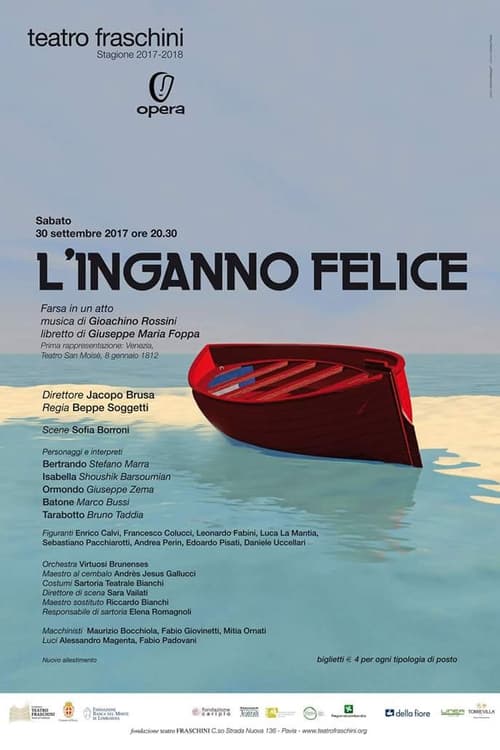
Artavazd Sargsyan
as Bertrando
Silvia Dalla Benetta
as Isabella
Baurzhan Anderzhanov
as Ormondo
Tiziano Bracci
as Batone
Lorenzo Regazzo
as Tarabotto
Tommaso Dionis
as A Soldier / Solo Flute
Figaro uses every trick he can muster to outwit Dr Bartolo and ensure his master wins his chosen bride. He meets his match in the would-be-bride Rosina, who has schemes of her own. Glyndebourne favourite Danielle de Niese adds the crafty Rosina to her growing list of bel canto heroines. Directed by Annabel Arden with playful energy springing from Rossini’s joyous music, this new production heralds the welcome return of a masterpiece not seen at Glyndebourne Festival since 1982.
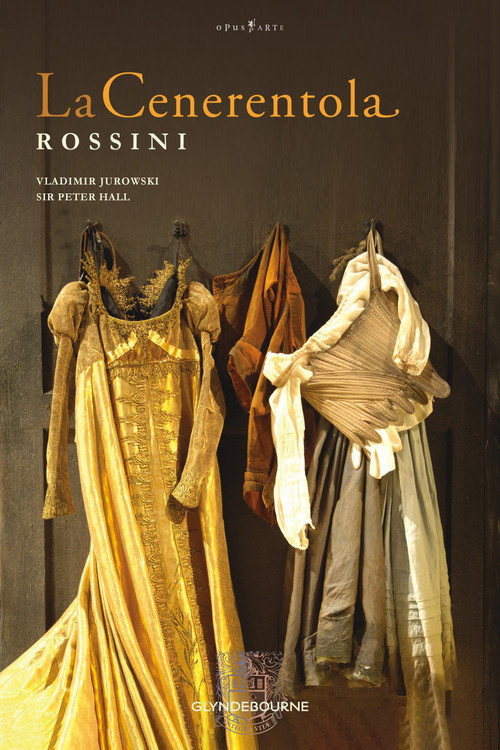
In late 18th-century Italy, in the mansion of Don Magnifico, the young and pretty Angelina works as a maid. Teased by her two frivolous half-sisters, Clorinda and Tisby, Angelina believes she is in love with a young valet and goes to the ball. Dressed in her finest finery, she meets the man who is in fact the Prince and flees from him after giving him a bracelet that will allow him to recognise her a little later. The masks come off, and kindness and love triumph! ‘La Cenerentola’ is the last opera buffa composed by Gioachino Rossini for an Italian audience. A dramma giocoso in two acts, with a libretto by Jacopo Ferretti, freely adapted from Charles Perrault’s fairy tale ‘Cinderella’ (1697), omitting the magic in favour of a realism tinged with humour and social criticism. Premiered for the Rome Carnival at the Teatro Valle in Rome on 28 January 1817. Recorded live at Glyndebourne Opera, Lewes, East Sussex, on 2 and 4 June 2005.
Behind the Hollywood Bowl stage which is playing the opera The Barber of Seville, Bugs Bunny flees into the backstage area with Elmer Fudd in close pursuit. Seeing his opportunity to fight on his terms, Bugs raises the curtain on Elmer, trapping him on stage. As the orchestra begins playing, Bugs comes into play as the barber who is going to make sure that Elmer is going to get a grooming he will never forget.
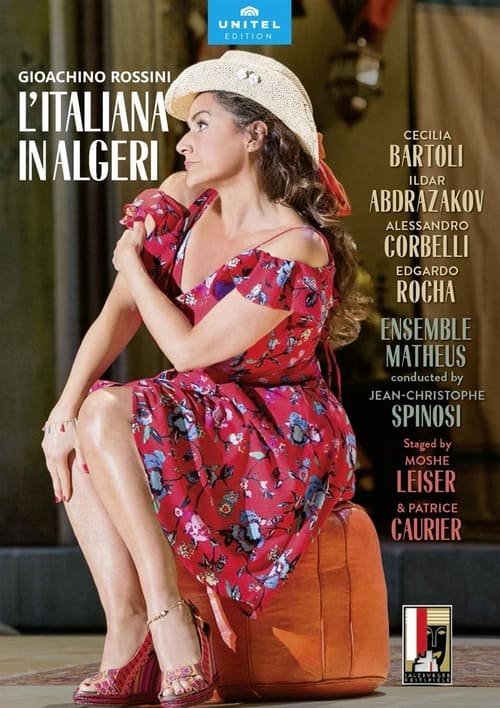
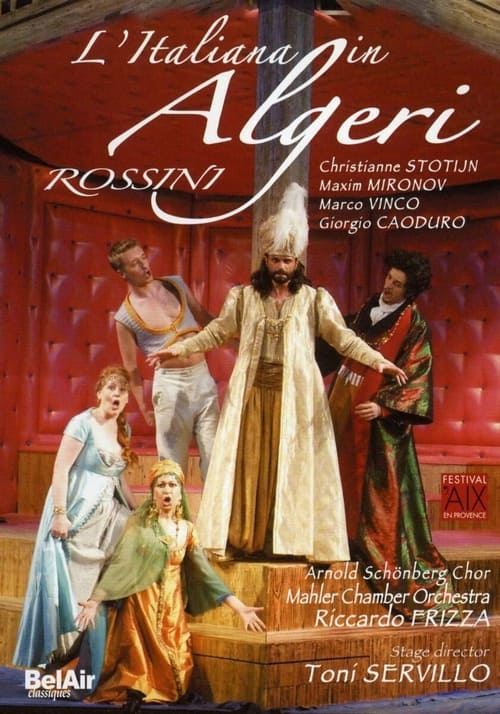
Live performance, Festival d'Aix-en-Provence, July 2006. 'L'italiana in Algeri' (English: 'The Italian Girl in Algiers') is an operatic dramma giocoso in two acts by Gioachino Rossini to an Italian libretto by Angelo Anelli, based on his earlier text set by Luigi Mosca. It premiered at the Teatro San Benedetto in Venice on 22 May 1813. The music is characteristic of Rossini's style, remarkable for its fusion of sustained, manic energy with elegant, pristine melodies.
Isabella is a strong, independent woman who has no intention of giving in to the clumsy advances of the powerful Mustafà. In this production by Mosh Leiser and Patrice Caurier, which plays on preconceptions about culture clash, Mustafà is no longer a handsome Ottoman, but a shady gangster who traffics in electronic goods in the port of Algiers. Make of it what you will...
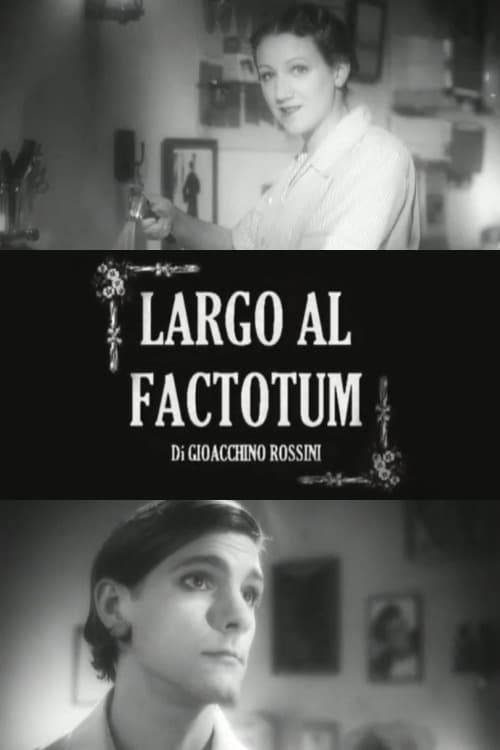
A silent black-and-white comedy inspired by the fizzing rollercoaster of Largo al factotum - the familiar aria from Rossini's The Barber of Seville - featuring the young apprentice hero and a recalcitrant, increasingly monstrous hairball.
Tom, famous baritone Signor Thomasino Catti-Cazzaza, enthralls a concert audience with his rendition of "Largo al factotum", from Rossini's "Il Barbiere di Siviglia", while Jerry strives for sleep under the stage.
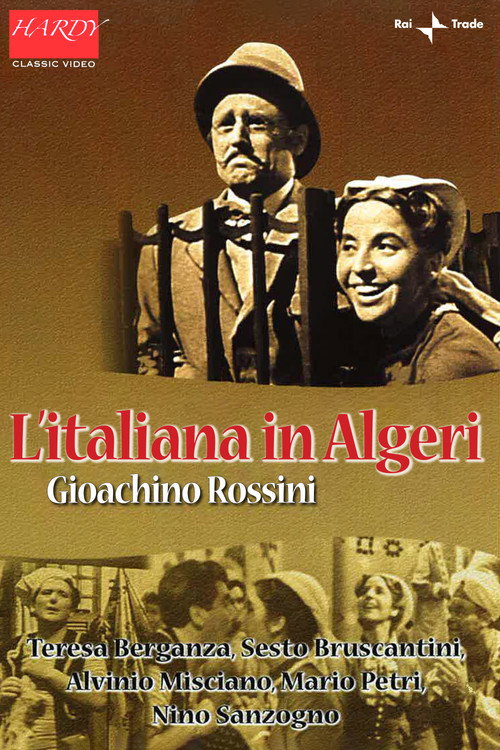
In 1810, Mustafà, Bey of Algiers and thoroughly fed up with his wife, the docile Elvira, orders the captain of the corsairs to find him one of those feisty Italian women. It turns out to be Isabella, an Italian woman of unparalleled beauty searching for her fiancé Lindoro, whom Mustafà happens to be holding captive in his seraglio. The Bey intends to give Lindoro to his wife Elvira, hoping to get rid of him once and for all. Isabella, accompanied by her annoying suitor Taddeo—whom she passes off as her uncle to save him from the gallows—relies on her powers of seduction. “L’italiana in Algeri” (The Italian Girl in Algiers) is a two-act dramma giocoso (opera buffa) by Gioachino Rossini, with a libretto by Angelo Anelli. It premiered at the Teatro San Benedetto in Venice on May 22, 1813. Recorded in the studios of Radiotelevisione Italiana (RAI) in Milan on July 10, 1957.
Two artists go out to train, they don't fit the standards of their neighborhood, their city, or their imposing culture.
In this concert, a take-off on the play "A Chorus Line," comic Billy Crystal uses the premise of auditions for a Broadway musical to play various characters trying out for the parts.
Partoyo, a big-time businessman, abandons his family because of work. A sociopolitical snapshot of Jakarta in the changing governance.
In a feature film based off the popular TruTV series, the team must scramble against time to save Lu's daughter Lyndah from a gang of dangerous criminals.
Every evening, Eugène Fortin becomes Madame Simone, to the delight of club-goers around town. His flamboyant costumes, a pastiche of many styles, give him the look of a clown from the end of the last century. One day, Madame Simone hears a voice urging him to go to the Wigstock festival in New York: a gathering dear to both transvestites and wig fans.
An underprivileged hairdresser becomes the game changer in a local body election in a village where caste politics rules the roost. Will he be able to bring some changes to people's lives?
In this poetic, fragmented portrait set in rural Oregon, three white millennials struggle to come to terms with their increasing sense of alienation from contemporary society. Their despair leads them to confront their perceived adversities in the most terrible way imaginable. A searing critique of white American values, KIN invites its viewers to contemplate the troubled and long-brewing reality of Trump's America.