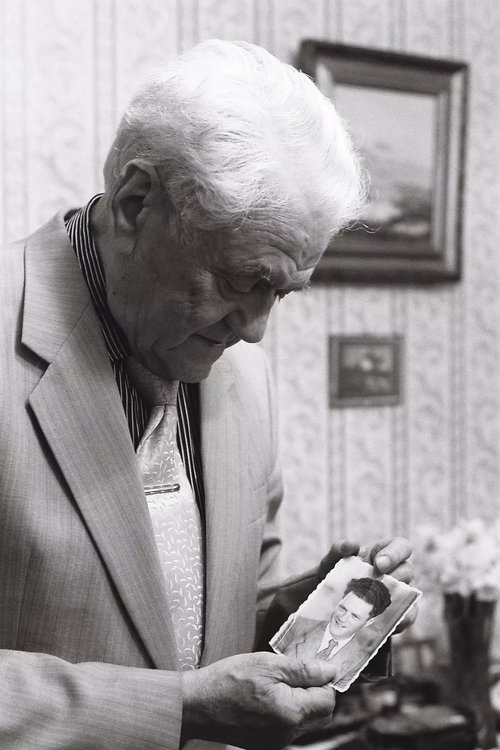
Raised in rural isolation by an extremist Hasidic sect, Chaim is torn between his devotion to his grandmother, an aging Holocaust survivor, and his attraction to a sexy blond in a Liberty car insurance ad.
René W. Solomon
as Chaim
Riva Gavartin
as Fania
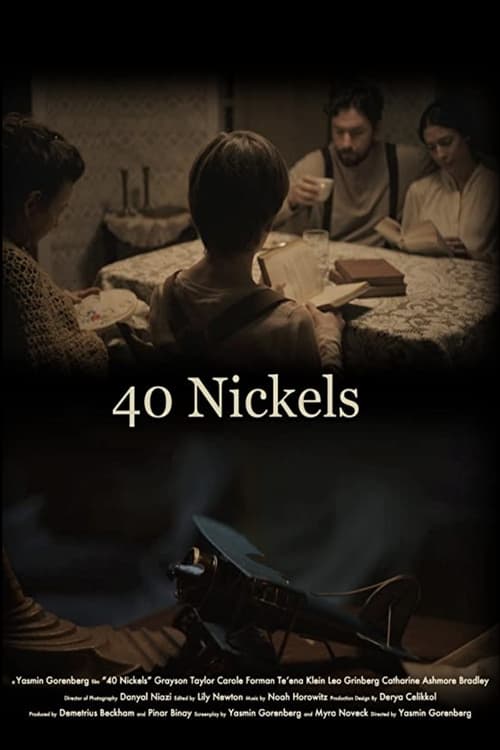
Based her grandfather’s boyhood in St. Louis, Yasmin Gorenberg tells a story of the pain passed from refugee parents to their children and the hope that can overcome it. “40 Nickels” captures the image of a generation of immigrants to the United States in the 1920’s and 1930’s and through that spotlights the effects of the 1919 pogroms in Eastern Europe. This is a film about parents and children: how trauma never leaves a family, and how hope and resilience is also passed down. It asks the question: Can a new generation look at the world with wonder rather than fear?
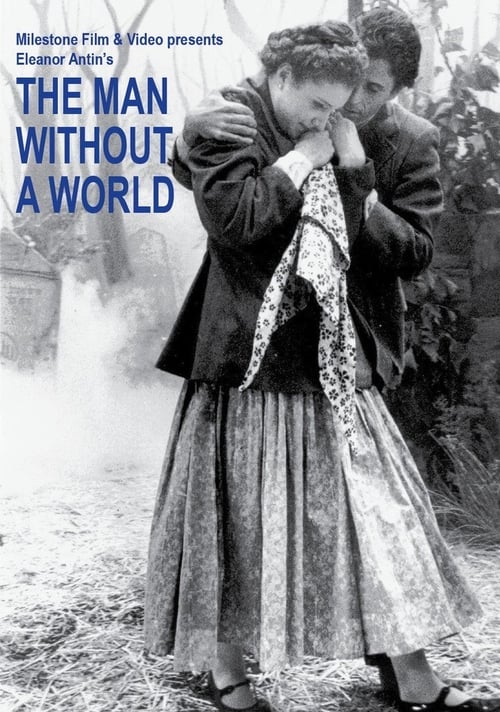
The Man Without a World is credited to the legendary (and imaginary) 1920s Soviet director, Yevgeny Antinov. But the film is anything but old. In fact, Antinov himself is the creation of contemporary filmmaker Eleanor Antin. Her film is a moving, comic melodrama set in a typical shtetl (village) in Poland. The Jews’ struggle against poverty and racial hatred is complicated by their own division into hostile political factions of the religious orthodoxy, assimilationists, socialists, Zionists, anarchists and survivors. While the Jews of the shtetl pursue their loves, politics, religion, business and dreams for the future, the Angel of Death is ever near...
Set in Berlin and New York's Lower East Side, The Great Yiddish Love stars the self-exiled Marlene Dietrich and her Nazi-endorsed replacement, Zarah Leander. It is a melodrama of love, emigration, and betrayal reassembled from Hollywood, German Ufa and Yiddish films from the 1930s and 40s.
Motel, a poor laborer, loving husband and new father, leads cloakmakers in a strike for better working conditions. When he is severely injured by strikebreakers, his wife, Esther, and infant son are left destitute. Desperate to save her starving child, Esther gives him up for adoption to a wealthy couple, and then commits suicide. The richly-rendered beautiful Yiddish songs by Sholem Secunda featuring Cantor Leibele Waldman and Joel Feig's famous choir are a good example of the bittersweet melodrama in the finest tradition of the Yiddish theater.
In this multiverse comedy about Alzheimer's, Nellie travels through alternate dimensions in search of her husband.
In one continuous shot, SHTTL shows the lives, loves, and inner conflicts within a Yiddish speaking shtetl on the border between Ukraine and Poland - one day before the Nazi invasion of the Soviet Union.
An immigrant worker at a pickle factory is accidentally preserved for 100 years and wakes up in modern day Brooklyn. He learns his only surviving relative is his great grandson, a computer coder who he can’t connect with.
An upbeat, witty, and timely exploration of a global community of artists creating innovative work in their quest to rediscover and revitalise the endangered Yiddish language. From behind-the-scenes with an acclaimed Yiddish-language version of Yentl in Melbourne, to enjoyably transgressive punk-Klezmer musicians, and Barrie Kosky’s latest trailblazing production in Berlin – the endangered Yiddish language is alive and well in this rousing documentary. The language originated amongst the Jewish community in Eastern Europe, but almost disappeared when more than half of the world’s Yiddish speakers were murdered during the Holocaust. Most of the artists and performers (aka Yiddishists) in the film didn’t grow up speaking Yiddish, but all have found solace, identity, and inspiration in its rich traditions and culture. Ros Horin has mapped a fascinating cultural history.
Elliott Gould narrates this affectionate look at life in the shtetls of Eastern Europe in the 19th and early 20th centuries. "It's unreal that all this could have just disappeared," says Polish native Mariem Adler Stok, one of the seniors whose memories of this "Yiddish world" give this documentary its life. The hour traces Jewish history in Europe and explores Jews' focus on education, their religious customs, clothing, food, music and theater.
Lithuania, 1941, during World War II. Hundreds of thousands of texts on Jewish culture, stolen by the Germans, are gathered in Vilnius to be classified, either to be stored or to be destroyed. A group of Jewish scholars and writers, commissioned by the invaders to carry out the sorting operations, but reluctant to collaborate and determined to save their legacy, hide many books in the ghetto where they are confined. This is the epic story of the Paper Brigade.
The questioning of Jewish heritage and identity via the portrait of a diversed family, across Belgium and the United States.
When the cities most beloved super hero goes missing it's up to the street level super femmes to save the day. This film was originally an award winning web series that explores comic book tropes with a mighty dose of camp and humor.
This segment involves a pop-up book trip through the Brazilian state of Bahía (spelled Baía in the film), as Donald and José meet up with some of the locals who dance a samba and Donald pining for one of the women, portrayed by singer Aurora Miranda.
Contrasting artistic visions, misplaced confidence and blatant ignorance collide on the backdrop of an increasingly fragile and divided world. Two stubborn Scottish filmmakers struggle to make a short film together in the Austrian Alps.
This is the story of a group of Mexican children who celebrated Christmas by re-enacting the journey of Mary, the mother of Jesus and Saint Joseph searching for room at the inn. "Posada" meant "inn", or "shelter", and their parents told them "no posada" at each house until they came to one where they were offered shelter in a stable. This leads to festivities including the breaking of the piñata, which in turn leads to Donald Duck trying to break his own piñata as well.
Panchito gives Donald and José a tour of Mexico on a flying sarape, or magic carpet. Several Mexican dances and songs are learned here. A key point to what happens later is that Donald is pining for some more ladies again, tries to hound down every single one he sees, and gain return affections, but once more he fails every time and ends up kissing José while blindfolded.
The skies of Mexico City result in Donald falling in love with singer Dora Luz.
An inevitable march, an exodus or an exile. A town that is abandoned and remembered. On the way, perhaps, there is an end.