A journey into time, landscape and consciousness: The Southwestern United States in the black-and-white moving images and unsettling instrumental music. Entropy of the American dream.
A version of Benjamin Britten's opera based on the Melville story. Will the virtuous young sailor Billy Budd be hanged for murder?
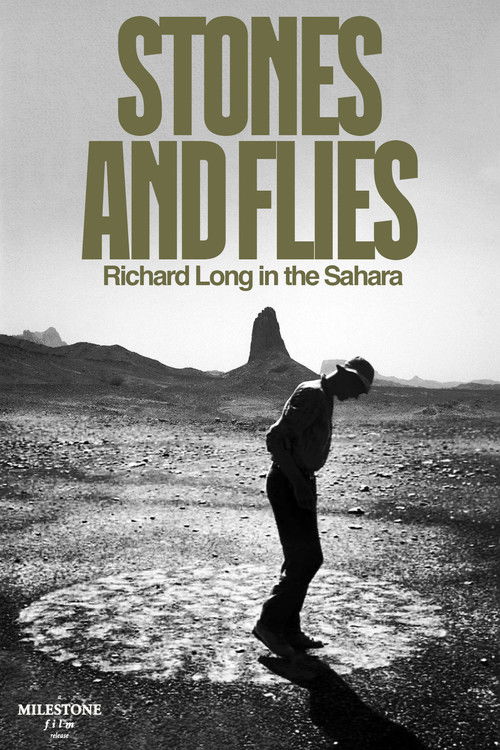
In the fall of 1987, Philippe Haas accompanied the sculptor Richard Long to the Algerian Sahara and filmed him tracing with his feet, or constructing with desert stones, simple geometric figures (straight lines, circles, spirals). In counterpoint to the images, Richard Long explains his approach. Since 1967, Richard Long (1945, Bristol), who belongs to the land art movement, has traveled the world on foot and installed, in places often inaccessible to the public, stones, sticks and driftwood found in situ. His ephemeral works are reproduced through photography. He thus made walking an art, and land art an aspiration of modern man for solitude in nature.
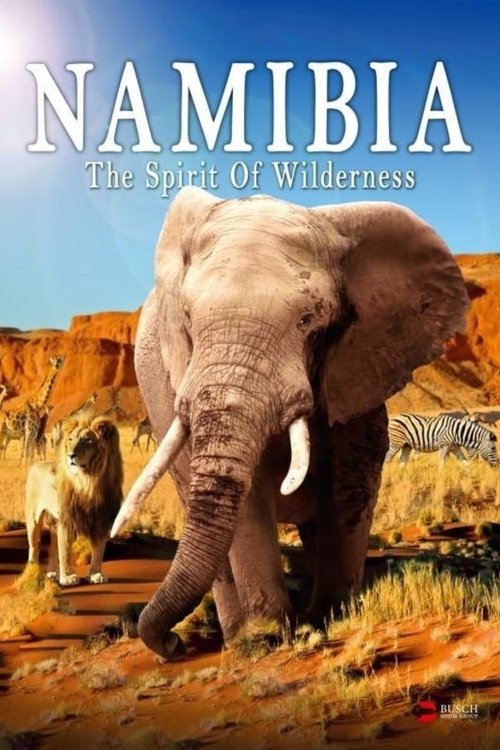
With more than 300 days a year, the sun dominates this country so much that it’s even shining from their flag. It’s a barren land, sometimes it’s like it’s from another planet but still familiar. It is land of contrasts and colours with wide landscapes and fascinating deserts. Influenced by various cultures during colonization and now reborn from the shadows of Apartheid in 1990, Namibia gives a beautiful collage of culture, language, art, music and food. Everyone who loves an adventure should travel to Namibia, the precious corner of our world full of incredible natural wonders. The experience of endless landscapes and an unparalleled blaze of colour make Namibia unforgettable. NAMIBIA – THE SPIRIT OF WILDERNESS invites you on a trip whose fascination will never let you go: From the Namib Desert over the breath-taking Fish River Canyon to the spectacular Etosha National Park where you will see wild elephants, antelopes, giraffes, zebras and lions.
A perspective and reflection on the work of Gabriel Ferrandini.
Home is where we grow up or settle permanently. And this home is always shaped by nature. Today, we human beings change and shape this more than any law of nature. HEIMAT NATUR is a visually stunning journey through the nature of our homeland, from the peaks of the Alps to the coasts and the depths of the North and Baltic Seas. In between is a cinematic foray through steaming forests, shimmering moors, over rose-blossoming heaths and the colorful cultural landscape around our villages and towns. In extraordinary images this nature is shown from its most beautiful side, examining the state of the native habitats. Slow-motion and time-lapse photography as well as intimate shots of familiar and unfamiliar species, some filmed for the first time, making the film a cinematic nature experience for the whole family.
The T.N.P., the Théâtre National Populaire, an important experimental theater directed by Jean Vilar. Franju combines sequences from theatrical performances with documentary images, creating links and confrontations between theater and the real world.
In a remote area of northern Spain, the wind has a name: Tramuntana. Tramuntana takes what it wants—clothes, trees, boats, and the people of the landscape who live with the endless threat of being carried away by its force. This film is a lyrical portrait of this furious wind, woven from the stories passed down by local villagers.
A short documentary about a husband’s longing for his wife, presented through the longing rhymes that adorn his bland life.
An animated film made from approximately 1700 laser printed photo(collage)s, manipulated by hand.
A story about money, power, exploitation, and many possible ends of the world. Some long for Mars, others for heaven. Some dance the humppa on the moon. In this short and tragicomic play, every one of us has our own small part to play.
While on a ship to Skagway, Alaska, Duke and Chester find a map to a secret gold mine, which had been 'stolen' by thugs. In Alaska to recover her father's map, Sal Van Hoyden falls in with Ace Larson, who secretly wants to steal the gold mine for himself. Duke, Chester, the thugs, Ace and his henchman chase each other all over the countryside—for the map.
Hassan, frustrated by poverty, becomes involved with a wealthy woman and eventually abandons his family for her.
The reception ebbs and flows as the unfamiliar landscape whirls by the window of a plane or train or car. Communication is delayed, fragmented, interrupted. Memories of a distant country.
A Landscape documentary about the silent voids the living inhabit after everyone they love has gone.
'The angle of the world allows us to see the real as an outer and inner presence at the same time, an opaque otherness, yet capable of becoming an intimate space. These incommensurable lengths and distances of an interior that opens up: The mysterious movement of the clouds, the cadence of the waves against the light, or the silent slippage of a barely identifiable human silhouette, everything seems transfigured, derealized and reinvented by light in a poetic world that evokes the paintings of Turner or Friedrich, the writings of Poe or Baudelaire.’ — Violeta Salvatierra
Petty con artists Slicker Smith and Herbie Brown mistakenly join the Army evading the cops. The cop chasing them winds up as their drill instructor. A rich young man and his former working class chauffeur are not only in the same unit, they're vying for a pretty girl who seems attracted to both.
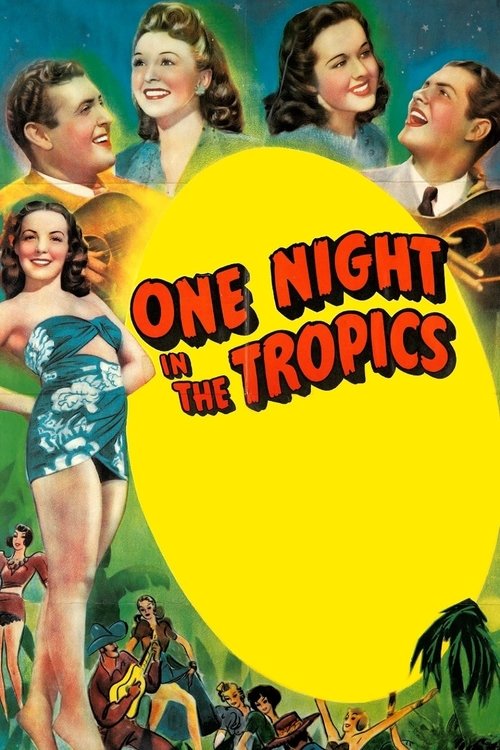
Jim "Lucky" Moore, an insurance salesman, comes up with a novel policy for his friend, Steve: a 'love insurance policy', that will pay out $1-million if Steve does not marry his fiancée, Cynthia. The upcoming marriage is jeopardized by Steve's ex-girlfriend, Mickey, and Cynthia's disapproving Aunt Kitty. The policy is underwritten by a nightclub owner, Roscoe, who sends two enforcers - Abbott and Costello - to ensure that the wedding occurs as planned.
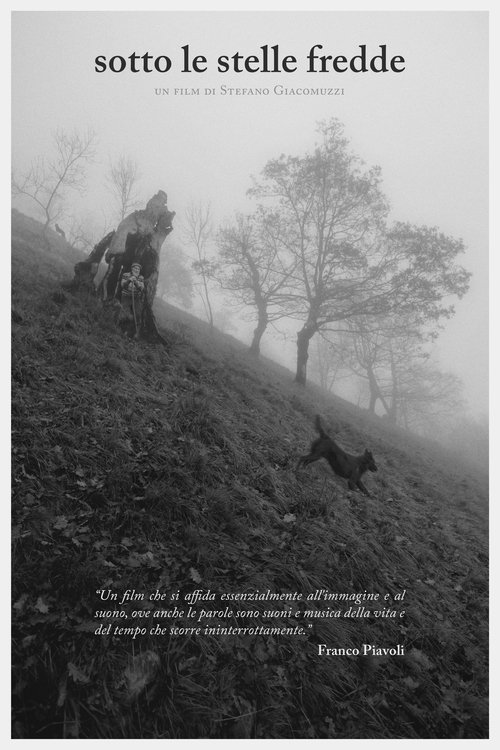
Set in the mountains of northeast Italy, this film may be considered an observational documentary about rural life. Although this is undeniably the case, at the same time Under the cold stars can hardly be considered a documentary: the microcosm on which it focuses appears to be a reflection of a broader reality and perhaps a way to deal with the themes of man’s existence and his relationship with animals, nature and, most importantly, with time. As written by Franco Piavoli "it is a film which essentially relies on images and sound, where words themselves are sound and the music of life, of the relentless flow of time."
A method soldier boys have for amusing themselves in their leisure moments. New comrades are frequently initiated by the old-fashioned sport of tossing in a blanket. The newly arrived recruit, who is the victim of their sport, enjoys himself, perhaps, less than the other participants.