Over 3,500 years ago, the powerful Shang Dynasty emerged from the Central Chinese plains. Their armies were led by a fierce and brilliant young general - her name was Fu Hao.
Yi Zha
as Fu Hao
Fang Shuai
as King Wuding
Xin Xing
as Guard Yu
In year 1250 B.C. during the late Bronze age, two emerging nations begin to clash. Paris, the Trojan prince, convinces Helen, Queen of Sparta, to leave her husband Menelaus, and sail with him back to Troy. After Menelaus finds out that his wife was taken by the Trojans, he asks his brother Agamemnon to help him get her back. Agamemnon sees this as an opportunity for power. They set off with 1,000 ships holding 50,000 Greeks to Troy.
When U.S. Rangers and an elite Delta Force team attempt to kidnap two underlings of a Somali warlord, their Black Hawk helicopters are shot down, and the Americans suffer heavy casualties, facing intense fighting from the militia on the ground.
Cruelty, psychological and sexual violence, humiliations: reality television seems to have gone mad. His debut in the early 2000s inaugurated a new era in the history of the audio-visual. Fifty years of archives trace the evolution of entertainment: how the staging of intimacy during the 80s opened new territories, how the privatization of the biggest channels has changed the relationship with the spectator. With the contribution of specialists, including philosopher Bernard Stiegler, this documentary demonstrates how emotion has made way for the exacerbation of the most destructive impulses.
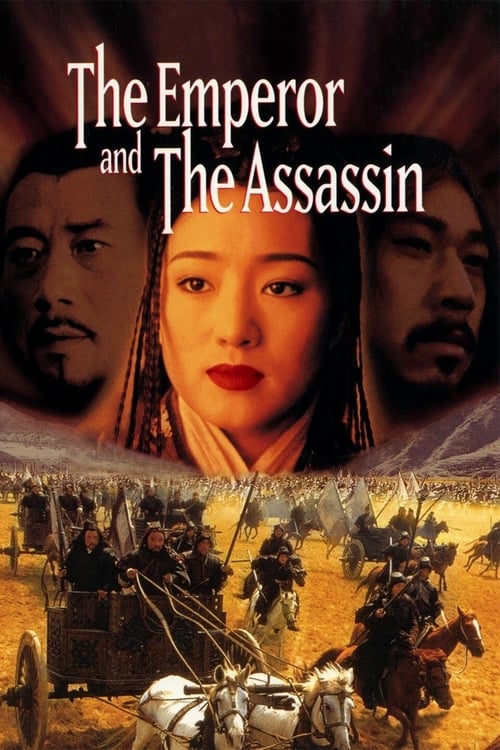
In pre-unified China, the King of Qin sends his concubine to a rival kingdom to produce an assassin for a political plot, but as the king's cruelty mounts she finds her loyalty faltering.
Shakespeare's King Lear is reimagined as a singular historical epic set in sixteenth-century Japan where an aging warlord divides his kingdom between his three sons.
On January 6, 2021, Americans witnessed an attack on the U.S. Capitol without precedent in our history. Armed militiamen and QAnon followers made headlines, but among them were a sea of crosses and Christian flags, rosaries and "Jesus Saves" signs. What motivated so many Christians to participate in this violent assault?
In the first decades of the 20th century, when life was being transformed by scientific innovations, researchers made a thrilling new claim: they could tell whether someone was lying by using a machine. Popularly known as the “lie detector,” the device transformed police work, seized headlines and was extolled in movies, TV and comics as an infallible crime-fighting tool. Husbands and wives tested each other’s fidelity. Corporations routinely tested employees’ honesty and government workers were tested for loyalty and “morals.” But the promise of the polygraph turned dark, and the lie detector too often became an apparatus of fear and intimidation. Written and directed by Rob Rapley and executive produced by Cameo George, The Lie Detector is a tale of good intentions, twisted morals and unintended consequences.
The aging Zhao embarks on his final and greatest campaign, a road to adventure that will crown his name in glory for all time.
A sumptuous and sensual tale of intrigue, romance and betrayal set against the backdrop of a defining moment in European history: two beautiful sisters, Anne and Mary Boleyn, driven by their family's blind ambition, compete for the love of the handsome and passionate King Henry VIII.
In 150 years, twice marked by total destruction —a terrible earthquake in 1923 and incendiary bombings in 1945— followed by a spectacular rebirth, Tokyo, the old city of Edo, has become the largest and most futuristic capital in the world in a transformation process fueled by the exceptional resilience of its inhabitants, and nourished by a unique phenomenon of cultural hybridization.
Billions of years ago, Venus may have harbored life-giving habitats similar to those on the early Earth. Today, Earth's twin is a planet knocked upside down and turned inside out. Its burned-out surface is a global fossil of volcanic destruction, shrouded in a dense, toxic atmosphere. Scientists are now unveiling daring new strategies to search for clues from a time when the planet was alive.
The story of the documentary The Sorrow and the Pity (1971), directed by Marcel Ophüls, which caused a scandal in a France still traumatized by the German occupation during World War II, because it shattered the myth, cultivated by the followers of President Charles de Gaulle (1890-1970), of a united France that had supposedly stood firm in the face of the ruthless invaders.
Thanks to new excavations in Mauritius and Madagascar, as well as archival and museum research in France, Spain, England and Canada, a group of international scholars paint a new portrait of the world of piracy in the Indian Ocean.
Akira Kurosawa's lauded feudal epic presents the tale of a petty thief who is recruited to impersonate Shingen, an aging warlord, in order to avoid attacks by competing clans. When Shingen dies, his generals reluctantly agree to have the impostor take over as the powerful ruler. He soon begins to appreciate life as Shingen, but his commitment to the role is tested when he must lead his troops into battle against the forces of a rival warlord.
When the first railroads were built some two hundred years ago, they brought about a revolutionary change for mankind, linking cities and countryside, driving the industrial revolution and irrevocably changing the landscape: a history of the railroad from its beginnings to the present day.
A French documentary or, one might say more accurately, a mockumentary, by director William Karel which originally aired on Arte in 2002 with the title Opération Lune. The basic premise for the film is the theory that the television footage from the Apollo 11 Moon landing was faked and actually recorded in a studio by the CIA with help from director Stanley Kubrick.
Meet the real-life airmen who inspired Masters of the Air as they share the harrowing and transformative events of the 100th Bomb Group.
The documentary of the Nuremberg War Trials of 21 Nazi dignitaries held after World War II.