When an American filmmaker is commissioned to make a film for a Middle East Biennial on the theme of 'art as a subversive act,' his film is banned for blasphemy, he is asked to destroy every copy, and threatened with arrest.
Caveh Zahedi
as Self
Beckett Zahedi
ZuZu Snyder
Amanda Field
Colin Nusbaum
Michael Patten
The film features a conversation between Lucas and Francis Ford Coppola, producer of THX 1138. They discuss Lucas' vision for the film, including his ideas about science fiction in general and in particular his concept of the "used future" which would famously feature in his film Star Wars. Intercut with this discussion is footage shot prior to the start of production of THX 1138 showing several of its actors having their heads shaved, a requirement for appearing in the film. In several cases the actors are shown being shaved in a public location. For example, Maggie McOmie is shaved outside the Palace of Fine Arts in San Francisco, while Robert Duvall watches a sporting event as his hair is cut off. Another actor, Marshall Efron, who would later play an insane man in the film, cut off his own hair and was filmed doing so in a bathtub.
A documentary about Pier Paolo Pasolini and his film 'Salò o le 120 giornate di Sodoma'.
A documentary by writer and filmmaker Daniel Bird about the making of Sergei Parajanov's 'The Colour of Pomegranates'.
Won-Tak's dad, an old-time con-man, was suddenly killed during a freak accident in the prison, just one day before his release. Having waited for so many years to be reconciled with his dad and to start a new life together, Won-Tak felt betrayed and vowed to ruin his own life and bring shame to his parents. However, unknown to him, Wong-Tak's dad has managed to strike a bargain with an angel to return to the living world as Won-Tak's new bestfriend.
Director Denys Arcand made an inquiry on textile industry in Quebec, meeting employers and workers of that industry.
When Francois Truffaut approached Alfred Hitchcock in 1962 with the idea of having a long conversation with him about his work and publishing this in book form, he didn't imagine that more than four years would pass before Le Cinéma selon Hitchcock finally appeared in 1966. Not only in France but all over the world, Truffaut's Hitchcock interview developed over the years into a standard bible of film literature. In 1983, three years after Hitchcock's death, Truffaut decided to expand his by now legendary book to include a concluding chapter and have it published as the "Edition définitive". This film describes the genesis of the "Hitchbook" and throws light on the strange friendship between two completely different men. The centrepieces are the extracts from the original sound recordings of the interview with the voices of Alfred Hitchcock, Francois Truffaut, and Helen Scott – recordings which have never been heard in public before.
How free and independent is the press in Europe? In recent years, multiple crises and the rise of authoritarianism have put pressure on journalists. We take a look at these countries, where aggression towards the media seems to be undermining the very idea of democracy.
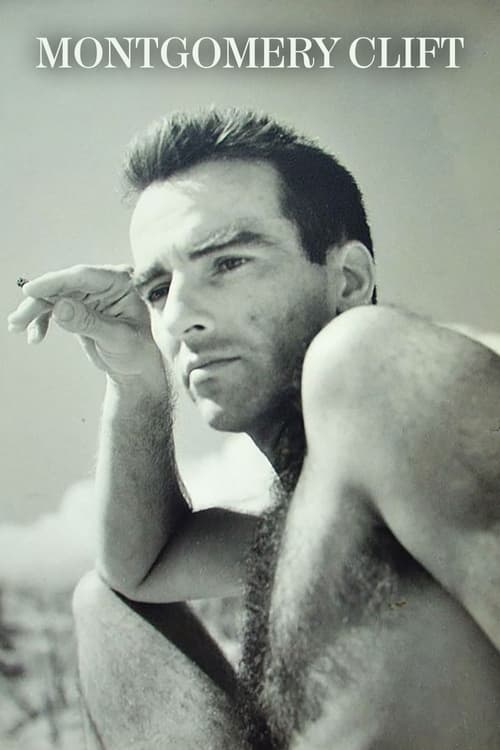
A documentary incorporating footage of Montgomery Clift’s most memorable films; interviews with family and friends, and rare archival material stretching back to his childhood. What develops is the story of an intense young boy who yearned for stardom, achieved notable success in such classic films as From Here to Eternity and I Confess, only to be ruined by alcohol addiction and his inability to face his own fears and homosexual desires. Montgomery Clift, as this film portrays him, may not have been a happy man but he never compromised his acting talents for Hollywood.
In 1928, as the talkies threw the film industry and film language into turmoil, Chaplin decided that his Tramp character would not be heard. City Lights would not be a talking picture, but it would have a soundtrack. Chaplin personally composed a musical score and sound effects for the picture. With Peter Lord, the famous co-creator of Chicken Run and Wallace & Gromit, we see how Chaplin became the king of slapstick comedy and the superstar of the movies.
After seven years of marriage, a couple of professional workers (he, a doctor and she, a banker) try to refresh their sex life.
So-hwi is a martial arts prodigy and college student. Realizing that her superhuman strength is holding back her love life, she decides to quit martial arts to pursue handsome hockey player Joon-mo. But Joon-mo is in love with an older woman, and when So-hwi's mystical martial arts community comes under threat from an old enemy, Heuk-bong, her childhood friend Il-yeong must persuade her to return.
A man takes up residence with a mysterious marquis and is soon persuaded to enter into an asylum for preventative therapy. Things are not what they seem, and the marquis may be even more sinister than what the young man might have predicted.
Tom and Hannah have been platonic friends for 10 years. He's a serial dater, while she wants marriage but hasn't found Mr. Right. Just as Tom is starting to think that he is relationship material after all, Hannah gets engaged. When she asks Tom to be her 'maid' of honor, he reluctantly agrees just so he can attempt to stop the wedding and woo her.
This is not merely another film about cinema history; it is a film about the love of cinema, a journey of discovery through over a century of German film history. Ten people working in film today remember their favourite films of yesteryear.
A meditation on the human quest to transcend physicality, constructed from decaying archival footage and set to an original symphonic score.