United by the planet's biggest conservation project -- The Red List -- conservation heroes around the world are risking everything to save giraffe, gorillas, big cats and other endangered wildlife.
Ellen DeGeneres
as Self - Narrator (voice)
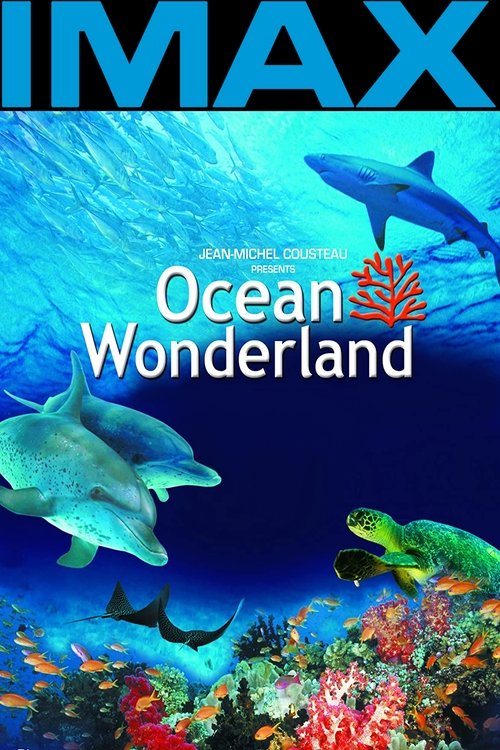
In 2009, the underwater world around the Central Polynesian Sporades in the eastern Pacific was intact. But a few years later, the corals died massively. Now they have recovered.
A documentary of insect life in meadows and ponds, using incredible close-ups, slow motion, and time-lapse photography. It includes bees collecting nectar, ladybugs eating mites, snails mating, spiders wrapping their catch, a scarab beetle relentlessly pushing its ball of dung uphill, endless lines of caterpillars, an underwater spider creating an air bubble to live in, and a mosquito hatching.
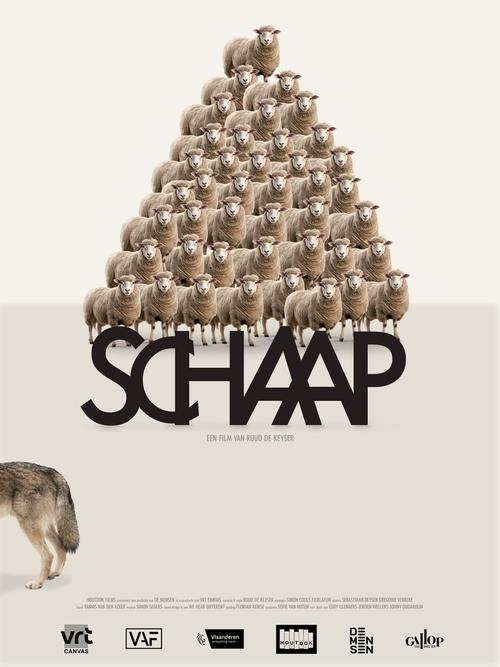
Secret territories still exist in France today. This film is a personal quest, the story of a crazy gamble taken by a passionate dreamer, an anti-hero capable of breaking all barriers to achieve his goal: to meet wild wolves in their natural habitat. After three years in the field, bivouacking in the wilderness in all weathers, the director managed to track down the wolves. Little by little, he observes, gets closer and ends up being accepted by the pack. Against all odds, the magnificent predators offer a little of their intimacy to this strange character. But the film also raises the question of the limits of this intimacy.
Documentary following researchers as they try to take the first-ever picture of a black hole. They must travel the globe to build a revolutionary telescope that spans planet Earth.
An incredible look at cephalopods – squids, octopi, and cuttlefish, from the Wildlife on One series. Filmed from Hawaii to the Gulf of Mexico, and using computers, scientists study the shape and color-changing abilities of these bizarre animals. Narrated by David Attenborough. (This film was shown on BBC as Season 12, Episode 2 of Wildlife on One. This listing is for the 16mm film release.)
Impressive family film offers a unique stories of the wonderful animals who inhabit the Aldabra atoll, were born here, create communities, give birth to young and struggle for their survival.
Sir David Attenborough unveils the two stunning underwater realms of Saudi Arabia - the flamboyant Red Sea and the contrasting hot muddy Gulf, capturing for the first time the rare event of Palolo worms spawning at night.
The deep waters of the Southern and Pacific Oceans still hold many mysteries. Two international teams of scientists set out to explore the icy depths of Antarctica and the abysses of the Mariana Trench. Filmed for the first time, creatures seemingly from another galaxy cohabit with champions of survival in extreme conditions.
This film documents the efforts of a group of Canadians and Americans to save the whooping crane from extinction. They display great determination in their dealings with this independent, pre-Ice Age creature. The issues of wild animals imprinting on people and the preservation of wild animals in captivity are examined in this film. Produced in cooperation with the Canadian Wildlife Service and the United States Fish and Wildlife Service.
The story of Darwin's finches and their relationship with other creatures of the Galapagos; tracing their evolution, how the islands were formed and how it's main inhabitants got there.
Told by an old Sagauro cactus, of the many guests which live in its "hotel," from ants to owls nestling in its bark and unlikely co-habitants such as a rattle snake and next door, protected by a barrier of thorn balls, a desert rat.
First transmitted in 1961, David Attenborough travels to Meru National Park in Kenya to visit Joy and George Adamson and meet Elsa the lioness and her cubs shortly before Elsa's death.
In September 1954, David Attenborough, cameraman Charles Lagus, Jack Lester and Alf Woods, both from the Zoological Society of London, set out for Sierra Leone. They spent three months intently surveying the landscapes of Sierra Leone in search of nature’s rarest animals. Although predominantly searching for Picathartes gymnocephalus (the White-necked Rockfowl) they hoped to take back to London a representative collection of the whole of animal life in this part of Africa.
Bee Wild is an inspirational, upbeat, and poetic documentary that explores the foundational role that bees play in sustaining humanity, the reasons for their sharp population decline and how we can regenerate bees worldwide so they are once again part of a thriving ecosystem. Because we are losing 1 billion pollinators annually, the film will focus on the urgent nature of both bees and other insects that pollinate our food and emphasize ways that viewers can get involved in restoring, regenerating and nurturing this largely unseen world.
Blue Whales: Return of the Giants 3D takes viewers on a journey of a lifetime to explore the world of the magnificent blue whale, a species rebounding from the brink of extinction. Following two scientific expeditions—one to find a missing population of blues off the exotic Seychelles Islands, the other to chronicle whale families in Mexico’s stunning Gulf of California—the film is an inspirational story that transforms our understanding of the largest animal ever to have lived.
Seldom seen and very rarely filmed in their natural environment, Lumholtz tree kangaroos are the ghosts of the north Queensland forests. This film follows the intimate lives of these tree-climbing specialists in the wilderness of the Atherton Tableland.