Part documentary, part personal essay, this experimental film combines archive imagery with the striking wintry landscapes of Alaska to tell the story of immigrant experience coming into the UK from 1960 onwards.
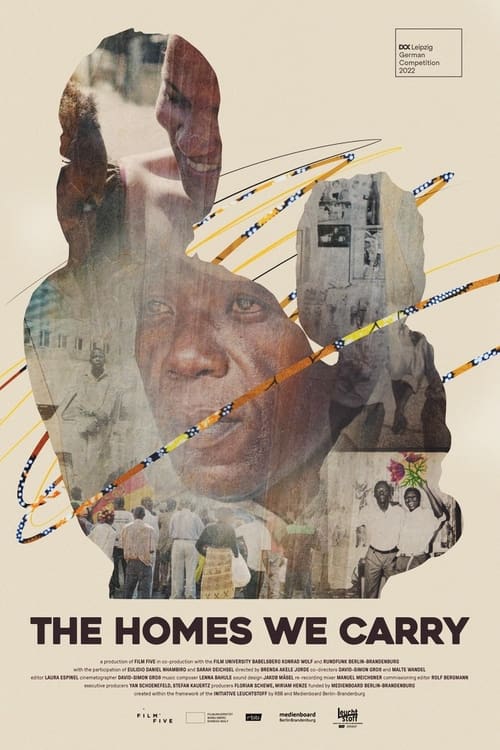
Hammer and compass in Mozambique. We see a GDR flag waved at a rally in Maputo, carried by "Madgermanes", contract workers who once toiled in eastern Germany. Some of them founded families there, like Eulidio. His daughter Sarah grows up with her mother in Berlin. The relationship with her "second home" is slow in growing, partly thanks to Luana, Sarah's baby, whose father, Eduardo is also from Mozambique.
Inspired by true events, this film takes place in Rwanda in the 1990s when more than a million Tutsis were killed in a genocide that went mostly unnoticed by the rest of the world. Hotel owner Paul Rusesabagina houses over a thousand refuges in his hotel in attempt to save their lives.
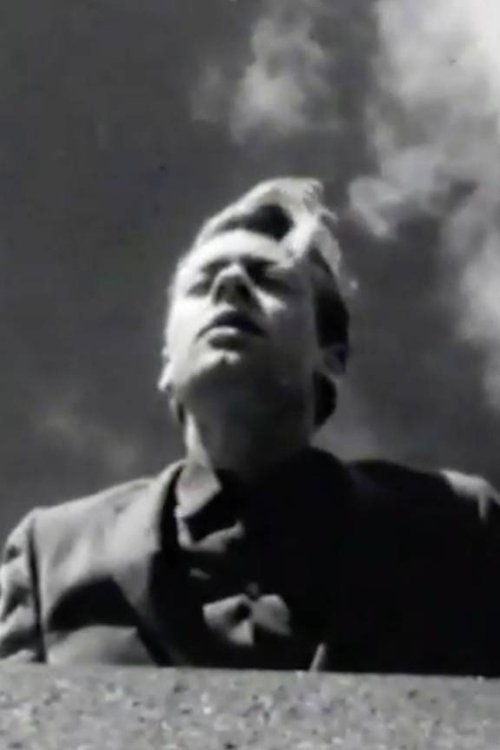
Made on a wind-up Bolex camera, The Sound of Seeing announced the arrival of 21-year-old filmmaker Tony Williams. Based around a painter and a composer wandering the city (and beyond), the film meshes music and imagery to show the duo taking inspiration from their surroundings.
Experimental educational film reveals the emergence of some ideas of Biophysics in historical, philosophical and methodological aspects. The first film from the Biophysics Cycle (1982-1989).
Twenty-five films from twenty-five European countries by twenty-five European directors.
Journalist Dermi Azevedo has never stopped fighting for human rights and now, three decades after the end of the military dictatorship in Brazil, he's witnessing the return of those same practices.
An anthology of one-minute films created by 51 international filmmakers on the theme of the death of cinema. Intended as an ode to 35mm, the film was screened one time only on a purpose-built 20x12 meter public cinema screen in the Port of Tallinn, Estonia, on 22 December 2011. A special projector was constructed for the event which allowed the actual filmstrip to be burnt at the same time as the film was shown.
When a young woman is shot by an undocumented immigrant on Pier 14 in San Francisco, the incident ignites a political and media furor that culminates in Donald Trump’s election as President of the United States. In the eye of this storm, two public defenders fight to reveal the truth.
An experimental ethnographic documentary that criticizes the colonizer view of anthropology.
What if from one day to the next, you’re no longer seen, but instead are stared at? The leading characters in this multi-layered film have ended up in a new world where suddenly nothing seems to align. In their new lives in the Netherlands, they unintentionally provoke reactions on a daily basis. Even after many years, they still hear the same questions over and over again: where are you from, do you speak Dutch, do you tan in the sun?
The little-known story of Ukrainian children torn from their homes in the crush between the Nazi and Soviet fronts in World War II. Spending their childhood as refugees in Europe, these inspiring individuals later immigrated to the United States, creating new homes and communities through their grit, faith and deep belief in the importance of preserving culture.
Journalist Émilie Tran Nguyen invites the viewer to follow her in her quest and discover, at the same time as her, the historical origins of this anti-Asian racism. Told in the first person, alternating archive images, interviews with historians, sociologists and field sequences, this film traces the making of prejudices in the French imagination and pop culture, to twist the neck of stereotypes, deconstruct and act.
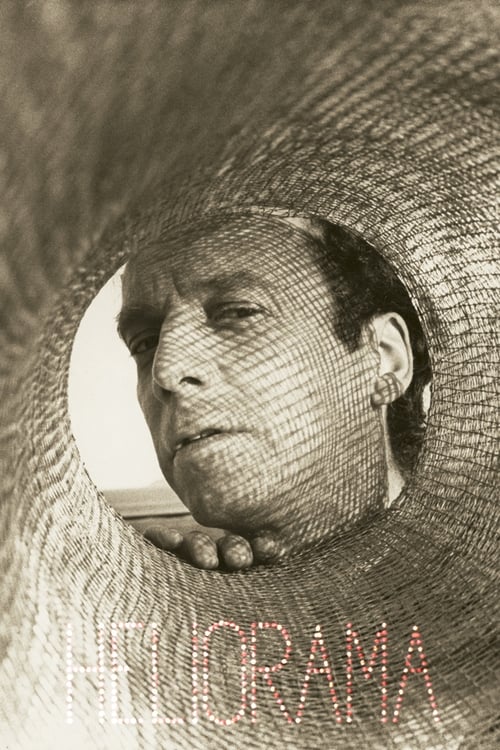
Two screens of film about - and sometimes shot by - Claes Oldenburg, detailing his inspiration, his methods and his relationship with his partner Hannah Wilke.
Anne Bean, John McKeon, Stuart Brisley, Rita Donagh, Jamie Reid and Jimmy Boyle are interviewed about their artistic practice and the legacy of Surrealism on their work.
"Ryuta is 5 years old. Even though he is my son, I sometimes wonder what this small person is to me. Even though I see his joys and sadnesses and know the feel of his warmth on my skin when I hold him, there are moments when my feelings for him become vague and blank." - Takashi Ito
From the re-appropriation of archive images with various contents (war images, soccer matches, social celebrations, religious rites, historical characters, etc.) and from different sources (including films by Chris Marker, Alain Resnais, Leni Riefenstahl or Gianikian and Ricci Lucchi, as well as images from ads and news...), together with reflections of Pierre Bourdieu, Zygmunt Bauman, Bertolt Brecht, Hannah Arendt, Stanley Milgram, Eric Hobsbawn, Amin Maalouf, Josep Fontana, etc., Zavan Films producer develops this complex and kaleidoscopic work on (national, religious, commercial...) identities and their relation with war, economic profit and "legal crimes".
From the “integration model” to the “Islamist fanatic”, France fantasizes about these children of immigrants who grew up with it. Like every month “What I’m Meddling With!” presents portraits, the result of an in-depth investigation, to give a face to today's questions. The program, broadcast in the thematic evening of the Franco-German channel Arte, is made up of 2 ambivalent documentaries: "Les Lumières De La Zone" and "Les Soldats De Dieu" followed by debates.